WhatsApp

Computed Tomography Scan

What You Need to Know

Have you ever been advised by a doctor to get a CT scan? Or perhaps you’ve heard the term and wondered what it means. You are not alone. Many people hear about medical tests and feel a little nervous or confused. This guide is here to help. We will explain everything about the Computed Tomography Scan in very simple words, so simple that even a child can understand.

This article will be your friendly guide, walking you through what a Computed Tomography Scan is, why it’s used, how to prepare for one, and what to expect. Think of it as a detailed map for your journey into understanding this amazing medical technology.

Summary

A CT (Computed Tomography) scan is a fast and detailed imaging test that helps doctors look inside the body using X-rays combined with computer technology.
CT scanners take many cross-sectional images from different angles, forming a complete 3D picture of organs, bones, and tissues β€” much clearer than regular X-rays.
CT scans help detect injuries, tumors, blood clots, infections, and internal bleeding. They are widely used in emergency rooms, cancer detection, and surgical planning.
You lie on a table that slowly moves through a circular scanner. It’s painless and usually takes just a few minutes. Sometimes, a contrast dye may be given for clearer images.
Computed Tomography (CT) Scan

Understanding CT Scan

So, what is a computed tomography scan? Let’s break it down. The full name is a bit long, but the idea is simple. Imagine you have a loaf of bread and you want to see what’s inside without breaking it open. You could take very thin slices of the bread and look at each slice. A Computed Tomography Scan does something similar for your body.

It uses a special X-ray machine that moves around your body in a circle. While it moves, it takes many pictures from different angles. A powerful computer then takes all these pictures and puts them together to create detailed, cross-sectional images, or “slices,” of your body. This allows doctors to see your bones, organs, and blood vessels with great clarity.

AΒ computed tomography ct scan is a powerful diagnostic tool that combines X-rays with computer technology. In the past, it was also widely known as a computerized axial tomography ct scan, which means the same thing. The main goal of any Computed Tomography Scan is to give doctors a clear inside view without any surgery.
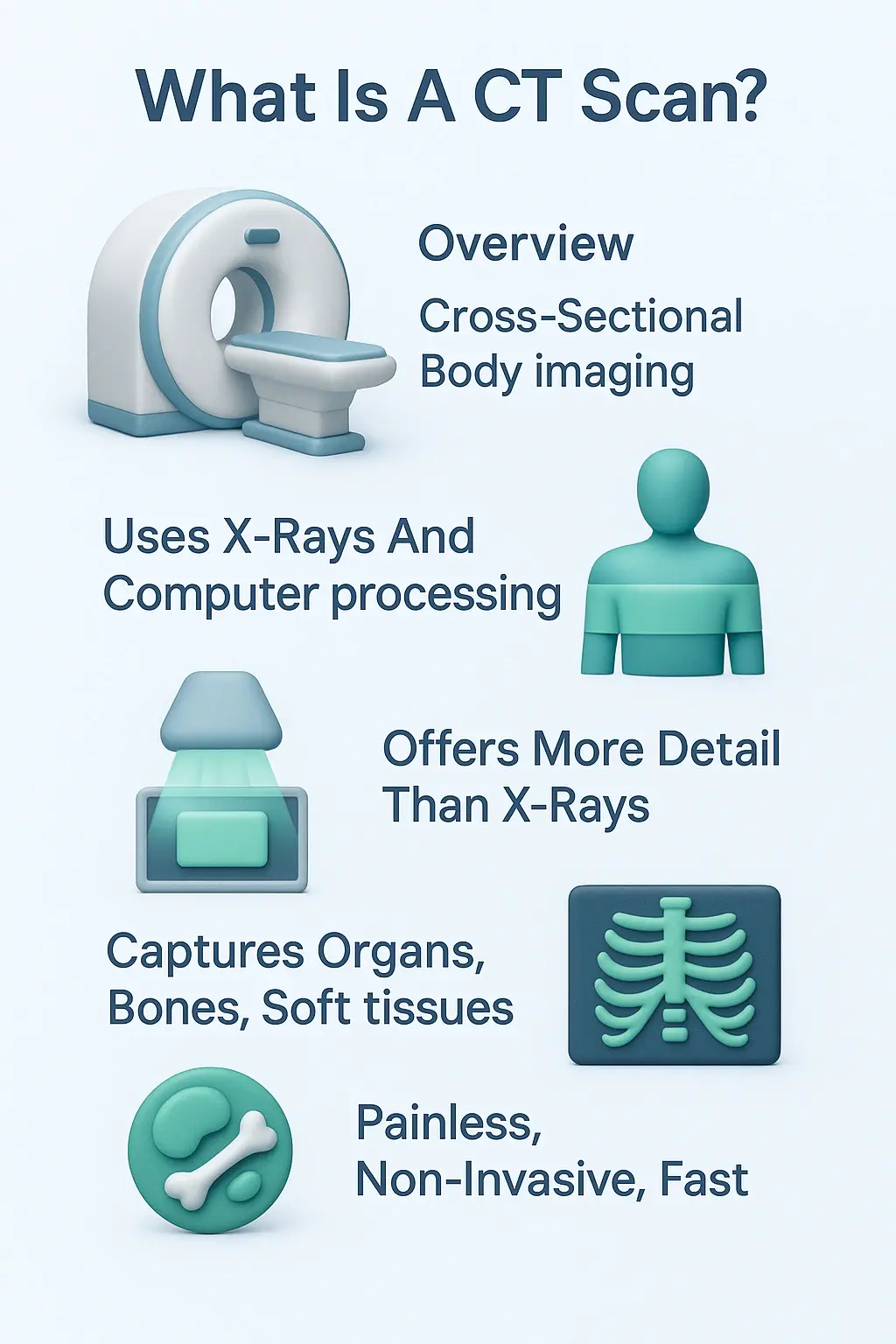
What Is A CT Scan

The development of CT scan technology began in the early 1970s. It was invented by British engineer Sir Godfrey Hounsfield and South African physicist Allan Cormack, who were jointly awarded the Nobel Prize in Physiology or Medicine in 1979. The first successful clinical CT scan was performed in 1971 on a patient with a brain tumor.

Since then, CT scanners have evolved drastically, with modern machines offering faster scans, 3D imaging, and reduced radiation exposure. Today, CT is a cornerstone of modern diagnostic medicine across the world.
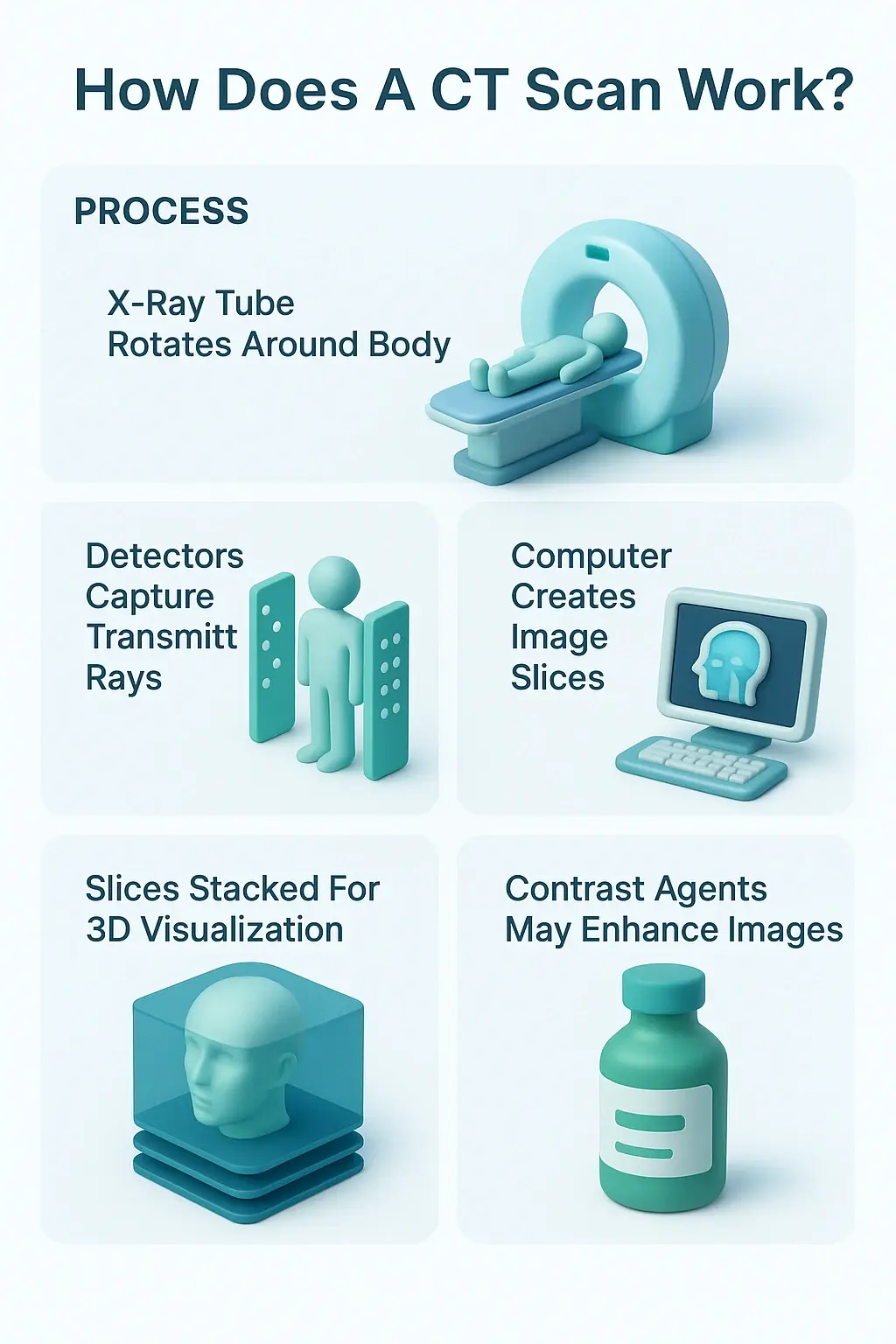
During a Computed Tomography Scan, you will lie down on a flat, motorized bed. This bed will slowly slide into the center of a large, doughnut-shaped machine called the CT scanner. As you move through the scanner, an X-ray tube inside the machine rotates around you. It sends out thin X-ray beams through your body.

Detectors on the opposite side of the machine measure the amount of X-rays that pass through. You won’t feel a thing! The most you’ll have to do is lie very still, and sometimes the technician might ask you to hold your breath for a few seconds. This is to make sure the pictures are not blurry. The computed tomography working principle is based on how different body tissues absorb these X-rays differently, allowing the computer to create a detailed picture.
The real magic of a Computed Tomography Scan happens in the computer. The scanner takes hundreds or even thousands of individual X-ray pictures from all around your body. Each picture is like a single, flat image. The computer then uses complex software to process these images.

It stacks them up like slices of bread to create a detailed 3D view of the part of your body being examined. This process uses technology similar to a computed tomography x ray but is much more advanced. It allows doctors to look at your body one thin layer at a time, making it easier to spot even very small problems that a regular X-ray might miss.
People often get confused between CT scans, MRIs, and X-rays. While they are all imaging tests, they work differently and are used for different purposes. An X-ray is a quick, simple test that is great for looking at bones. An MRI uses powerful magnets and radio waves to create images and is excellent for looking at soft tissues like muscles, nerves, and the brain. A Computed Tomography Scan is a faster test than an MRI and provides excellent detail of bones, soft tissues, and blood vessels all at once.
Feature CT Scan (Computed Tomography) MRI (Magnetic Resonance Imaging) X-ray
How it Works Uses rotating X-rays and a computer to create cross-sectional images. Uses strong magnets and radio waves to see inside the body. Uses a single beam of radiation to create a 2D image.
Best For Emergency situations (trauma, stroke), bone fractures, lung and chest issues, cancer detection. Detailed images of soft tissues like the brain, spinal cord, ligaments, and muscles. Checking for broken bones, pneumonia, and dental issues.
Scan Time Very fast, typically takes only a few minutes. Longer, can take from 30 minutes to over an hour. Very quick, usually takes less than a minute.

Common Uses of CT Scan

Doctors use the Computed Tomography Scan for many reasons because it is so versatile and provides clear, detailed images. The computed tomography uses are vast, helping to diagnose diseases, plan treatments, and check if treatments are working.

It is one of the most valuable tools in modern medicine for looking inside the human body. Let’s explore some of the most common reasons a doctor might order this scan. If you’ve ever wondered what are ct scans used to find, this section will give you a clear answer.
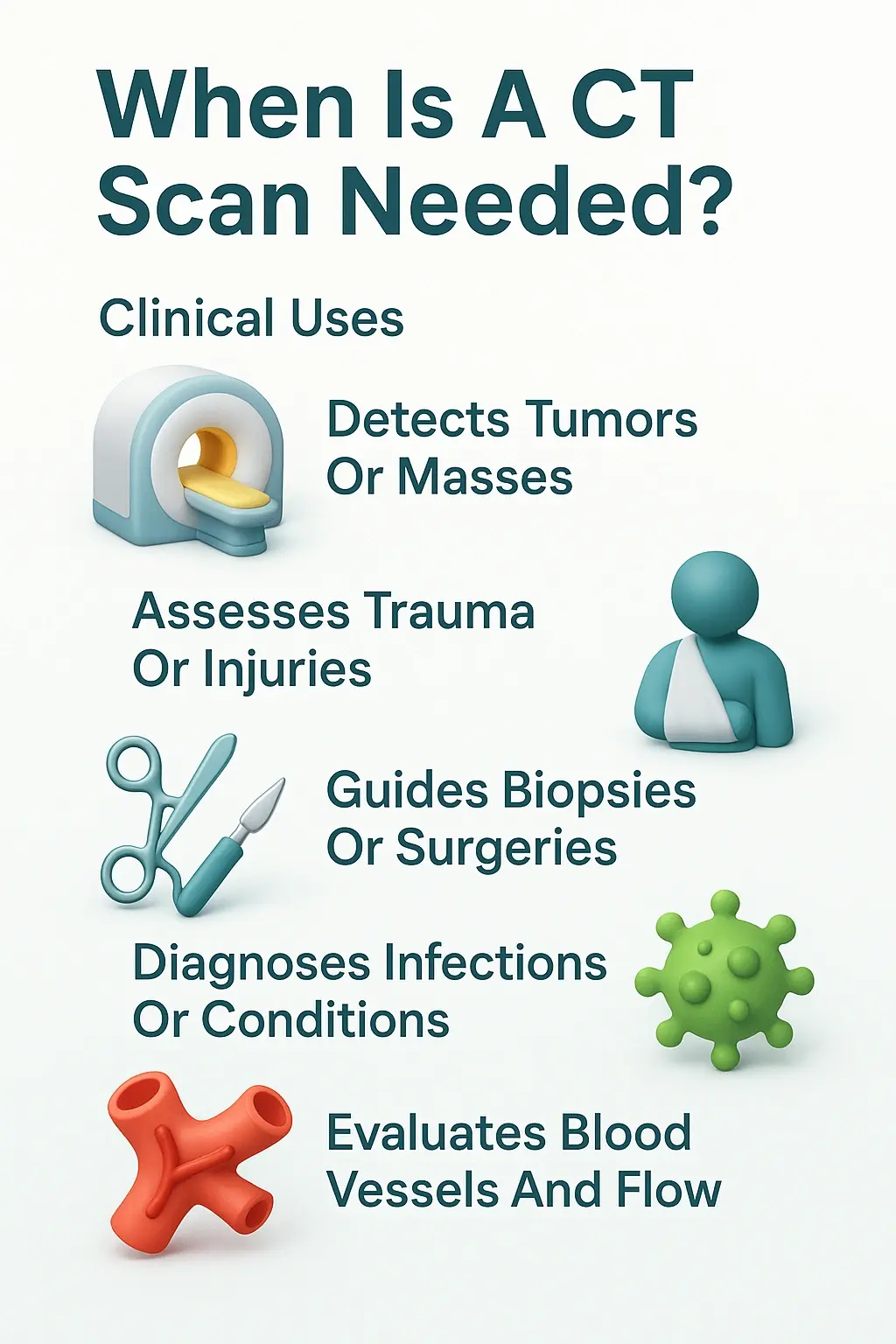
When Is A CT Scan Needed
When someone has a head injury, or if a doctor suspects a problem in the brain like a stroke or a tumour, a Computed Tomography Scan of the head is often the first test they order. It is very fast and can quickly show bleeding in the brain, skull fractures, or blood clots. For a computed tomography ct or cat scan of the brain, this speed is crucial in emergencies.

The detailed images help doctors make life-saving decisions quickly. In research, the ct computed tomography scan psychology definition relates to its ability to show brain structures, helping scientists understand how brain abnormalities might affect behaviour.
The Computed Tomography Scan is excellent for examining the chest. It can detect problems like infections (such as pneumonia), lung cancer at a very early stage, and blood clots in the lung’s arteries (called pulmonary embolism).

It can provide much more detail than a standard chest X-ray. Doctors can see the exact size and location of a tumour, which helps them plan for surgery or radiation therapy. It gives a clear picture of the lungs, heart, and major blood vessels in the chest.
If you have pain in your stomach area, a doctor might recommend a Computed Tomography Scan to find the cause. It can help diagnose conditions like appendicitis, kidney stones, pancreatitis, and diverticulitis.

It’s also used to find tumours in the liver, kidneys, pancreas, or ovaries. For patients who have been in an accident, this scan can quickly identify internal bleeding or organ damage in the abdomen and pelvis, which is critical for immediate treatment.
While regular X-rays are good for simple bone breaks, a Computed Tomography Scan is used for more complex fractures. It can show the exact position of the broken bone pieces, which is very important for a surgeon planning to repair the fracture.

It is also useful for examining small bones in the hands and feet or for looking at joints like the shoulder, elbow, or hip in great detail.

Types of CT Scans

Just like there are different types of cars for different purposes, there are different types of CT scans. The specific type of Computed Tomography Scan you get will depend on what your doctor wants to see.

Some scans are designed to look at blood vessels, while others are used for general screening. All of them use the same basic technology, but with small changes to get the best possible images for a specific problem. Understanding these types can help you know exactly what kind of scan you are having.
CT Angiography is a special type of Computed Tomography Scan used to look at blood vessels. Before the scan, a special dye (called contrast material) is injected into your veins. This dye travels through your bloodstream and makes your arteries and veins show up very clearly on the CT images.

It’s used to find problems like blockages, aneurysms (bulges in a blood vessel wall), or other vessel abnormalities. A common example is a cardiac computed tomography ct scan, which is used to look at the arteries of the heart.
In many cases, a regular Computed Tomography Scan provides enough detail. However, sometimes doctors need a clearer view of certain organs or blood vessels. In a Contrast CT scan, you will be given a contrast material, either as a drink or as an injection.

This substance helps highlight specific areas inside your body, making them stand out on the final images. This is very useful for finding tumours or inflammation, as these areas often have a different blood supply than healthy tissue.
One concern with any Computed Tomography Scan is the amount of radiation used. A Low-dose CT (LDCT) scan of the chest uses up to 75% less radiation than a standard chest CT scan.

It is specifically recommended for long-term smokers or people at high risk of developing lung cancer. It can detect very small nodules in the lungs before they cause any symptoms, which can significantly improve the chances of successful treatment.

Full body CT Scan: A full-body Computed Tomography Scan scans the body from the head to the pelvis. It is not typically used for general health check-ups. Instead, it is most often used in emergency situations, such as after a major car accident, to quickly check for multiple injuries.

It is also used in oncology (cancer treatment) to see if cancer has spread from one part of the body to another (a process called metastasis).
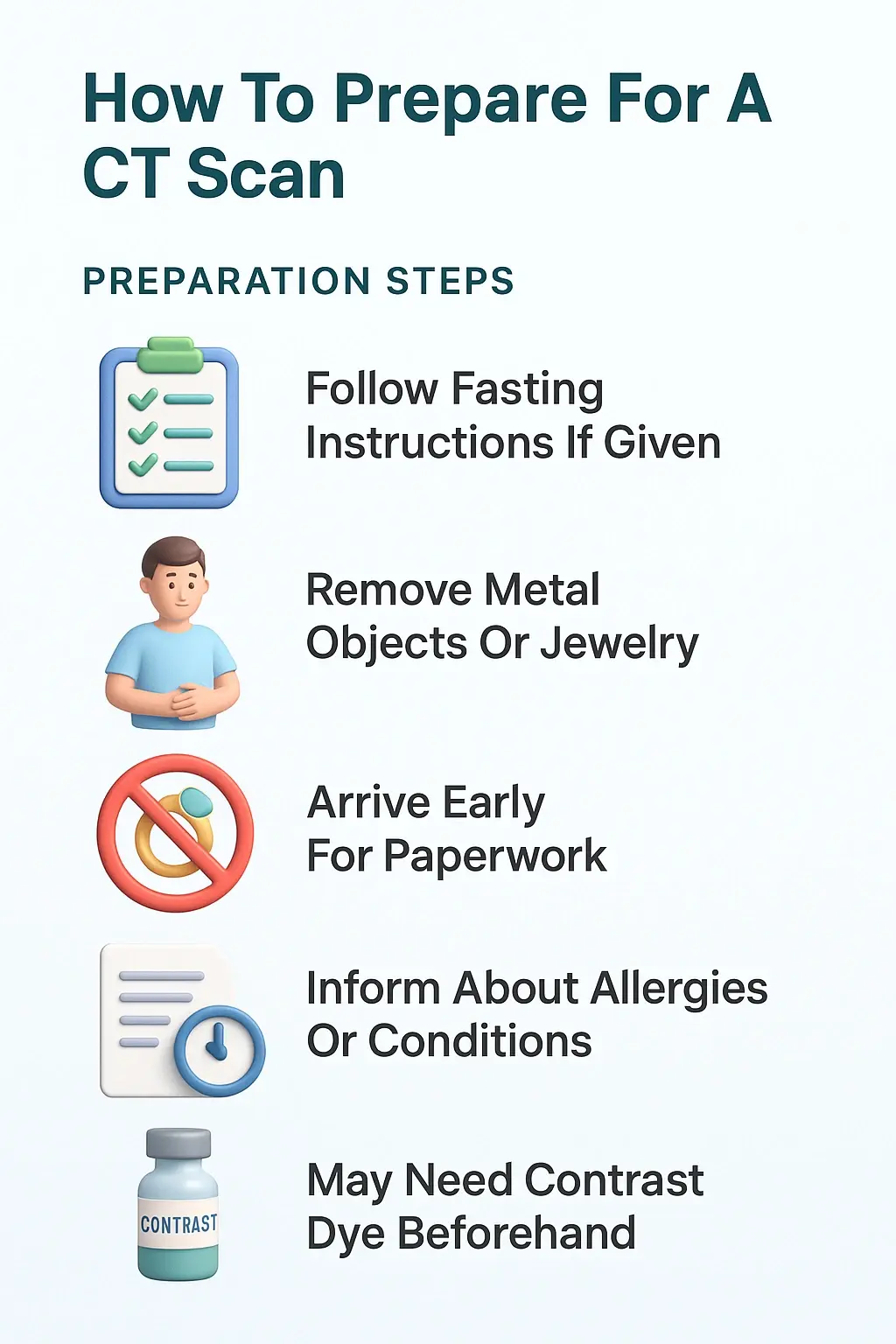
Preparing for a CT Scan

Proper preparation is key to ensuring your Computed Tomography Scan goes smoothly and the images are as clear as possible. The instructions you receive will depend on the type of scan you are having. It is very important to follow the instructions given by your doctor or the imaging centre. Don’t worry, the preparation is usually very simple and straightforward. Let’s go over the most common guidelines.
How To Prepare For A CT Scan
For many types of CT scans, especially those of the abdomen or those that require contrast dye, you will be asked not to eat or drink anything for a few hours before your appointment. This is called fasting.

Fasting is important because it ensures your stomach and intestines are empty, which gives the radiologist a clearer view of your organs. It also reduces the risk of feeling sick if you are given a contrast dye injection. You will usually be allowed to drink clear liquids like water. Always confirm the specific fasting rules for your Computed Tomography Scan.
In most cases, you can continue to take your regular medications as usual. However, it is very important to tell your doctor about all the medicines you are taking, including over-the-counter drugs and supplements.

If you are diabetic and take metformin, you may be asked to stop taking it for a day or two after a CT scan with contrast dye. This is a precaution to protect your kidneys. Your doctor will give you specific instructions.
On the day of your Computed Tomography Scan, it’s best to wear loose, comfortable clothing. You will likely be asked to change into a hospital gown for the procedure. The most important thing is to avoid wearing anything with metal on it.

This includes jewellery, eyeglasses, dentures, hairpins, and clothes with zippers or metal buttons. Metal can interfere with the CT scanner and affect the quality of the images.
Preparation Step Why It's Important What to Do
Fasting Prevents blurry images of the stomach and reduces the risk of nausea from contrast dye. Do not eat or drink for 4–6 hours before the scan, as instructed. Water is usually okay.
Inform about Health Helps the medical team ensure your safety, especially regarding allergies or kidney problems. Tell your doctor about any allergies (especially to iodine), kidney issues, or if you might be pregnant.
Clothing & Accessories Metal can create artefacts (white streaks) on the CT images, hiding important details. Wear comfortable clothes without metal. Remove all jewellery, piercings, and hearing aids before the scan.

CT Scan Procedure Explained

Knowing what will happen on the day of your Computed Tomography Scan can help you feel more relaxed. The entire process is managed by a trained professional called a radiologic technologist. They are there to guide you and make sure you are comfortable and safe. The procedure itself is painless and relatively quick. Here’s a step-by-step explanation of what you can expect.
How Does A CT Scan Work
When you arrive at the hospital or imaging centre, you will first check in at the reception. You may be asked to fill out some forms, including a questionnaire about your medical history and any allergies you might have. Afterwards, a technologist will take you to a private room where you can change into a hospital gown. They will explain the procedure to you and answer any questions you have about your Computed Tomography Scan.
If your scan requires contrast dye, this is when it will be administered. It can be given in three ways: as a drink, as an enema, or as an injection into a vein in your arm. If you get an injection, you might feel a warm, flushing sensation throughout your body and a metallic taste in your mouth. This is a normal reaction and usually goes away in a minute or two. Allergic reactions are rare, but the medical team is fully prepared to handle them.
Once you are ready, the technologist will help you lie down on the scanner bed. They will position you correctly, maybe using pillows to help you stay still and comfortable. The bed will then slide into the scanner. The technologist will be in a separate control room but can see, hear, and talk to you through an intercom. They will give you simple instructions, like when to hold your breath. The actual scanning time for a Computed Tomography Scan is very short, often just a few minutes.

Understanding CT Scan Results

After your Computed Tomography Scan is complete, the next step is interpreting the images. The images themselves are just black and white pictures; they need an expert to read them and understand what they show. This part of the process is just as important as the scan itself. The final report will be sent to the doctor who ordered the scan for you.
The images from your scan are read by a specialist doctor called a radiologist. Radiologists are experts in interpreting medical images. They will carefully examine all the “slices” from your Computed Tomography Scan on a high-resolution computer screen. They look for any abnormalities, such as tumours, inflammation, fractures, or bleeding. computed tomography ct results in a an detailed report that describes everything the radiologist sees, both normal and abnormal.
The radiologist will write a formal report and send it to your doctor, usually within a day or two. Your doctor will then share the results with you at a follow-up appointment. It is best to discuss the results directly with your doctor, as they can explain what the findings mean in the context of your overall health and symptoms. They will be able to answer your questions and discuss the next steps.
The results of a Computed Tomography Scan may provide a clear diagnosis, or they might point to the need for more tests. For example, if the scan shows a suspicious mass, your doctor might recommend a biopsy to determine if it is cancerous. In other cases, you might need a different type of scan, like an MRI, for a more detailed look. Sometimes, a follow-up scan is needed after a few weeks or months to see if a condition has changed or if a treatment is working.

Role of a CT Scan in Cancer Detection and Treatment Planning

A Computed Tomography (CT) scan is a cornerstone of oncologic imaging, using X-rays to create detailed cross-sectional images of the body. Its speed and accessibility make it essential for detecting tumors, determining their precise location and size, and staging cancer by identifying spread to lymph nodes or other organs. It is also vital for guiding biopsies and planning treatments like surgery and radiation therapy.
CT scans are highly effective for detecting tumors, particularly in the lungs, abdomen, and pelvis. Low-dose CT screening is a standard for identifying early-stage lung cancer in high-risk individuals. The technology’s ability to rapidly scan large areas of the body allows for the precise localization of masses. The use of intravenous contrast agents enhances the visibility of tumors by highlighting their blood supply, helping to differentiate them from normal surrounding tissues.
Accurate cancer staging is critical for determining prognosis and treatment, and CT is a primary tool for this purpose. It provides a comprehensive view to assess a tumor’s extent, including invasion into nearby structures and metastasis to distant lymph nodes and organs. For surgeons, these detailed images serve as an essential anatomical roadmap, showing the tumor’s relationship to vital blood vessels and organs, which is crucial for planning a safe and effective resection.
Modern CT technology has greatly advanced oncology care. Multidetector CT (MDCT) offers faster scans with higher image resolution. Dual-energy CT enhances tissue characterization, helping to differentiate tumor types. Functional techniques like CT perfusion can measure blood flow within a tumor to assess treatment response. Furthermore, 4D CT captures tumor motion caused by breathing, enabling more precise targeting in radiation therapy and minimizing damage to healthy tissue.

Benefits of CT Scanning

The Computed Tomography Scan has revolutionized medicine since its invention. It offers several significant advantages over other imaging techniques, making it an invaluable tool for doctors. Its ability to provide quick, detailed, and comprehensive views of the body helps in making accurate diagnoses and saving lives, especially in emergency situations. Let’s look at some of its key benefits.
One of the biggest advantages of a Computed Tomography Scan is its speed. A complete scan can often be done in under 10 minutes, with the actual image capture taking just a few seconds. This speed is critical in emergencies like a stroke or major trauma, where every second counts. The high level of detail in the images allows for a very accurate diagnosis, helping doctors to start the right treatment without delay.
Unlike some other imaging tests that focus on a very small area, a Computed Tomography Scan can scan large portions of the body very quickly. In a single session, doctors can get detailed images of the head, chest, abdomen, and pelvis. This is extremely useful for trauma patients to check for multiple injuries or for cancer patients to see if the disease has spread.
CT scanners produce images with excellent clarity and detail. Doctors can see organs, bones, and blood vessels clearly. The powerful computer software can also take the 2D “slice” images and create stunning 3D models of organs, bones, or blood vessels. This 3D reconstruction helps surgeons plan complex operations with greater precision, as they can see the exact anatomy before they even make an incision. a computed tomography ct scan provides a level of detail that was unimaginable just a few decades ago.

Risks and Limitations

While the Computed Tomography Scan is an incredibly useful tool, it is important to be aware of its potential risks and limitations. Doctors always weigh the benefits of getting a scan against the risks. For most people, the benefit of an accurate diagnosis far outweighs the small risks involved. The medical team takes every precaution to ensure the procedure is as safe as possible.
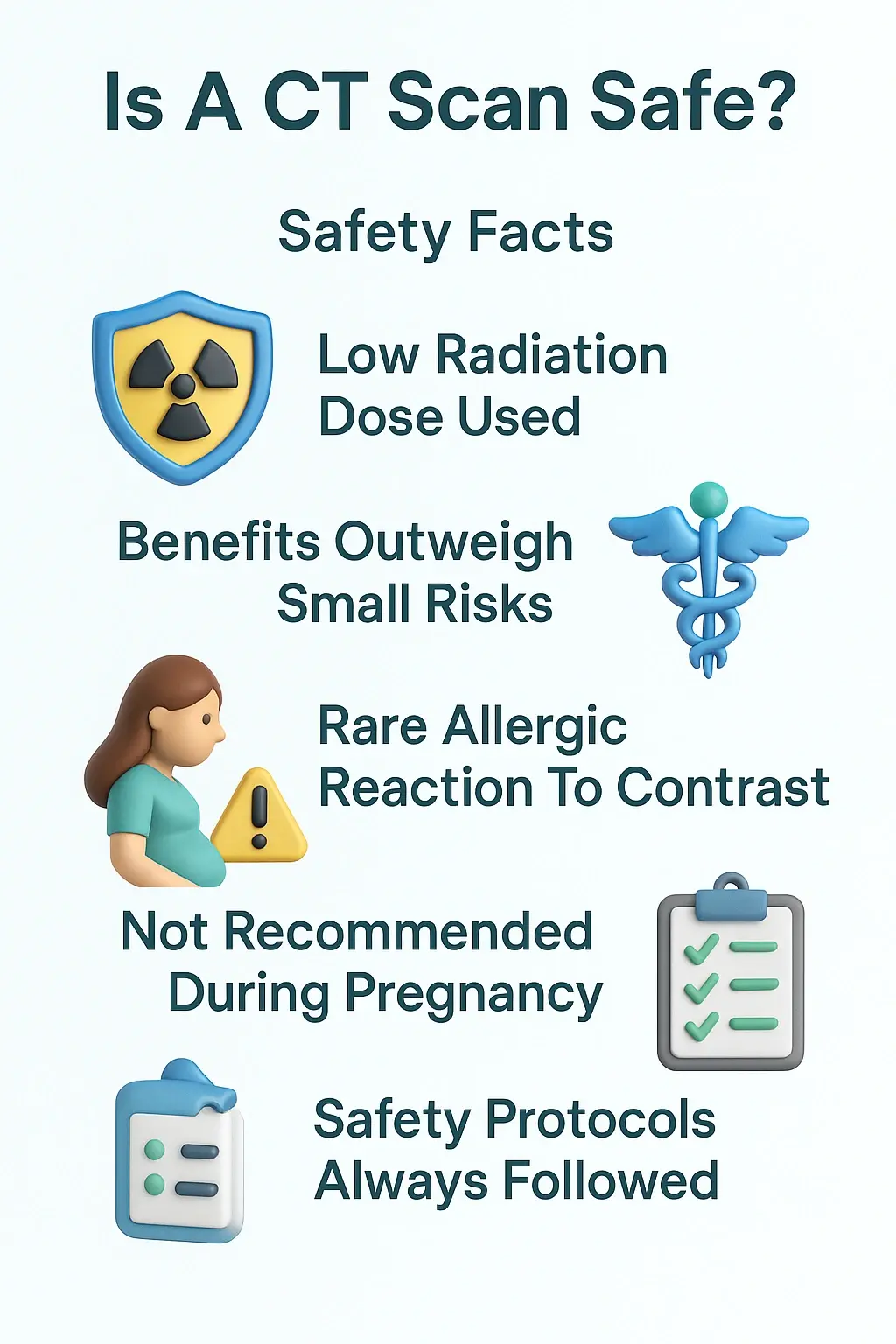
Is A CT Scan Safe
CT scans use X-rays, which are a form of ionizing radiation. Exposure to high levels of radiation can increase the risk of cancer later in life. However, the amount of radiation used in a single Computed Tomography Scan is low, and the risk is considered very small. Hospitals use the lowest possible radiation dose to get good quality images (a principle called ALARA – As Low As Reasonably Achievable).
Risk How It Is Managed Who Is Most Concerned
Radiation Exposure Technologists use the lowest possible dose. Scans are only performed when medically necessary. Modern machines are designed to use less radiation. Children and young adults are more sensitive to radiation. Patients requiring multiple scans over their lifetime.
Allergic Reaction to Contrast You will be asked about allergies before the scan. Medical staff are trained to handle reactions immediately. People with a history of allergies, especially to iodine or previous contrast dye. Patients with severe asthma.
Kidney Issues from Contrast Your kidney function may be checked with a blood test before the scan. You'll be advised to drink plenty of water after the scan. People with pre-existing kidney disease or diabetes. The elderly.
Some people can have an allergic reaction to the iodine-based contrast dye used in some CT scans. Most reactions are mild, like itching or a rash. Serious allergic reactions are very rare, but they can happen. It is crucial to tell your doctor and the technologist if you have any allergies, especially if you have ever had a reaction to contrast dye in the past.
Because a Computed Tomography Scan uses radiation, it is generally not recommended for pregnant women, especially if the scan is of the abdomen or pelvis. The radiation could potentially harm the developing baby. If a pregnant woman urgently needs a scan, doctors will consider other options like an MRI or ultrasound first. If a CT scan is absolutely necessary, they will take special precautions to protect the baby.

Frequently asked questions

You lie on a flat bed that slowly moves through the centre of a large, ring-shaped machine. As you move, an X-ray scanner rotates around you, taking pictures from different angles. A computer then processes these pictures to create detailed cross-sectional images.

Doctors use CT scans to find and diagnose many medical problems quickly. This includes detecting internal injuries after an accident, locating tumours or infections, and finding blood clots or internal bleeding. It helps them see inside the head, chest, and stomach.

There is no fixed limit, but doctors only recommend a CT scan when it is truly necessary. This is because each scan exposes you to a small amount of radiation. The decision is always based on whether the benefit of the diagnosis is greater than the small risk.

The cost of a CT scan in India can vary widely, from around β‚Ή1,500 to β‚Ή15,000. The price depends on the city, the hospital, the part of the body being scanned, and whether a special contrast dye is needed for a clearer picture.

CT scans are generally very safe and are a common medical procedure. They use a small dose of radiation, and the benefit of finding a health problem usually outweighs this tiny risk. Some people may have a mild allergic reaction to the contrast dye if it is used.

The main benefits are that CT scans are fast, painless, and give extremely detailed images. They can show bones, muscles, organs, and blood vessels all in a single scan. This helps in making a quick and accurate diagnosis, especially in emergencies.

The main risk from repeated scans is the increased exposure to radiation over your lifetime. While the risk from one scan is very small, many scans can slightly increase the lifetime chance of developing cancer. This is why they are only performed when medically required.

The actual scanning process is very fast, often completed in less than a minute. However, the entire appointment, which includes preparation and positioning you on the machine, usually takes about 15 to 30 minutes from start to finish.
Dr Swati Shah

Dr. Swati Shah

MS, DrNB (Surgical Oncology)

Dr. Swati Shah is a renowned Robotic Uro and Gynecological Cancer Surgeon from Ahmedabad. He has 15+ years of extensive experience in pelvic oncosurgery and 10+ years of experience in robotic surgery. She treats cancers of kidney, bladder, prostate, uterus, ovaries and other pelvic organs.

5/5 - (25 reviews)
dr swati shah - uro & gynec cancer surgeon
Privacy Overview

This website uses cookies so that we can provide you with the best user experience possible. Cookie information is stored in your browser and performs functions such as recognising you when you return to our website and helping our team to understand which sections of the website you find most interesting and useful.