Retroperitoneal sarcoma (RPS) is a rare cancer that starts deep in the abdomen. Because it’s so uncommon, researchers often struggle to get a clear picture of who gets it and how best to treat it. A new study from Japan now offers valuable answers.
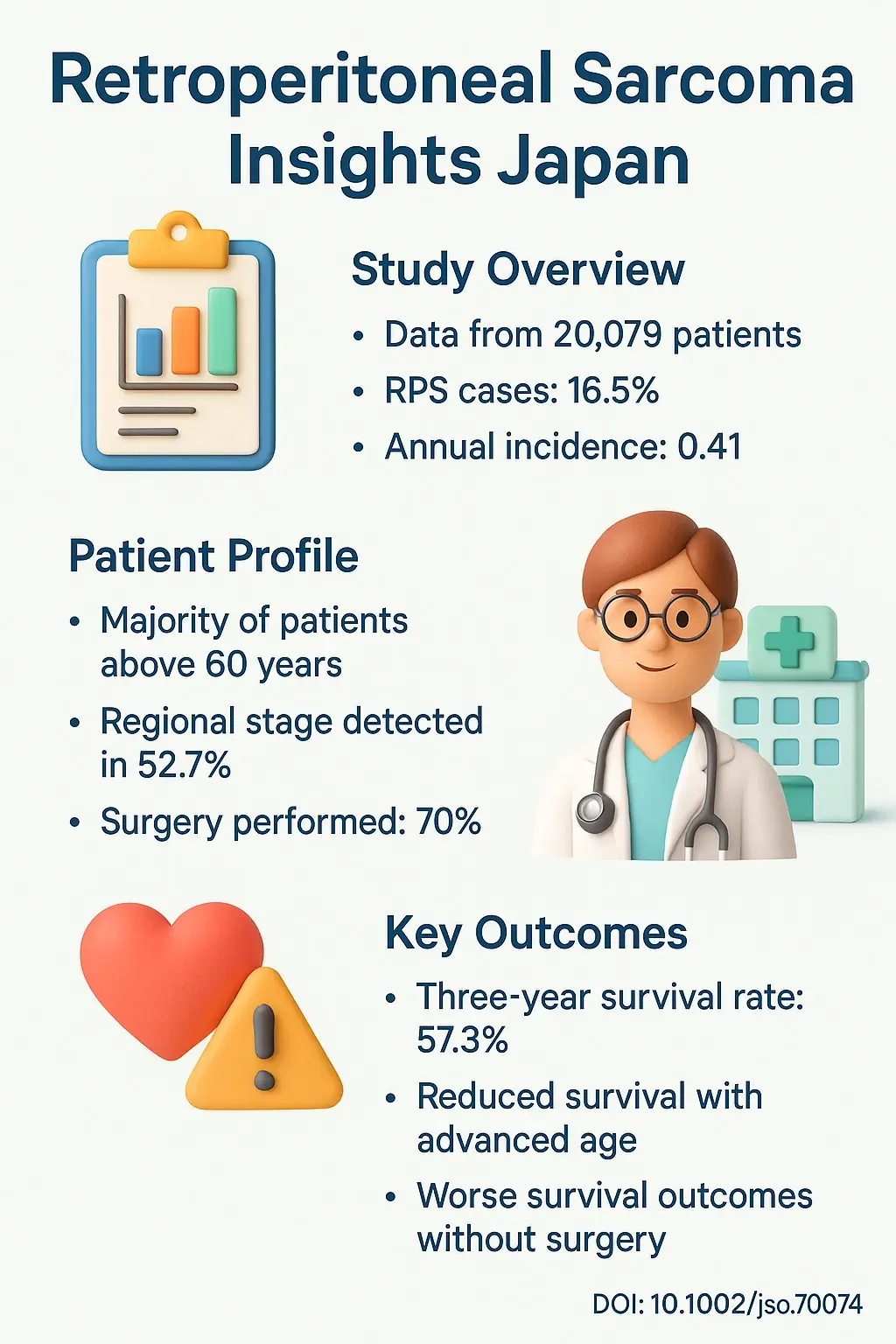
Researchers looked at national cancer data from over 20,000 patients with soft-tissue sarcomas between 2016 and 2019. About 3,300 of those had retroperitoneal sarcoma—making up 16.5% of all soft-tissue sarcoma cases in Japan.
Most patients were older than 60, and over half had cancer that had already begun to spread locally. Surgery was the main treatment and was performed in 70% of patients. Only a small number received chemotherapy or radiation.
The study found that survival three years after diagnosis was about 57%. Patients were more likely to do poorly if they were older, male, had a more aggressive tumor type, didn’t have surgery, or were treated at hospitals that didn’t see many sarcoma cases.
This research highlights how important early diagnosis, expert care, and surgery are in treating this rare cancer. If you or a loved one is diagnosed with retroperitoneal sarcoma, it’s worth asking about treatment at a high-volume center with experience in sarcoma care.