
WhatsApp

Heated Chemotherapy During Surgery for Ovarian Cancer: What Patients Should Know

You are here >> Home > Latest Updates > Ovarian Cancer > Heated Chemotherapy…

Hyperthermic Intraperitoneal Chemotherapy in Ovarian Cancer A Systematic Review and Meta-analysis of Phase III Randomized Controlled Trials.DOI 10.1016j.ygyno.2025.10.012

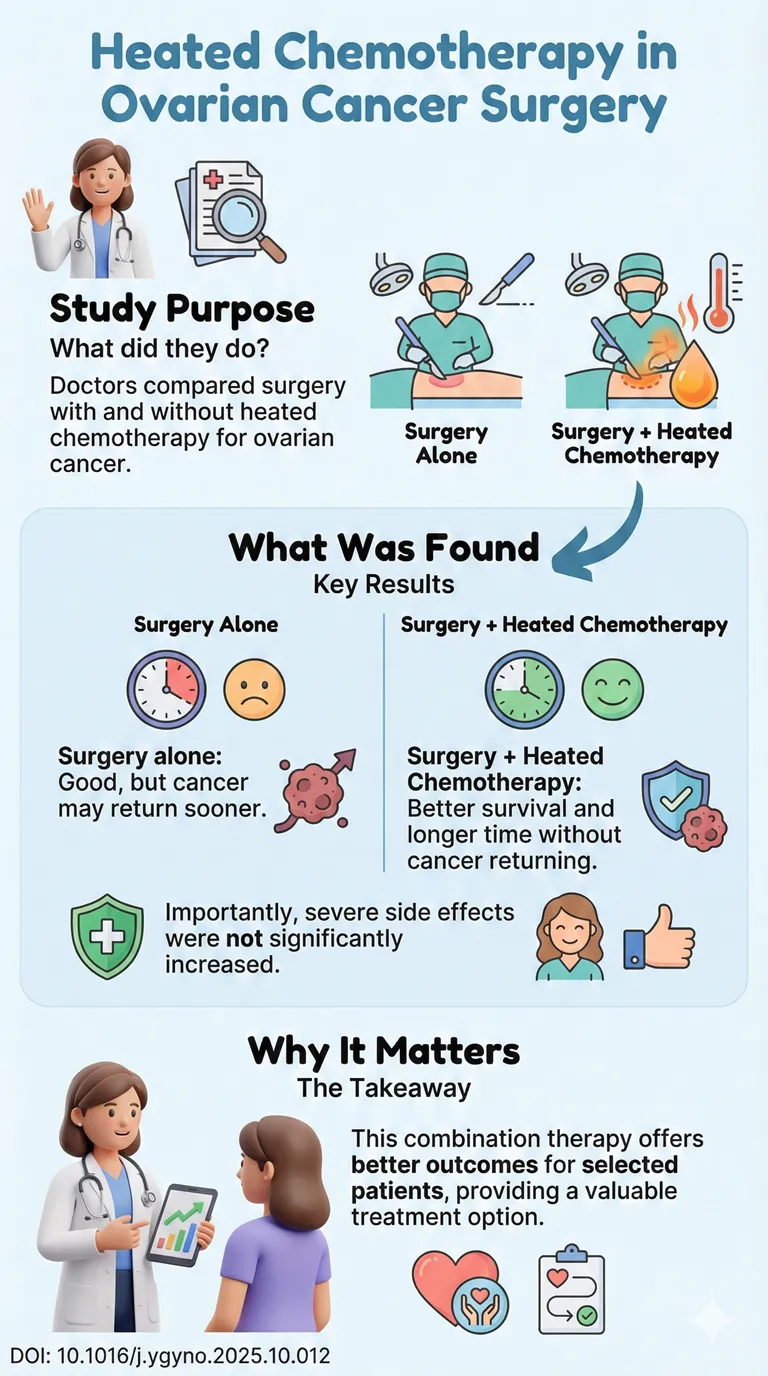
Ovarian cancer often spreads inside the abdomen. This makes treatment challenging. Surgery is usually the first step. Doctors remove as much visible cancer as possible. Chemotherapy is then used to kill cancer cells that cannot be seen. Researchers are testing better ways to deliver this treatment.

One method is called heated chemotherapy during surgery. Doctors call this HIPEC. After surgery, warm chemotherapy is placed directly into the abdomen. The heat helps the medicine reach cancer cells more effectively. This approach targets cancer where it grows, rather than sending all the medicine through the bloodstream.

A large review looked at strong clinical trials that tested this method. The review included over 1,100 women with ovarian cancer. All patients had surgery. Some also received heated chemotherapy during the operation.

The results were encouraging. Women who received heated chemotherapy lived longer. Their cancer also stayed away for a longer time before returning. These benefits were seen in women treated for the first time and in women whose cancer had come back.

Safety is a major concern for patients. Heated chemotherapy sounds intense. The study looked closely at serious side effects after surgery. The number of severe complications was similar in both groups. This means the heated treatment did not lead to more dangerous problems after surgery.

What does this mean for patients? Heated chemotherapy during surgery may offer better control of ovarian cancer for selected women. It is not for everyone. The procedure requires an experienced surgical team and careful patient selection. Your overall health, cancer stage, and treatment history matter.

If you or a loved one has ovarian cancer, it may help to ask your doctor about this option. It may be available at specialized cancer centers. Knowing all treatment choices helps patients feel more informed and supported during care.

Rate this post
dr swati shah - uro & gynec cancer surgeon
Privacy Overview

This website uses cookies so that we can provide you with the best user experience possible. Cookie information is stored in your browser and performs functions such as recognising you when you return to our website and helping our team to understand which sections of the website you find most interesting and useful.