
WhatsApp

Father’s Prostate Cancer May Influence Risk in Sons

You are here >> Home > Latest Updates > Pelvic Cancer > Father’s Prostate…

Prostate cancer characteristics in fathers and risk of early onset high-risk prostate cancer in sons. DOI 10.1002ijc.70133

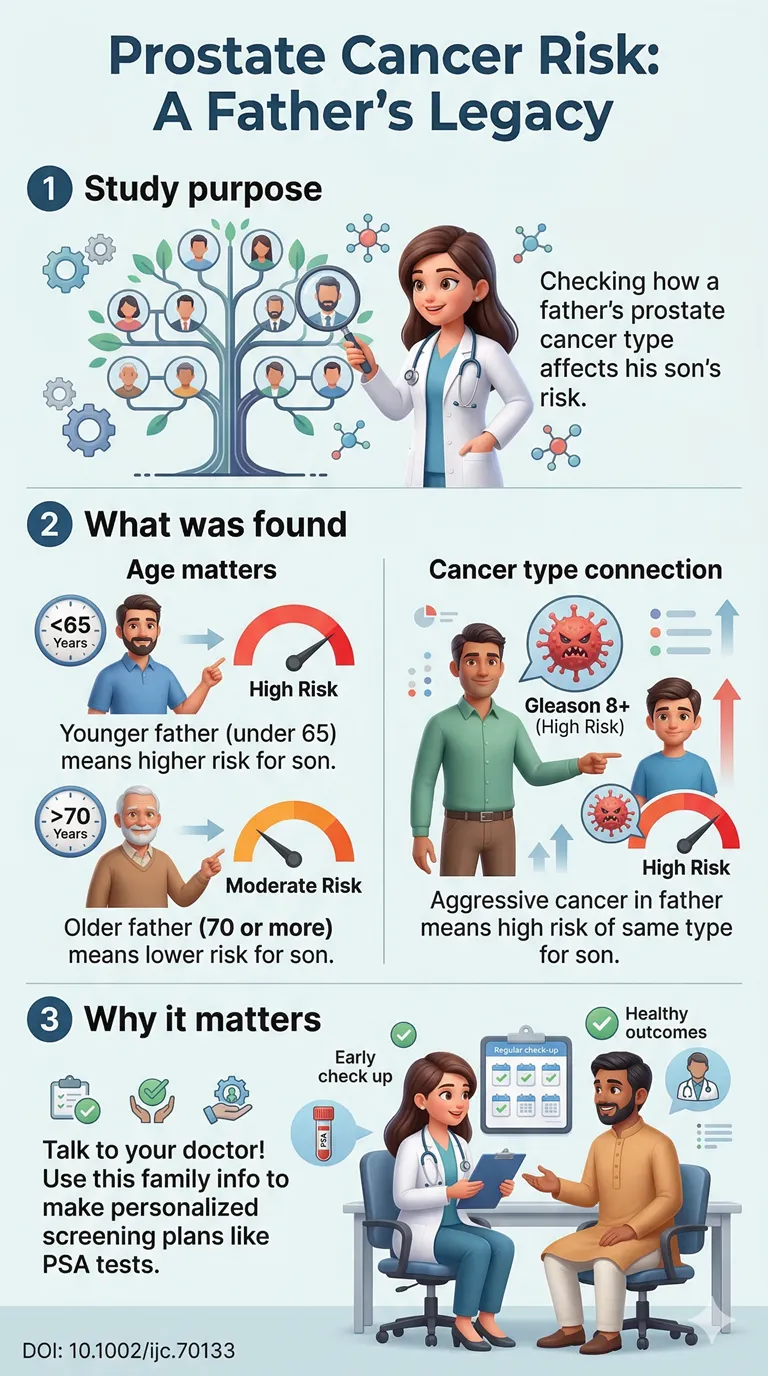
Family history is an important factor in prostate cancer risk. Men who have a father with prostate cancer are known to have a higher chance of developing the disease themselves. A new study looked deeper to understand how the age and severity of the father’s cancer may affect risk in sons.

Researchers analyzed data from more than 25,000 men whose fathers had prostate cancer. The study followed these men to see how often they developed prostate cancer compared with the general population.

The results showed that risk was higher when the father was diagnosed at a younger age. Sons whose fathers were diagnosed before age 65 had more than four times the risk of developing prostate cancer compared with men without this family history. When the father was diagnosed at 70 years or older, the risk was still increased but lower.
The study also found that the aggressiveness of the father’s cancer mattered. Sons were more likely to develop high-risk prostate cancer if their father had an aggressive form of the disease with a high Gleason score.
These findings suggest that details about a father’s prostate cancer, including age at diagnosis and tumor severity, can help doctors better estimate risk in sons.
For men with a strong family history, doctors may recommend earlier screening with prostate-specific antigen (PSA) testing or closer monitoring.
Understanding family history can help men make informed decisions about screening and early detection, which may improve outcomes if prostate cancer develops.

Rate this post
dr swati shah - uro & gynec cancer surgeon
Privacy Overview

This website uses cookies so that we can provide you with the best user experience possible. Cookie information is stored in your browser and performs functions such as recognising you when you return to our website and helping our team to understand which sections of the website you find most interesting and useful.