Home > Blog > Cancer > Cancer Diagnosis > Diagnosis English > CT Scan
The development of CT scan technology began in the early 1970s. It was invented by British engineer Sir Godfrey Hounsfield and South African physicist Allan Cormack, who were jointly awarded the Nobel Prize in Physiology or Medicine in 1979. The first successful clinical CT scan was performed in 1971 on a patient with a brain tumor.
| Feature | CT Scan (Computed Tomography) | MRI (Magnetic Resonance Imaging) | X-ray |
|---|---|---|---|
| How it Works | Uses rotating X-rays and a computer to create cross-sectional images. | Uses strong magnets and radio waves to see inside the body. | Uses a single beam of radiation to create a 2D image. |
| Best For | Emergency situations (trauma, stroke), bone fractures, lung and chest issues, cancer detection. | Detailed images of soft tissues like the brain, spinal cord, ligaments, and muscles. | Checking for broken bones, pneumonia, and dental issues. |
| Scan Time | Very fast, typically takes only a few minutes. | Longer, can take from 30 minutes to over an hour. | Very quick, usually takes less than a minute. |
Full body CT Scan: A full-body Computed Tomography Scan scans the body from the head to the pelvis. It is not typically used for general health check-ups. Instead, it is most often used in emergency situations, such as after a major car accident, to quickly check for multiple injuries.
It is also used in oncology (cancer treatment) to see if cancer has spread from one part of the body to another (a process called metastasis).
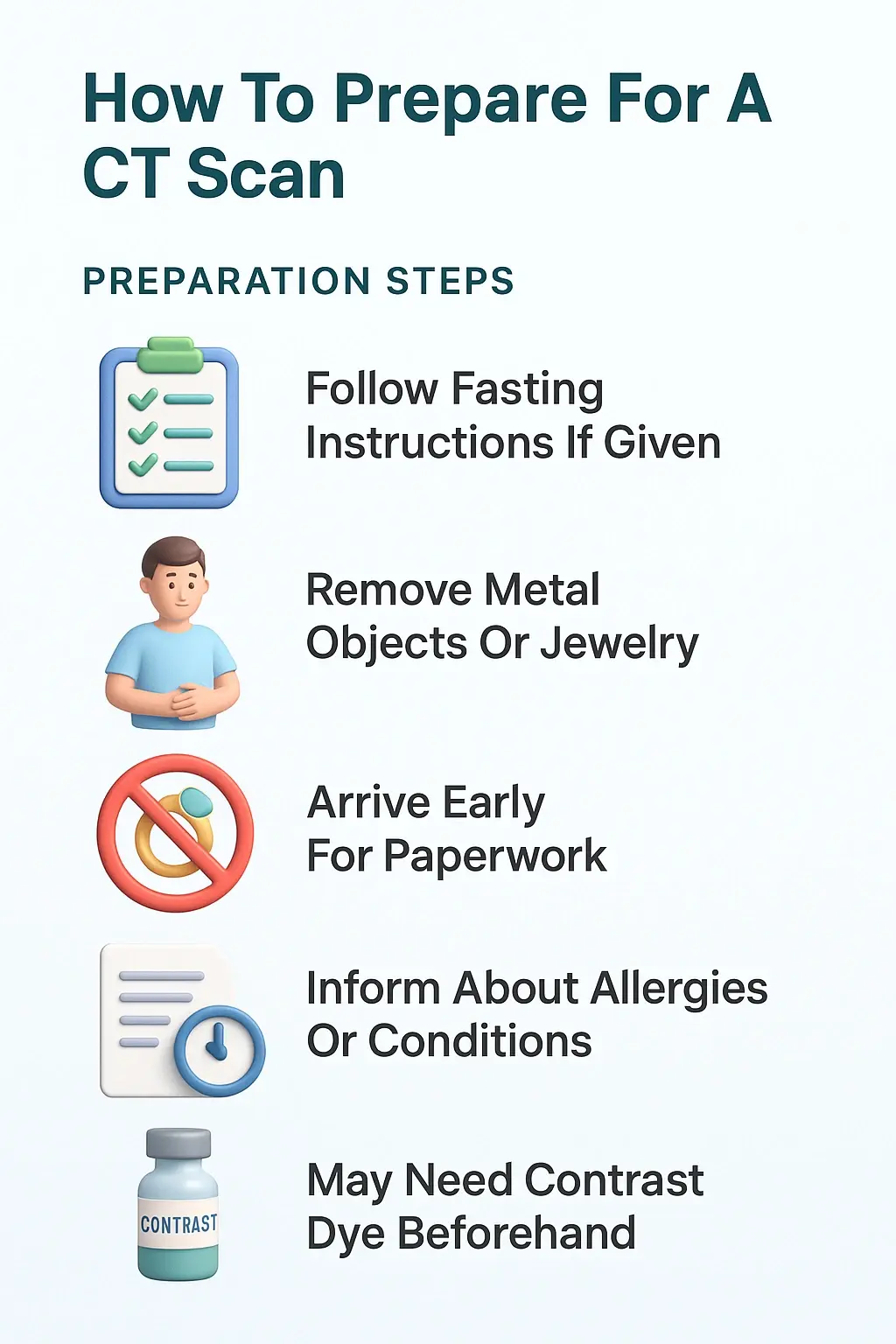
| Preparation Step | Why It's Important | What to Do |
|---|---|---|
| Fasting | Prevents blurry images of the stomach and reduces the risk of nausea from contrast dye. | Do not eat or drink for 4–6 hours before the scan, as instructed. Water is usually okay. |
| Inform about Health | Helps the medical team ensure your safety, especially regarding allergies or kidney problems. | Tell your doctor about any allergies (especially to iodine), kidney issues, or if you might be pregnant. |
| Clothing & Accessories | Metal can create artefacts (white streaks) on the CT images, hiding important details. | Wear comfortable clothes without metal. Remove all jewellery, piercings, and hearing aids before the scan. |
Knowing what will happen on the day of your Computed Tomography Scan can help you feel more relaxed. The entire process is managed by a trained professional called a radiologic technologist. They are there to guide you and make sure you are comfortable and safe. The procedure itself is painless and relatively quick. Here’s a step-by-step explanation of what you can expect.
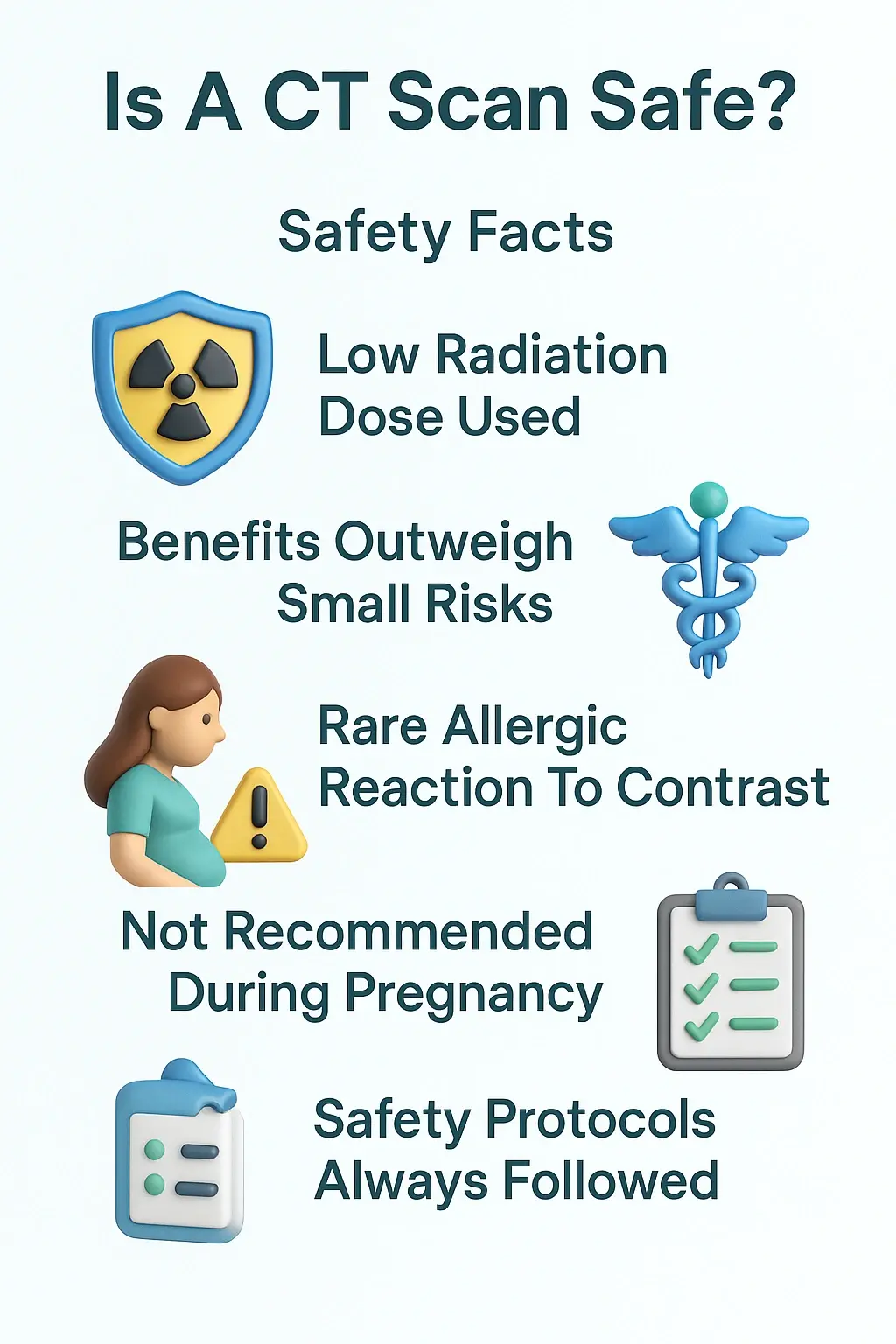
| Risk | How It Is Managed | Who Is Most Concerned |
|---|---|---|
| Radiation Exposure | Technologists use the lowest possible dose. Scans are only performed when medically necessary. Modern machines are designed to use less radiation. | Children and young adults are more sensitive to radiation. Patients requiring multiple scans over their lifetime. |
| Allergic Reaction to Contrast | You will be asked about allergies before the scan. Medical staff are trained to handle reactions immediately. | People with a history of allergies, especially to iodine or previous contrast dye. Patients with severe asthma. |
| Kidney Issues from Contrast | Your kidney function may be checked with a blood test before the scan. You'll be advised to drink plenty of water after the scan. | People with pre-existing kidney disease or diabetes. The elderly. |
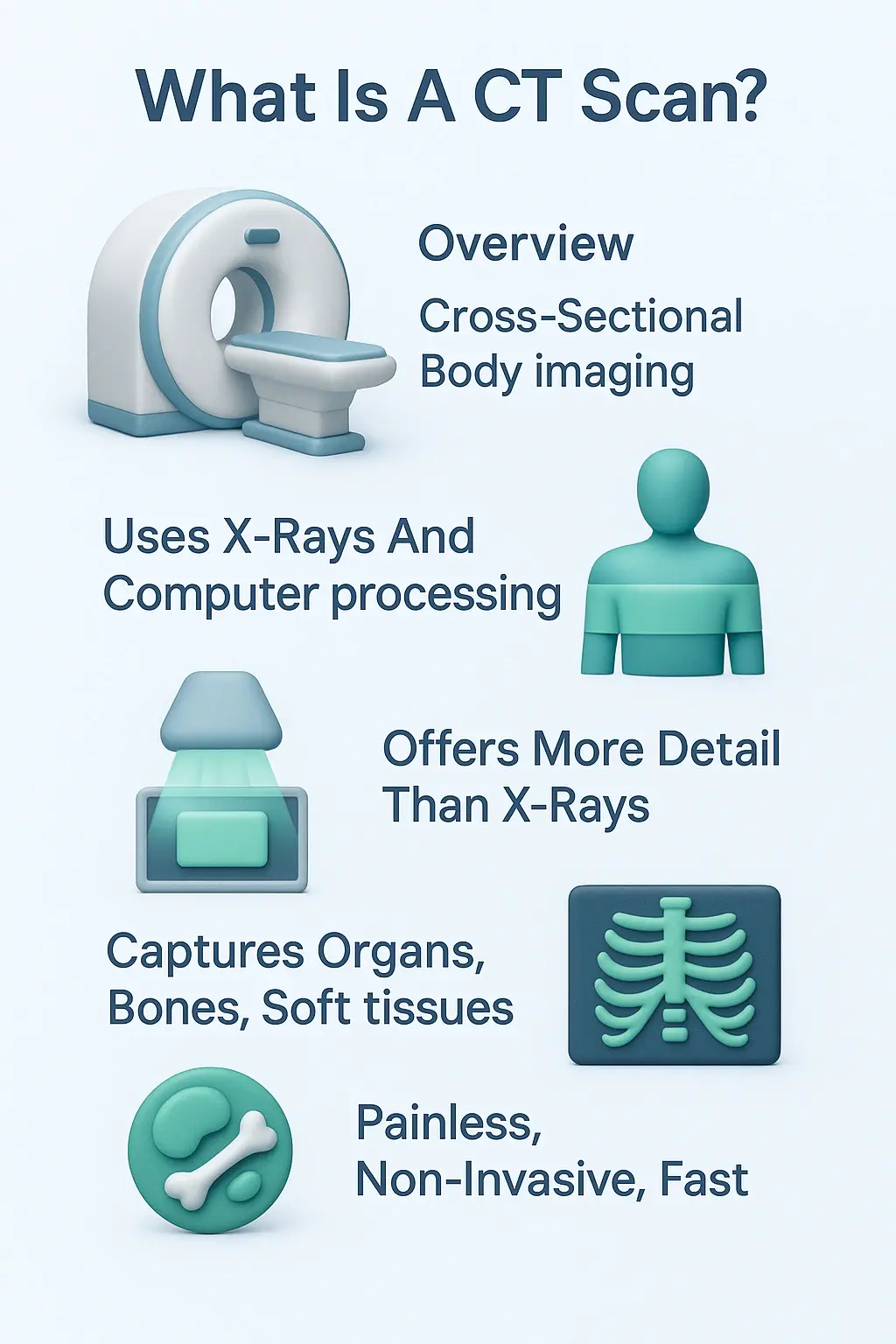
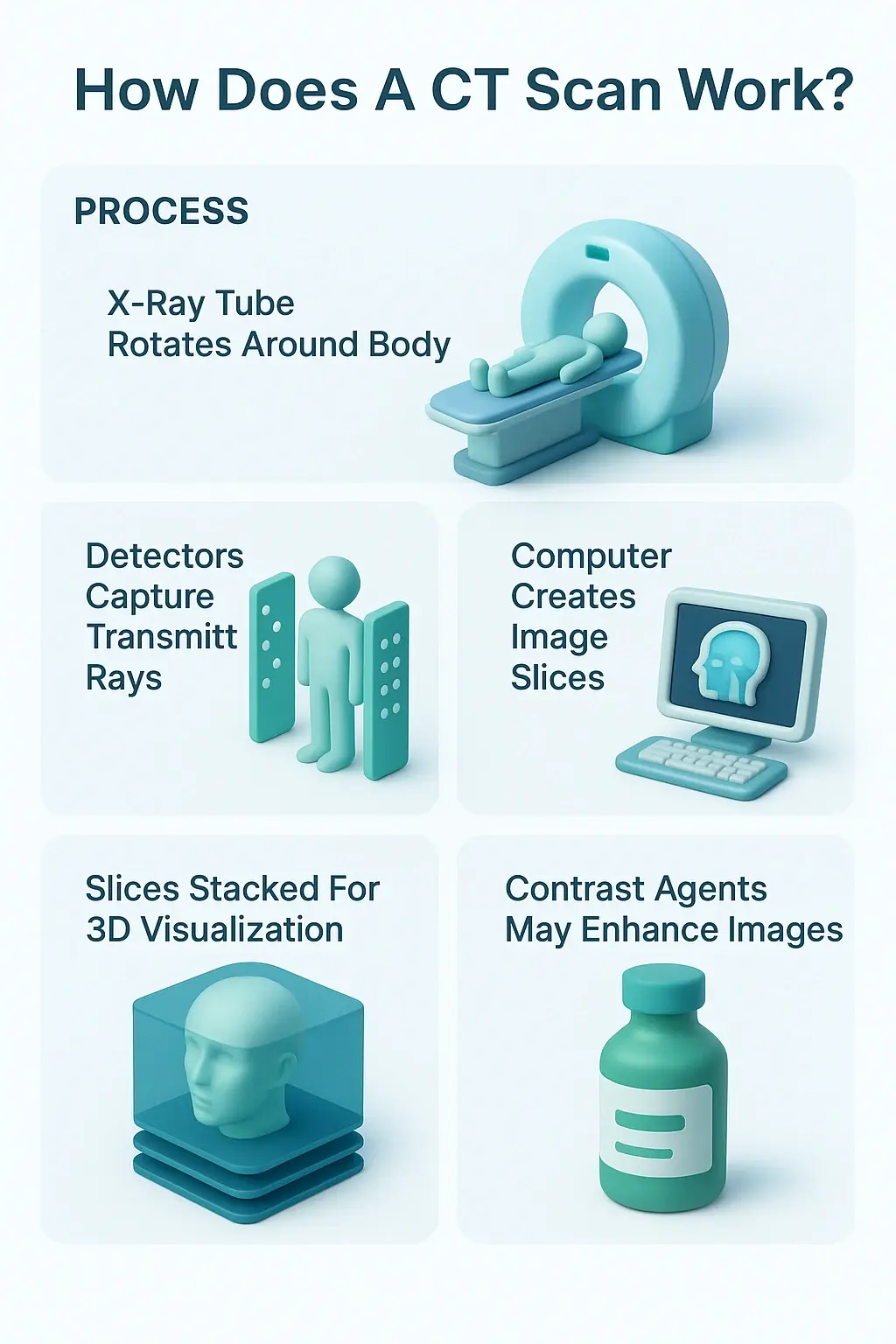
You lie on a flat bed that slowly moves through the centre of a large, ring-shaped machine. As you move, an X-ray scanner rotates around you, taking pictures from different angles. A computer then processes these pictures to create detailed cross-sectional images.
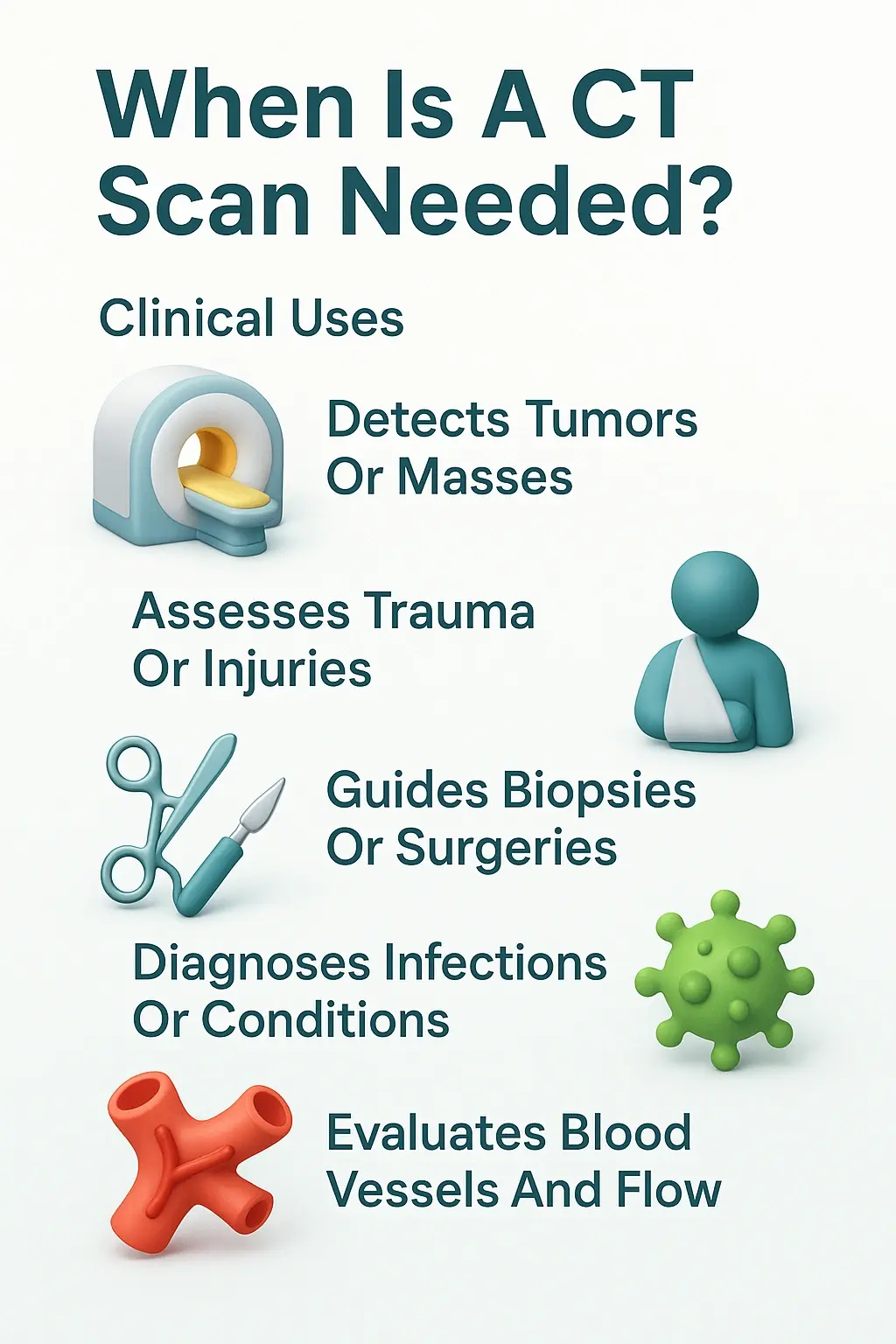
Doctors use CT scans to find and diagnose many medical problems quickly. This includes detecting internal injuries after an accident, locating tumours or infections, and finding blood clots or internal bleeding. It helps them see inside the head, chest, and stomach.
There is no fixed limit, but doctors only recommend a CT scan when it is truly necessary. This is because each scan exposes you to a small amount of radiation. The decision is always based on whether the benefit of the diagnosis is greater than the small risk.
The cost of a CT scan in India can vary widely, from around ₹1,500 to ₹15,000. The price depends on the city, the hospital, the part of the body being scanned, and whether a special contrast dye is needed for a clearer picture.
CT scans are generally very safe and are a common medical procedure. They use a small dose of radiation, and the benefit of finding a health problem usually outweighs this tiny risk. Some people may have a mild allergic reaction to the contrast dye if it is used.
The main benefits are that CT scans are fast, painless, and give extremely detailed images. They can show bones, muscles, organs, and blood vessels all in a single scan. This helps in making a quick and accurate diagnosis, especially in emergencies.
The main risk from repeated scans is the increased exposure to radiation over your lifetime. While the risk from one scan is very small, many scans can slightly increase the lifetime chance of developing cancer. This is why they are only performed when medically required.
The actual scanning process is very fast, often completed in less than a minute. However, the entire appointment, which includes preparation and positioning you on the machine, usually takes about 15 to 30 minutes from start to finish.
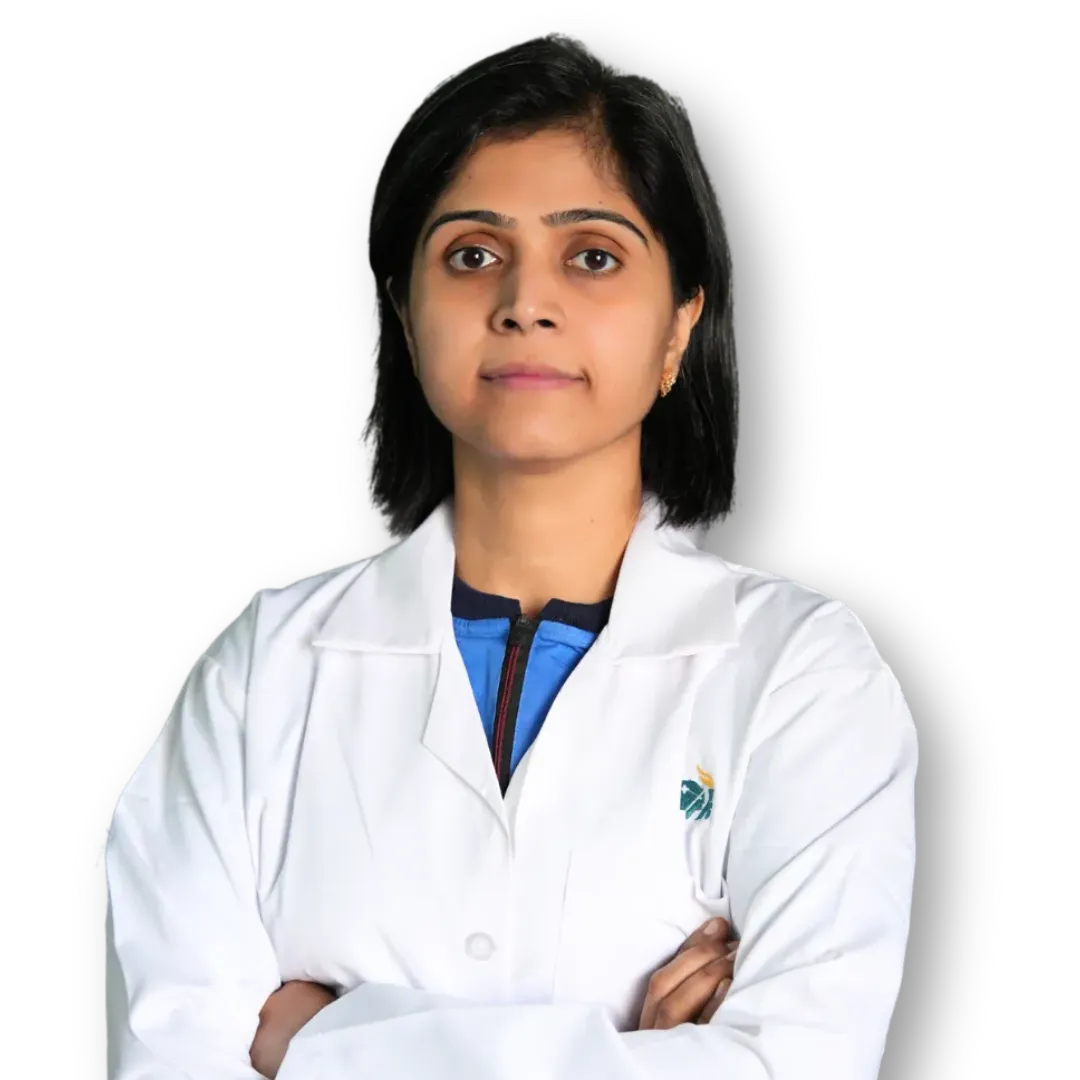
Dr. Swati Shah is a renowned Robotic Uro and Gynecological Cancer Surgeon from Ahmedabad. He has 15+ years of extensive experience in pelvic oncosurgery and 10+ years of experience in robotic surgery. She treats cancers of kidney, bladder, prostate, uterus, ovaries and other pelvic organs.