WhatsApp

Urinalysis

Uses, Types, Procedure & Results

Have you ever visited a doctor and been asked for a urine sample? It’s a very common practice, and the test they perform is called a Urinalysis. Think of it as a health report card that your body provides through your urine. This simple, painless test can tell doctors a lot about what’s happening inside you, from how hydrated you are to signs of serious diseases.
Β 
In this detailed guide, we will walk you through everything you need to know about a Urinalysis. We’ll explain what it is, why it’s done, what the results mean, and what to expect during the process. Our goal is to make this information so simple that anyone, even a young student, can understand their health better.

Summary

Urinalysis is a quick and simple lab test of your urine. It helps detect a wide range of health problems β€” from infections to kidney issues β€” often before symptoms appear.
The test looks at the color, clarity, chemical makeup, and microscopic elements in your urine. It can find signs of diabetes, urinary tract infections (UTIs), or kidney disease.
Doctors often use urinalysis during regular checkups, before surgery, or if you have symptoms like pain while peeing. It’s safe, low-cost, and offers quick insights.
You just provide a urine sample, usually in a clinic or lab. No needles, no pain. Some results are instant, while others take a bit longer for full analysis.
Urinalysis

What Is Urinalysis?

A Urinalysis is a test that examines your urine. It is used to detect and manage a wide range of medical conditions, such as urinary tract infections, kidney disease, and diabetes. It’s a key diagnostic tool because your urine contains waste products from your body, and analysing these products can reveal clues about your overall health.
The history of urinalysis dates back thousands of years. Ancient physicians, including Hippocrates, observed urine’s color and smell to diagnose diseases. In the 17th and 18th centuries, medical science began using chemical tests to detect sugar or protein in urine. Today, modern laboratories use automated analyzers for precise and quick urinalysis results, making it one of the most commonly performed tests in medicine.
The main purpose of a urine test, or Urinalysis, is to check for any abnormalities. Your doctor might order this test as part of a routine check-up, if you have symptoms of a health problem, or to monitor an existing condition. It’s a quick, non-invasive way to get a snapshot of your body’s functions, helping doctors make an accurate diagnosis.
A surprising amount of information can be found in a small urine sample. A Urinalysis can help detect:
β¦Ώ Kidney problems like stones or infections.
β¦Ώ Liver diseases.
β¦Ώ Diabetes (by checking for sugar in the urine).
β¦Ώ Urinary Tract Infections (UTIs).
β¦Ώ Dehydration.
β¦Ώ Signs of certain types of cancers.
β¦Ώ Issues during pregnancy, like preeclampsia.
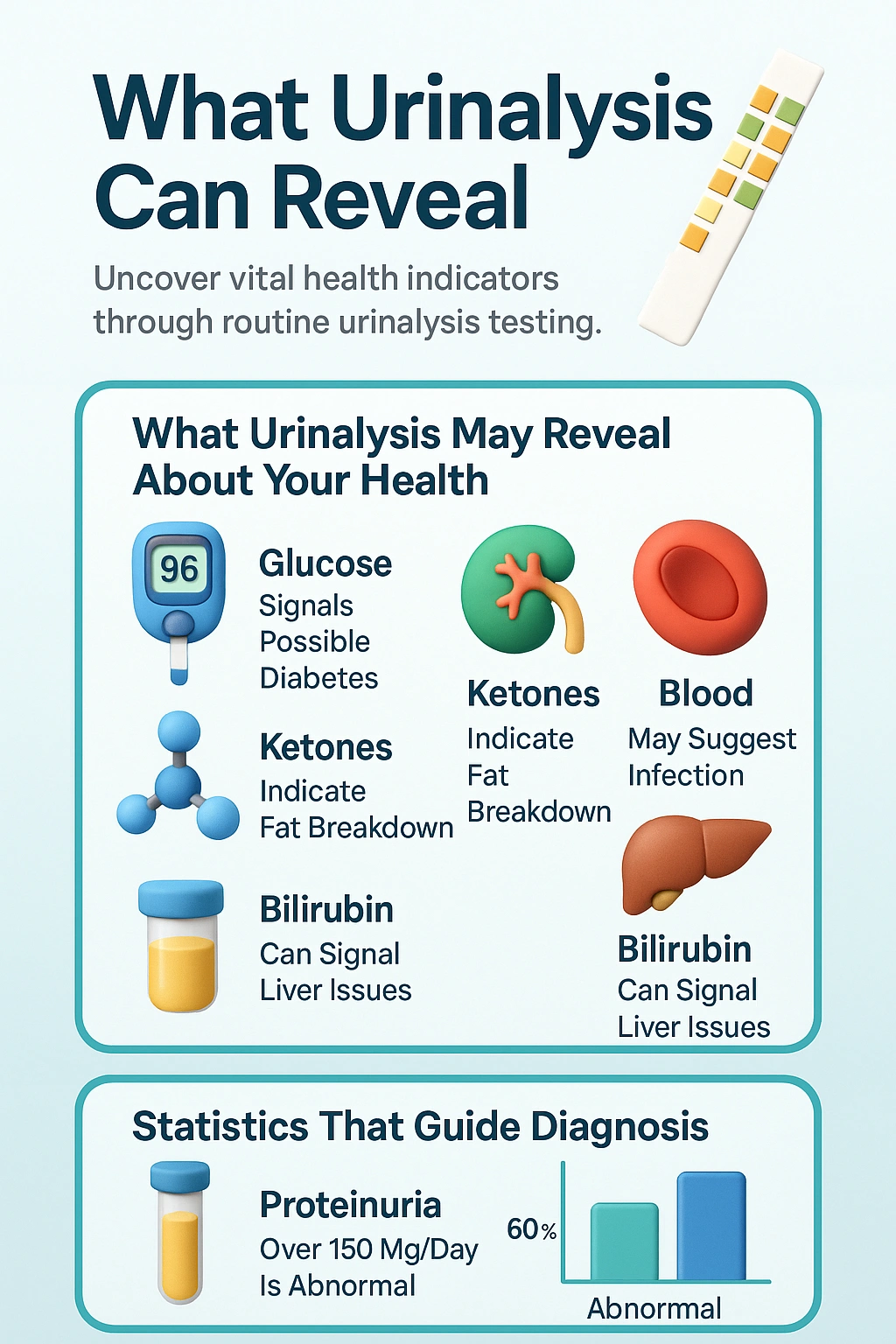
What Urinalysis Can Reveal1
People often confuse a Urinalysis with a urine culture, but they are different. A Urinalysis is a broad screening test that looks at the physical, chemical, and microscopic properties of urine to find abnormalities. If it shows signs of infection (like bacteria or white blood cells), a doctor may then order a urine culture. A urine culture is a specific test to grow the bacteria from the urine sample in a lab to identify the exact type and determine the best antibiotic to treat it.

Types of Urinalysis Tests

A complete Urinalysis involves three main parts. Each part gives the doctor different clues about your health.
Physical examinationΒ – This is the first step where the lab technician simply looks at the urine. They check its color (is it pale yellow, dark, or red?), its clarity (is it clear or cloudy?), and its smell. A change in these physical properties can be the first sign that something is wrong. For instance, cloudy urine might suggest an infection.
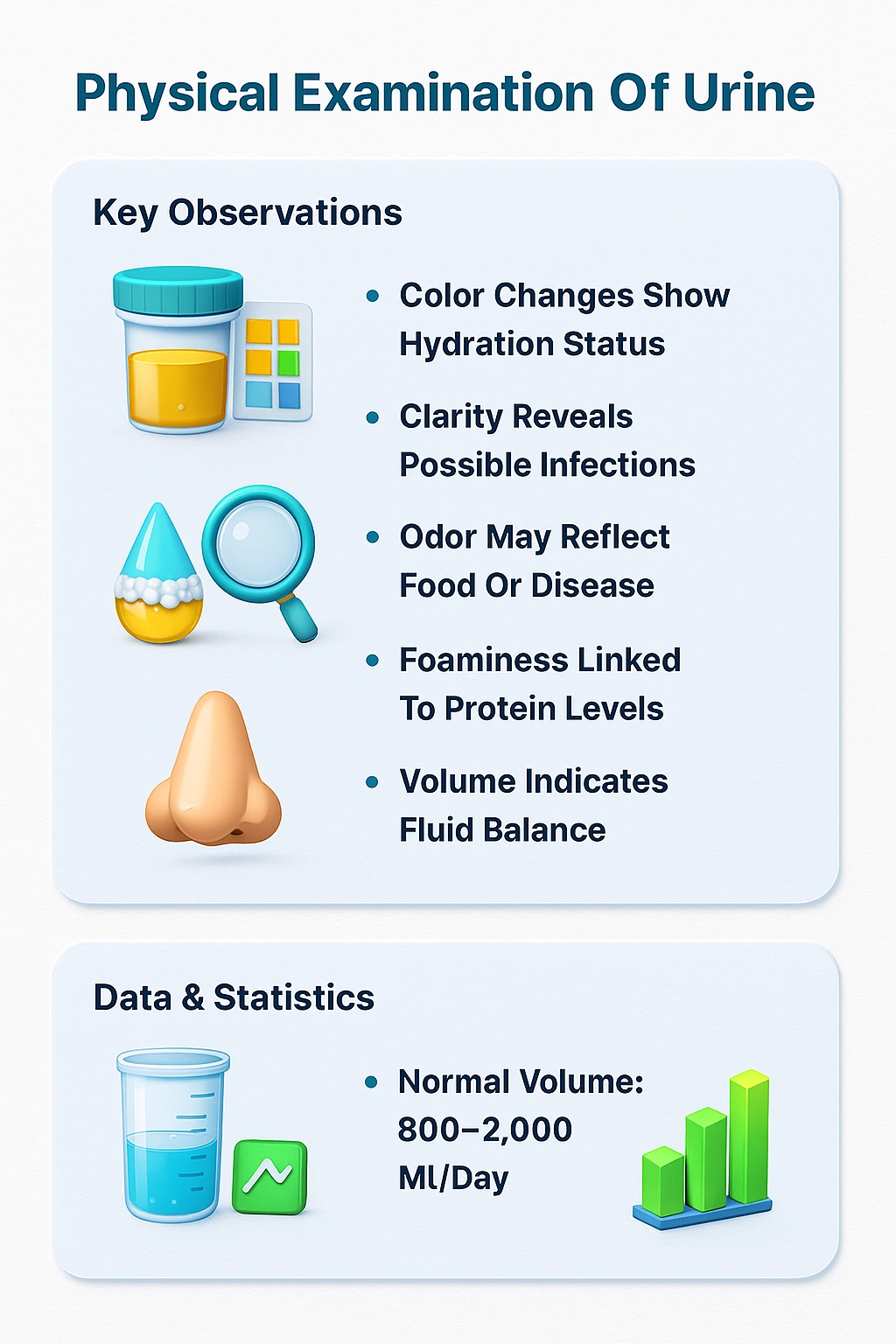
Physical Examination Of Urine

Next, a chemical analysis is performed, often using a urinalysis strip test. This is a plastic strip with chemical pads that change color when dipped into urine. This quick test measures various substances, including:

β¦Ώ pH: How acidic or alkaline your urine is.
β¦Ώ Protein: High levels could indicate kidney problems.
β¦Ώ Glucose (Sugar): A sign of diabetes.
β¦Ώ Ketones: Substances made when the body breaks down fat for energy.
β¦Ώ Bilirubin: A sign of liver issues.
β¦Ώ Specific Gravity: This checks the concentration of your urine. The urinalysis specific gravity tells the doctor how well your kidneys are balancing water in your body.
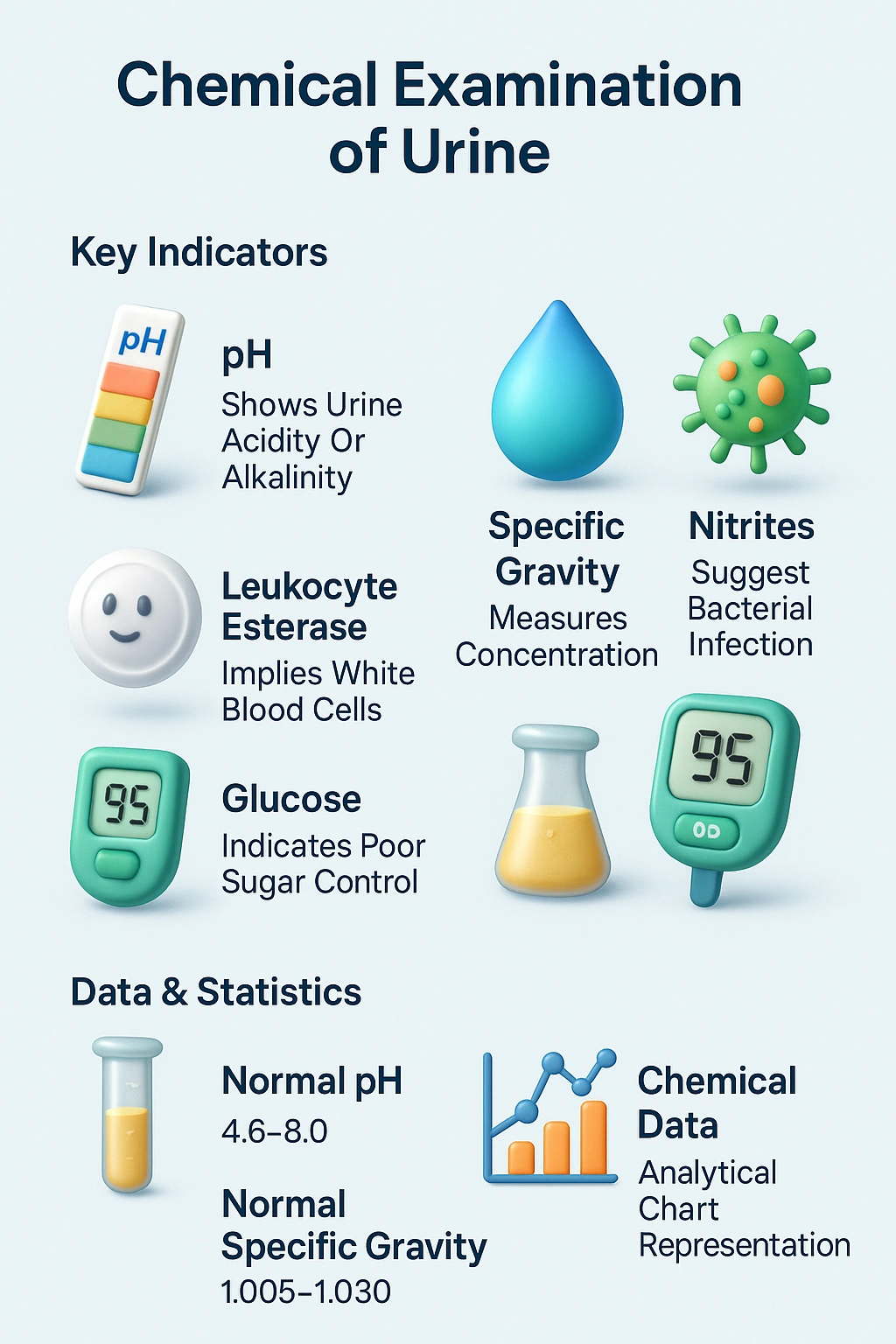
Chemical Examination Of Urine2

In this part, a small drop of urine is examined urinalysis under microscope. The technician looks for things that shouldn’t be there in large numbers, such as:

β¦Ώ Red Blood Cells (RBCs): Can be a sign of kidney disease, bladder infection, or stones.
β¦Ώ White Blood Cells (WBCs) or Pus Cells: Usually indicate an infection. The urinalysis pus cells normal range is typically very low (0-5 per HPF).
β¦Ώ Bacteria: The presence of urinalysis bacteria is a strong indicator of a UTI.
β¦Ώ Epithelial Cells: These are cells from the lining of your urinary tract. The urinalysis epithelial cells normal range is also low; high numbers can suggest inflammation.
β¦Ώ Crystals: Can be a sign of kidney stones.
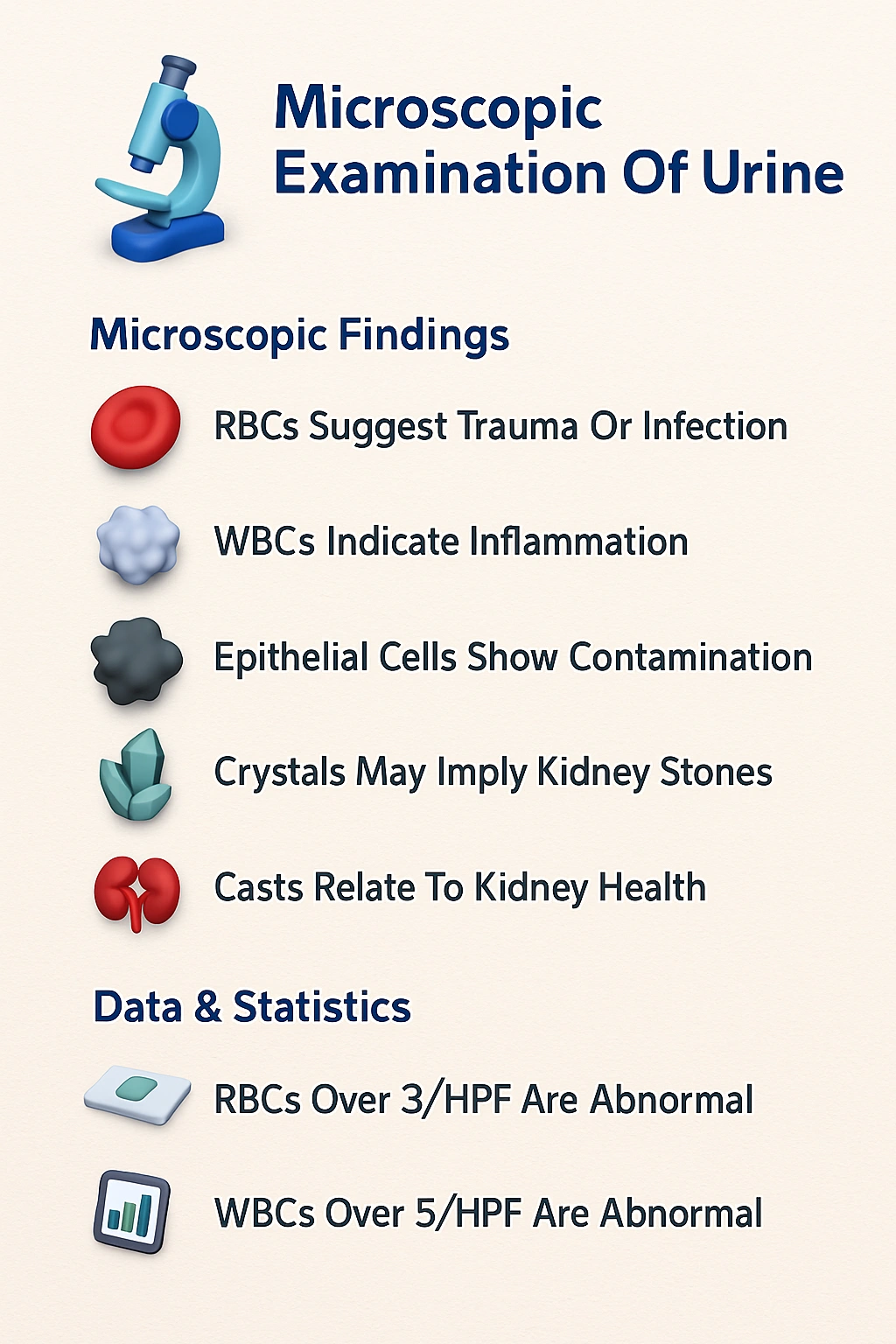
Microscopic Examination Of Urine
The dipstick test, as mentioned above, is a quick and easy way to screen for multiple issues at once. It’s the most common method used for the chemical part of a Urinalysis. The color changes on the strip are compared to a chart to get instant, preliminary results. It’s a very important part of any urinalysis routine test.
Urine Color What It Might Mean What to Do
Pale Straw / Transparent Yellow You are well-hydrated and healthy. Keep up your healthy water intake.
Dark Yellow / Amber You are likely dehydrated. Drink more water throughout the day.
Orange Could be dehydration or a sign of liver/bile duct issues. Can also be caused by certain medications. Increase water intake. If it persists, see a doctor.
Pink or Red Could be caused by certain foods (like beetroot) or medications. It can also indicate urinalysis blood (hematuria) due to infection, kidney stones, or other serious issues. If you haven't eaten red-colored foods, consult a doctor immediately.
Cloudy or Murky Often a sign of a urinary tract infection (UTI) or kidney stones. See a doctor for a proper diagnosis and treatment.

Why Is Urinalysis Done?

Doctors recommend a Urinalysis for several important reasons. It’s a versatile test that serves many purposes in healthcare.
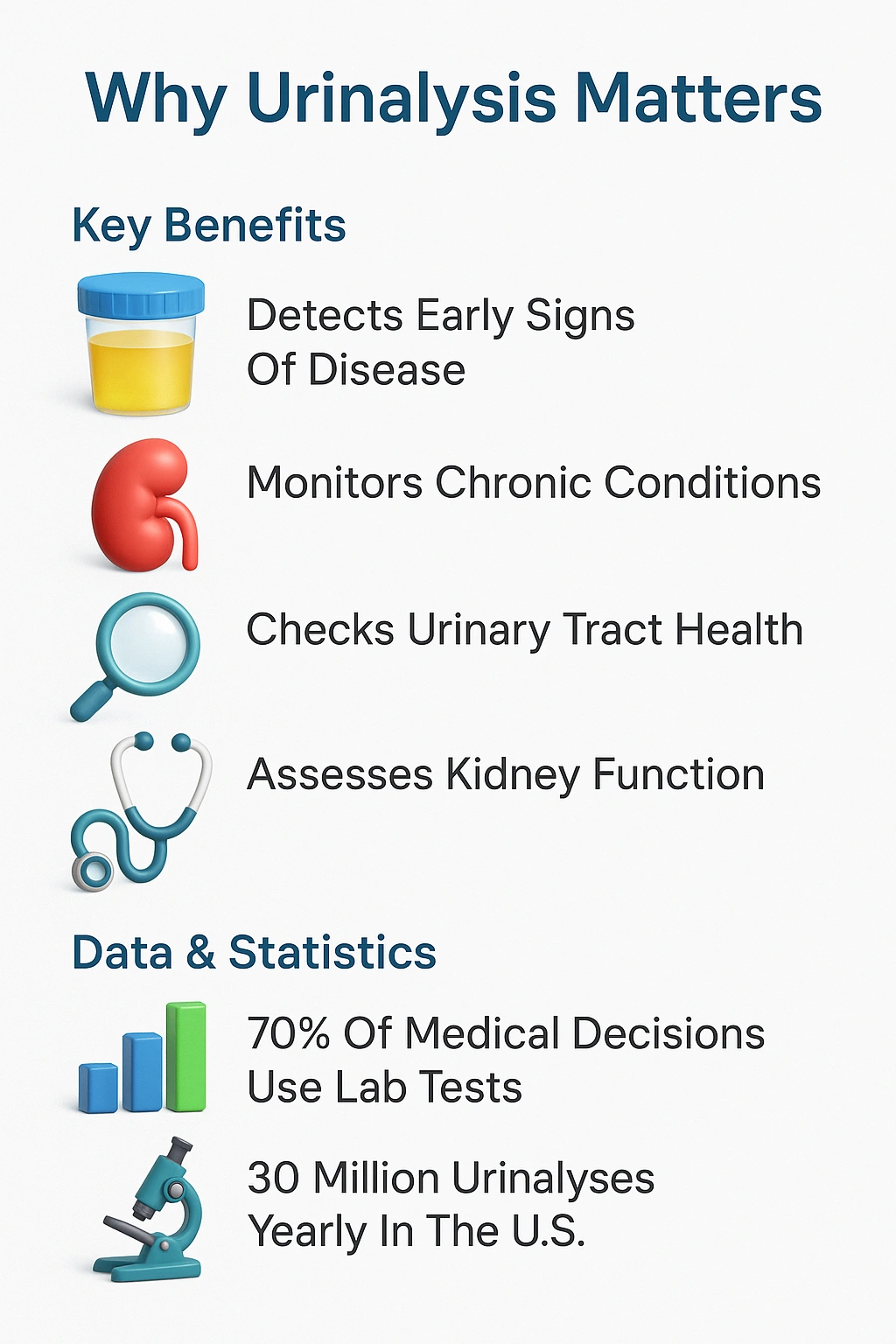
Why Urinalysis Matters
One of the most common reasons for a Urinalysis is to check for a urinary tract infections(UTI). If the test shows white blood cells, bacteria, or nitrites in the urine, it strongly suggests an infection in your bladder or kidneys. This helps the doctor prescribe the right treatment quickly.
Your kidneys act as filters for your blood, and your liver also processes waste. A Urinalysis can show if these organs are working properly. For example, urinalysis high protein can be a sign of damaged kidneys (nephritis), while the presence of bilirubin might point to a liver problem.
For people with diabetes, a regular Urinalysis is crucial. It helps check for glucose and ketones in the urine, which can indicate poor blood sugar control. For those with high blood pressure, this test can detect early signs of kidney damage by looking for small amounts of protein (microalbuminuria).
A Urinalysis is a standard part of prenatal care. The urinalysis during pregnancy is done to screen for high protein levels (a sign of preeclampsia), infections, and gestational diabetes. It is also included in most annual health check-ups as a general screening tool to catch problems before they become serious.

Role of Urinalysis in Cancer Screening (Bladder, Kidney, Prostate)

While a standard Urinalysis is not a definitive cancer test, it can play a vital role in detecting early warning signs of cancers affecting the urinary system.
If a routine Urinalysis shows something suspicious, a doctor might order more specific urine tests. Urine cytology is a test where a specialist examines urine under a microscope to look for actual cancer cells. Tumor marker tests look for specific substances released by cancer cells into the urine. These are not screening tests for everyone but are used when cancer is suspected.
One of the earliest signs of bladder or kidney cancer is blood in the urine (hematuria), which can be detected in a Urinalysis. Sometimes this blood is invisible to the naked eye (microscopic hematuria) and can only be found with this test. Finding abnormal-looking cells can also prompt a more thorough investigation for cancer.
If a Urinalysis repeatedly shows blood or abnormal cells, your doctor will recommend further tests. These may include imaging tests like an ultrasound or CT scan to get a detailed picture of your kidneys and bladder. A cystoscopy, where a thin tube with a camera is inserted into the bladder, might also be done to look for tumors directly.

Symptoms That May Require a Urinalysis

Your body often gives you signals when something is wrong. If you experience any of the following symptoms, your doctor will likely order a Urinalysis to investigate.
This is a classic symptom of a urinary tract infection (UTI). The burning sensation is caused by inflammation in the urethra or bladder. A Urinalysis can quickly confirm if an infection is the cause.
Seeing blood in your urine can be alarming. It can make your urine look pink, red, or brown. This condition, called hematuria, can be caused by infections, kidney stones, or more serious conditions. A Urinalysis is the first step to find the cause.
If your urine suddenly becomes cloudy, has a strong, foul smell, or changes to an unusual color without a clear reason (like food or medicine), it’s a good idea to get it checked. These changes can signal infection, dehydration, or other metabolic issues.
Feeling the need to urinate very often, even if very little comes out, or experiencing pain in your lower abdomen or back along with urination, are common signs of a bladder or kidney issue that a Urinalysis can help diagnose.
Component Normal Range What an Abnormal Result May Indicate
Specific Gravity 1.005 to 1.030 urinalysis high specific gravity may mean dehydration; urinalysis specific gravity low could indicate over-hydration or kidney issues.
pH 4.5 to 8.0 High pH (alkaline) might suggest a UTI or kidney stones. Low pH (acidic) can be linked to conditions like ketoacidosis.
Protein None or Trace The presence of protein (proteinuria) is a key marker for kidney disease.
Glucose (Sugar) None Glucose in urine is a classic sign of uncontrolled diabetes.
Ketones None Ketones may be present in uncontrolled diabetes, during fasting, or on a very low-carb diet.
White Blood Cells (Pus Cells) 0–5 per HPF Higher numbers indicate inflammation or a urinary tract infection (UTI).
Red Blood Cells 0–4 per HPF The presence of blood (hematuria) can be due to infection, stones, or kidney disease.

Urinalysis Procedure: What to Expect

The urinalysis procedure is very simple and straightforward. There’s nothing to be scared of. Here’s a step-by-step guide on what to do.

To get an accurate result, it’s important to provide a “clean-catch” sample. This prevents bacteria from your skin from contaminating the sample.

β¦Ώ Wash your hands thoroughly.
β¦Ώ Clean your genital area with a sterile wipe provided by the lab. Men should wipe the tip of the penis; women should wipe from front to back.
β¦Ώ Start urinating into the toilet for a few seconds.
β¦Ώ Then, place the collection cup under the urine stream and collect a sample (about 30-60 ml).
β¦Ώ Finish urinating in the toilet.
β¦Ώ Secure the lid on the cup and give it to the lab technician.

It’s also important to note that a urinalysis during period can sometimes show red blood cells in the sample, which can confuse the results. It’s always best to inform your doctor if you are menstruating.
The actual collection takes only a minute. The lab analysis is also quick. For a basic Urinalysis, you can often get the results within a few hours or by the next day. A urine culture, if needed, takes longer (2-3 days) because the bacteria need time to grow.
For a standard Urinalysis, there are usually no special preparations needed. You can eat and drink normally. There is generally no need for urinalysis fasting. However, it’s very important to tell your doctor about any medications, vitamins, or supplements you are taking, as some can affect the results.

Normal Range of Urine Test Results

After the test, you will receive a urinalysis report. Understanding the urinalysis normal range helps you make sense of your results, though your doctor will provide the final urinalysis interpretation.
β¦Ώ Color: Normal urine is typically pale yellow to amber.
β¦Ώ pH: The normal range is slightly acidic, around 4.5 to 8.0.
β¦Ώ Protein: Normally, there should be no protein in your urine. A trace amount might be okay, but anything more needs to be checked.
β¦Ώ Gravity: The normal urinalysis gravity range is 1.005 to 1.030.
β¦Ώ Glucose: There should be no glucose in your urine. Its presence is a strong indicator of high blood sugar.
β¦Ώ Ketones: Like glucose, ketones should not be present in urine. They can appear during severe diabetes, fasting, or starvation.
β¦Ώ Bilirubin: This should be absent. Bilirubin in the urine can be a sign that your liver is not working correctly.
β¦Ώ Hemoglobin: It’s also important to check for urinalysis hemoglobin, which is a protein in red blood cells. Its presence indicates that red blood cells have broken down, which can happen with certain medical conditions.
An abnormal result doesn’t always mean you have a serious illness. Sometimes, it can be due to diet, medication, or dehydration. Your doctor will look at the complete urinalysis report and your symptoms to decide if there is a problem. An example of urinalysis result showing high WBCs and bacteria, for instance, strongly points to a UTI.

Causes of Abnormal Urinalysis Results

If your Urinalysis results are abnormal, your doctor will investigate the potential cause. Here are some of the most common reasons.
This is a leading cause of abnormal results. A UTI will typically show high levels of white blood cells (pus cells), bacteria, and sometimes nitrites. The urine might also be cloudy and have a higher pH.
Kidney problems can cause several abnormal findings. The urinalysis of kidney stones might show tiny crystals and blood. Kidney inflammation (nephritis) often leads to high levels of protein in the urine.
As mentioned, glucose and ketones in the urine are hallmark signs of diabetes. For liver disease, the presence of bilirubin and another substance called urobilinogen can be key indicators in a Urinalysis.
Dehydration or medications: Simple things can also cause abnormal results. Not drinking enough water can lead to dark, concentrated urine with a high specific gravity. Certain medications, supplements (like Vitamin C), and even some foods can change the color and chemical composition of your urine.

Follow-Up After Abnormal Results

Receiving an abnormal Urinalysis result can be worrying, but it is an important first step toward a diagnosis. Your doctor will guide you on the next steps.
If the results are only slightly abnormal or could be due to a temporary factor, your doctor might ask you to repeat the urinalysis test. If an infection is suspected, a urine culture will be ordered to identify the specific bacteria causing the problem so the right antibiotic can be prescribed.
If your Urinalysis shows blood or signs of a blockage (like from a kidney stone or tumor), your doctor will likely order imaging tests. An ultrasound or a CT scan can provide detailed pictures of your kidneys, ureters, and bladder to find the source of the problem.
Depending on the findings, you might be referred to a specialist. A urologist specializes in the urinary tract, while a nephrologist specializes in kidneys. These doctors can provide expert care for conditions identified by the Urinalysis.
Abnormal Finding in Urinalysis Possible Cause Likely Next Step(s)
High White Blood Cells & Bacteria Urinary Tract Infection (UTI) Urine culture to identify the bacteria and determine the best antibiotic.
High Protein (Proteinuria) Kidney disease, high blood pressure, diabetes Repeat urinalysis, blood tests to check kidney function (creatinine), 24-hour urine collection for protein, blood pressure check.
Blood (Hematuria) Kidney stones, infection, bladder/kidney disease Microscopic exam to confirm, imaging (ultrasound or CT scan), referral to a urologist; possibly a cystoscopy.
High Glucose (Glucosuria) Diabetes mellitus Blood tests (fasting blood sugar, HbA1c) to confirm diabetes diagnosis and manage blood sugar levels.
Crystals Risk of kidney stones Increase water intake, dietary changes, imaging tests to check for existing stones.

Frequently asked questions

A urinalysis is a simple test that examines your urine. It is often called a urine routine test. It helps doctors check your overall health and look for signs of common diseases by analysing the physical, chemical, and microscopic contents of your urine.
This test can show early signs of conditions like kidney disease, diabetes, and liver problems. It also helps in detecting urinary tract infections (UTIs). The test reveals if there are abnormal substances like excess sugar, protein, or blood cells in your urine.
A urinalysis is done as part of a regular health check-up to catch problems before they become serious. Doctors also use it to find the reason for symptoms like painful urination or to monitor how well treatment for an existing condition is working.
You will be asked to provide a fresh urine sample in a clean container. In the laboratory, this sample is checked for its colour and clarity. Then, a special strip and a microscope are used to look for different cells, chemicals, and germs.
Most of the time, no special preparation is needed for a urinalysis. However, it’s best to avoid taking certain medicines or vitamin supplements that can affect the test results. Your doctor will tell you if any precautions are necessary before giving the urine sample.
A urinalysis is excellent for detecting signs of a UTI or kidney disease by finding bacteria, pus cells, or protein. However, a standard urinalysis cannot detect pregnancy; that requires a special urine test that looks for the pregnancy hormone (hCG).
A urine test can find various things like pus cells, red blood cells, crystals which can form stones, and bacteria. It also measures levels of protein, sugar (glucose), and other chemicals. These findings give your doctor a good idea about your health.
You do not need to provide a large amount of urine. Usually, a small sample of about 30 to 60 ml (about half a small teacup) is enough for the lab to complete all the necessary checks accurately. The collection container will often have a line to show how much is needed.
In India, a urinalysis test is very inexpensive and widely available. The cost is usually between β‚Ή100 and β‚Ή300. The final price may change slightly based on the city you are in and the diagnostic lab you choose.
Your test report will list your results next to the normal reference values. If your result falls outside this normal range, it is noted. However, you should always consult your doctor to correctly understand what these results mean for your health.
Dr Swati Shah

Dr. Swati Shah

MS, DrNB (Surgical Oncology)

Dr. Swati Shah is a renowned Robotic Uro and Gynecological Cancer Surgeon from Ahmedabad. He has 15+ years of extensive experience in pelvic oncosurgery and 10+ years of experience in robotic surgery. She treats cancers of kidney, bladder, prostate, uterus, ovaries and other pelvic organs.

5/5 - (25 reviews)
dr swati shah - uro & gynec cancer surgeon
Privacy Overview

This website uses cookies so that we can provide you with the best user experience possible. Cookie information is stored in your browser and performs functions such as recognising you when you return to our website and helping our team to understand which sections of the website you find most interesting and useful.