WhatsApp

Laparoscopic Nephrectomy

A Minimally Invasive Kidney Surgery

Home > Blog > Cancer > Cancer Surgery > Surgery English > Laparoscopic Nephrectomy

When we or our loved ones face a major health issue involving the kidneys, it can be a very scary time. The word “surgery” often brings images of large cuts, long hospital stays, and painful recovery to our minds.

However, medical science has advanced so much in the last few years that these fears are often no longer necessary. Today, doctors use a method that is much easier on the patient. This advanced method is known as Laparoscopic Nephrectomy.

This guide is written to explain everything you need to know about this procedure in very simple English. Whether you are a patient, a family member, or just a student trying to learn, this blog will help you understand the A to Z of kidney removal surgery. We will cover why it is done, how it is done, the costs, and how to recover quickly.
Summary

Laparoscopic nephrectomy is a keyhole surgery to remove a diseased or damaged kidney using tiny cuts and a camera. It is mainly done for kidney cancer, non-working kidneys, donor kidney removal, or chronic infection and obstruction. Patients usually recover faster and return to normal life with one healthy kidney.
Doctors suggest this surgery for renal cell carcinoma, badly scarred or shrunken kidneys, kidney donation, or long-standing infection or blockage. It helps remove the problem kidney while protecting overall health.
Small incisions mean less pain, less blood loss, smaller scars, and a shorter hospital stayβ€”often 2–3 days. People usually walk the same day and get back to work in 2–3 weeks.
Patients undergo tests, scans, fasting, and consent procedures. During surgery, anesthesia is given, ports are inserted, and the kidney is removed safely. After surgery, pain medicines, diet advice, activity limits, and follow-ups ensure good long-term kidney function and quality of life.
Laparoscopic Nephrectomy

What is Laparoscopic Nephrectomy?

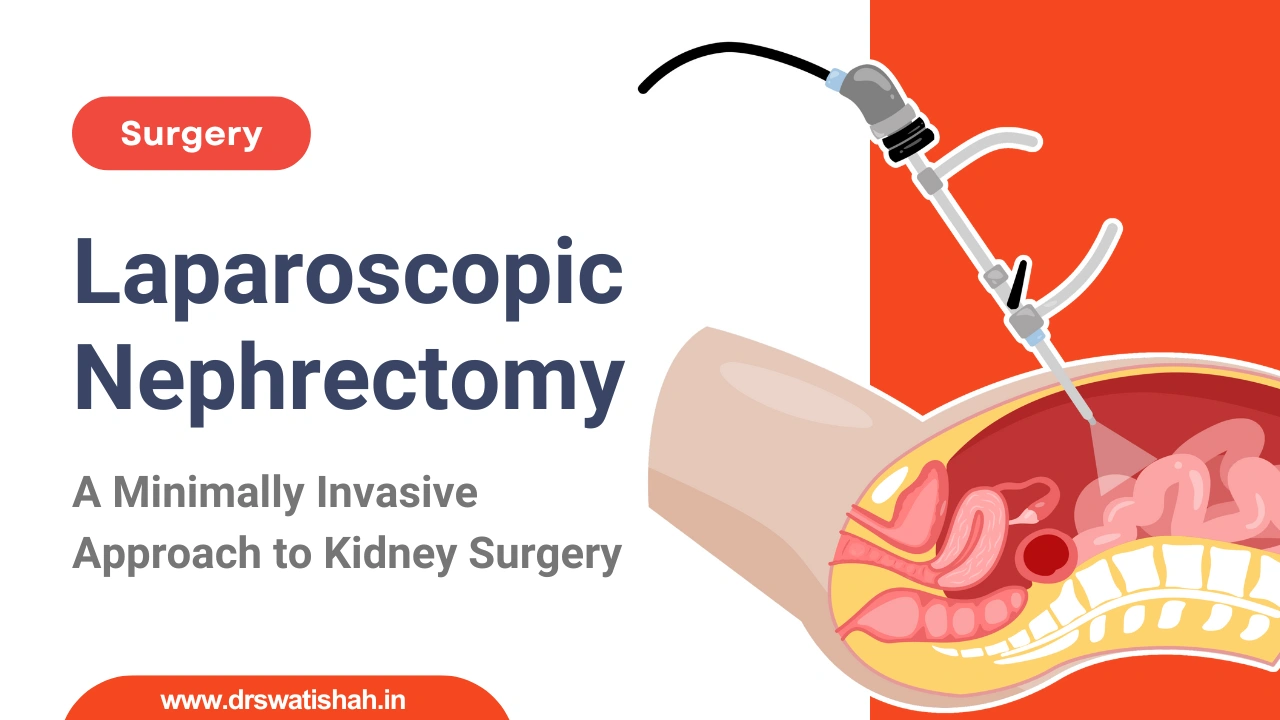
Laparoscopic nephrectomy is a type of minimally invasive surgery used to remove all or part of a kidney. It is performed using small incisions through which a camera and surgical instruments are inserted, allowing the surgeon to operate with precision.

This procedure is commonly recommended for kidney cancer, kidney donation, or severely damaged kidneys.
The first laparoscopic nephrectomy was performed in the early 1990s and has since become the gold standard for many kidney surgeries.

With advancements in surgical technology and instruments, the success and safety of this technique have significantly improved.

Today, it is widely used across the world, including major hospitals in India, offering a faster recovery and fewer complications compared to open surgery.

Types of Laparoscopic Nephrectomy

Depending on the patient’s condition and the extent of kidney damage, surgeons may employ different variations of this procedure. This section breaks down the primary classifications, such as radical, simple, and partial nephrectomy, as well as donor nephrectomy.

Understanding these distinctions is crucial as it dictates how much of the kidney is removed and the specific surgical approach required.

This type of surgery is usually performed for benign (non-cancerous) conditions. For example, if a kidney has been damaged by a long-term infection, kidney stones, or if it has simply stopped working and is causing high blood pressure, doctors will perform a simple Laparoscopic Nephrectomy.

In this procedure, the surgeon removes only the kidney. They usually leave the adrenal gland (a small gland on top of the kidney) and the surrounding fat inside the body because they are not harmful.

This is the most common operation for kidney cancer. When a patient has a tumor , the doctor cannot take any risks. They must remove everything that might contain cancer cells.

This brings us to the radical nephrectomy definition: it is the surgical removal of the entire kidney, the adrenal gland, the surrounding fatty tissue, and often the ureter (the tube connecting the kidney to the bladder).

The radical nephrectomy anatomy is quite complex. The surgeon has to be very careful because the kidney is connected to major blood vessels. During radical nephrectomy surgery, the goal is to take out the kidney in one piece without spilling any bad cells inside the body.

Knowing exactly which radical nephrectomy structures removed helps the patient understand the extent of the surgery. By removing the protective fat and glands, the doctor ensures the cancer does not come back.
Sometimes, the whole kidney does not need to go. If the tumor is small (usually less than 4 cm) and is in a safe position, the doctor might suggest a Partial Laparoscopic Nephrectomy. This is also called “Nephron-Sparing Surgery” because it saves the healthy part of the kidney.

This is a very technical procedure. In the medical billing world, professionals use a specific laparoscopic partial nephrectomy cpt code to categorize this surgery for insurance purposes. If you are dealing with hospital paperwork, you might need to assist the staff and laparoscopic partial nephrectomy select the proper code to ensure your claim is processed without errors.

Interestingly, in medical research, scientists sometimes refer to a 5/6 nephrectomy. This is a specific term often used in studies to describe removing a large portion of kidney mass to understand how the remaining kidney tissue adapts to the workload. While this is more of a research term, it highlights how much doctors study kidney function to keep patients safe.
This is perhaps the most noble type of surgery. It is done on a perfectly healthy person who wants to donate a kidney to a loved one whose kidneys have failed.

Because Laparoscopic Nephrectomy causes less pain and leaves a smaller scar, more people are willing to become donors. The surgeon takes extra care to ensure the blood vessels are cut long enough so they can be easily stitched into the receiver’s body.

Why Laparoscopic Nephrectomy is Performed

Doctors recommend this minimally invasive approach to address a variety of serious renal conditions that cannot be treated with medication alone.

Common indications range from removing a kidney damaged by chronic infection or obstruction to treating localized kidney cancer. It is also the standard procedure for healthy individuals donating a kidney for transplantation.
The primary reason for this surgery is Renal Cell Carcinoma (Kidney Cancer). Doctors look for specific radical nephrectomy indications.

These indications include large tumors (larger than 7 cm), tumors that are located in the center of the kidney, or tumors that have started to spread into the kidney veins. In these cases, removing the whole organ is the safest bet to save the patient’s life.
Sometimes, a kidney is “dead” inside the body. This can happen due to years of neglect, untreated stones, or birth defects. A non-functioning kidney is dangerous because it acts like a bag of infection.

It can also cause dangerously high blood pressure that medicines cannot control. Removing it cures the blood pressure and infection risk.
As mentioned, living donor transplant is the best treatment for kidney failure. The laparoscopic nephrectomy technique used for donors is highly specialized to ensure the donor recovers in just a few days and can go back to saving a life.
Some patients suffer from “Pyelonephritis” (severe kidney infection) that keeps coming back. If the kidney is blocked and full of pus, and antibiotics are failing, surgery is the only permanent cure.

Benefits of Laparoscopic Nephrectomy

Compared to traditional open surgery, the laparoscopic surgery approach offers significant advantages that improve the patient’s overall surgical experience.

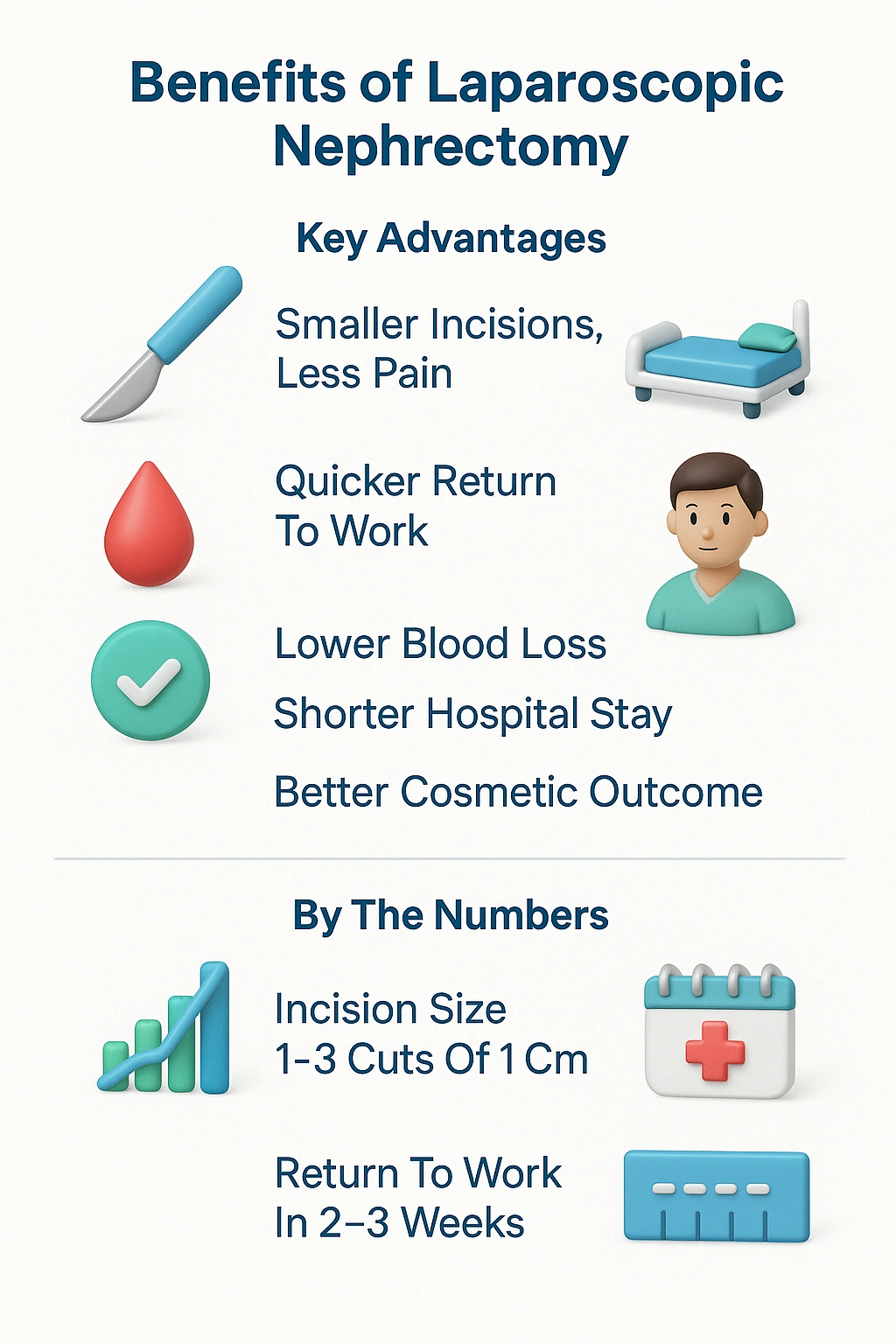
By utilizing smaller keyhole incisions, this modern technique typically results in reduced postoperative pain, minimal scarring, and a much shorter hospital stay. These benefits allow patients to return to their daily routines and work much faster than with conventional methods.
Benefits of Laparoscopic Nephrectomy
In the old days, a kidney surgery meant a cut that was 10 to 12 inches long, cutting through heavy muscle. It was very painful.

Today, with Laparoscopic Nephrectomy, the cuts are tiny (about 1 cm). A radical nephrectomy incision in open surgery would leave a huge mark, but in laparoscopy, the scars are barely visible after a year.
This is the biggest advantage. In open surgery, patients would stay in bed for a week. With laparoscopy, patients are encouraged to stand up and walk on the same evening of the surgery! This helps in better blood circulation and feeling fresh.
When a wound is large, it is open to the air and bacteria for a longer time. Small holes heal very fast. They are sealed with glue or one or two stitches, leaving very little room for infection to enter.
Nobody likes staying in a hospital. With Laparoscopic Nephrectomy, the average stay is just 2 to 3 days. In open surgery, it is often 7 to 10 days. This also saves money on room rent and nursing charges.
This table shows why the modern method is preferred by doctors and patients.
Feature Open Nephrectomy
(Old Method)
Laparoscopic Nephrectomy
(New Method)
Incision Size Large (15–20 cm) Tiny (3–4 cuts of 1 cm each)
Pain Level High (Requires strong painkillers) Low to Moderate (Manageable)
Blood Loss Moderate to High Minimal (Magnified view helps stop bleeding)
Hospital Stay 5 to 10 Days 2 to 4 Days
Return to Work 6 to 8 Weeks 2 to 3 Weeks

Risks and Complications

While this procedure is generally safe, like any major surgery, it carries certain potential risks that patients must be aware of before proceeding.

Complications can range from general surgical risks like infection and bleeding to specific issues such as injury to surrounding organs or reactions to anesthesia. Being informed about these possibilities is a vital part of the preoperative consent process.
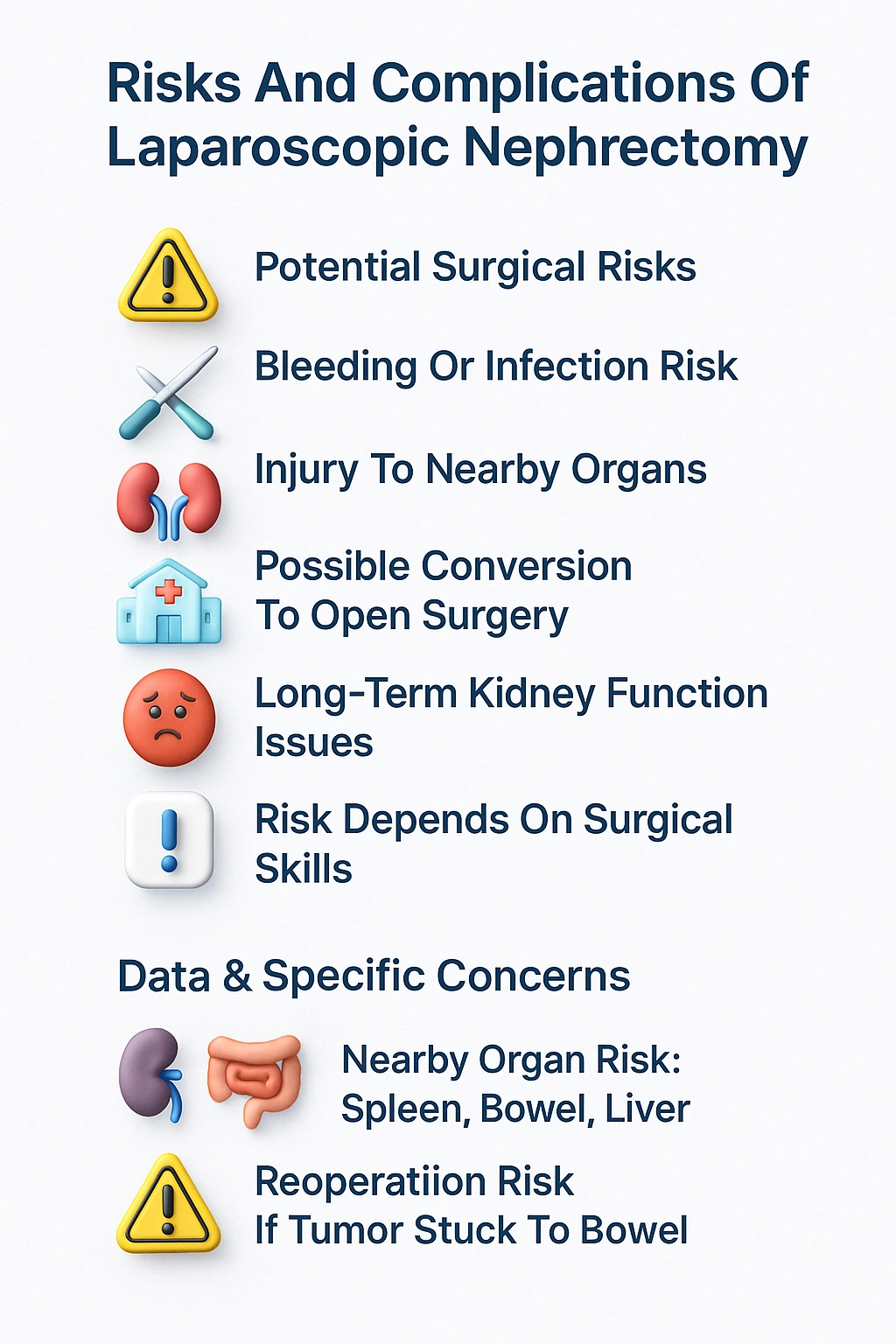
Risks And Complications Of Laparoscopic Nephrectomy
The kidney filters a lot of blood, so it is connected to big arteries. While rare, bleeding can happen. Infections at the port sites (where the camera goes in) are also possible but uncommon.
The abdomen is a crowded place. The kidney sits next to the spleen (left side), liver (right side), and bowel (intestines). One of the radical nephrectomy complications is accidental injury to these nearby organs. However, experienced surgeons know exactly how to push these organs aside safely.
Sometimes, the surgeon plans a keyhole surgery, but complications arise. If there is unexpected bleeding or if the tumor is stuck to the bowel, the doctor might have to make a larger cut to complete the operation safely. This is not a failure; it is a safety measure.
After removing one kidney, you must take care of the remaining one. If the remaining kidney was already weak, there is a risk of needing dialysis later in life. This is why pre-surgery checking is so important.

Preoperative Preparation

Ensuring the body is ready for surgery is essential for a smooth operation and to minimize the risk of complications. This phase involves a series of medical evaluations, blood tests, and specific instructions regarding fasting and medication adjustments in the days leading up to the procedure.

Adhering strictly to these guidelines helps the surgical team perform the operation safely and effectively.
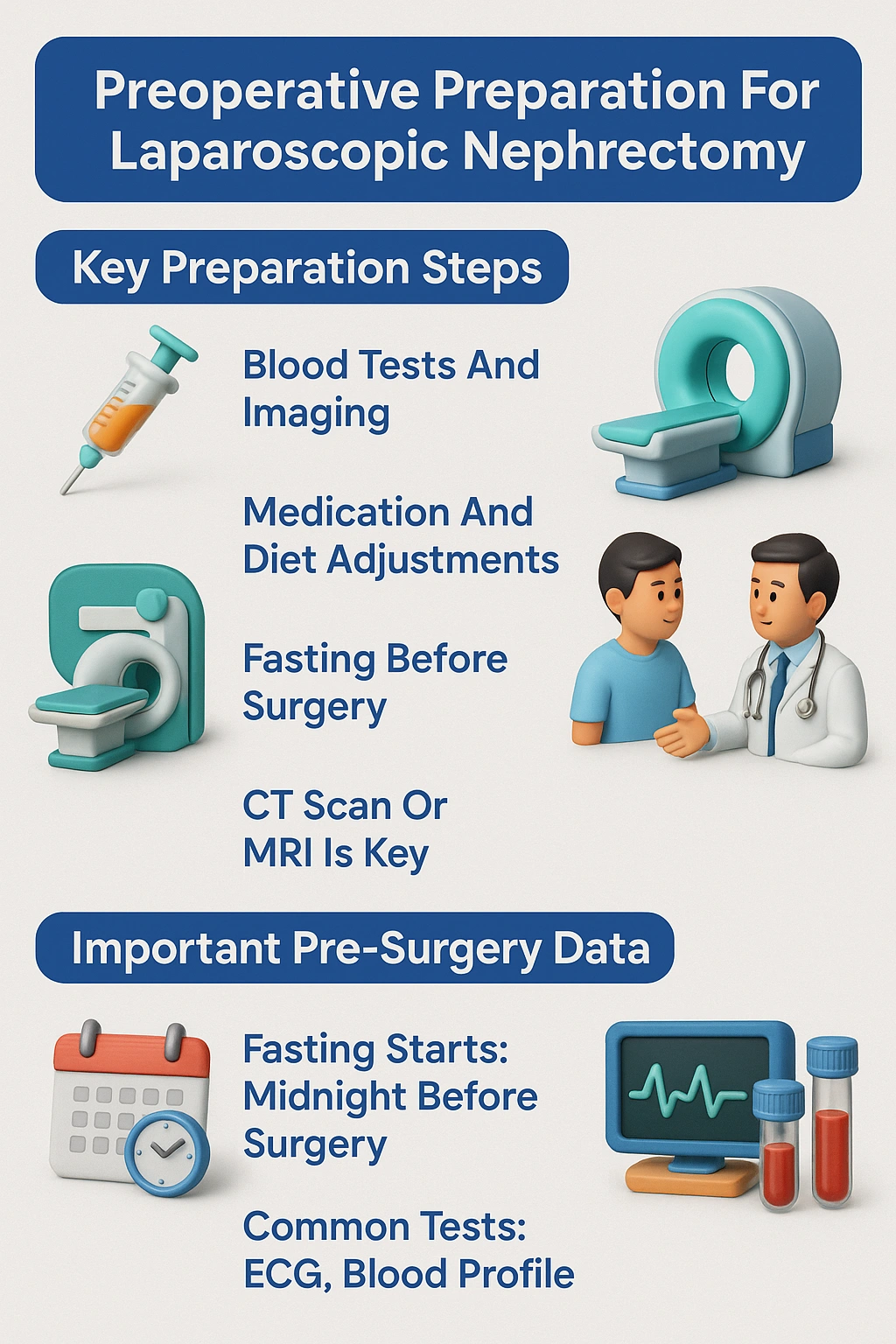
Preoperative Preparation For Laparoscopic Nephrectomy

You will undergo a battery of tests. The most important is the CT Scan or MRI. This gives the doctor a road map. They study the laparoscopic nephrectomy anatomy of your specific body to see where your veins and arteries are located. Blood tests will check your Creatinine (kidney function), Hemoglobin, and viral markers.
If you take Aspirin or Clopidogrel (blood thinners), you must stop them 5-7 days prior. These medicines prevent clotting, which is dangerous during surgery. You should also stop smoking, as smoking delays healing.
The rule is “NPO” (Nil Per Os), which means nothing by mouth. You usually stop eating solid food at midnight before the surgery. You might be allowed clear water up to 4 hours before. This prevents vomiting during anesthesia.
The surgeon will sit with you and explain the procedure. They will explain the radical nephrectomy steps briefly so you know what to expect. You will sign a consent form giving permission for the surgery and anesthesia.

Step-by-Step Surgical Procedure

For patients curious about what happens inside the operating room, understanding the sequence of events can help reduce anxiety.

This section outlines the process from the administration of general anesthesia and the placement of ports to the precise detachment and removal of the kidney.

It provides a walkthrough of how surgeons navigate the abdomen using advanced camera technology.
Step-By-Step Surgical Procedure For Laparoscopic Nephrectomy
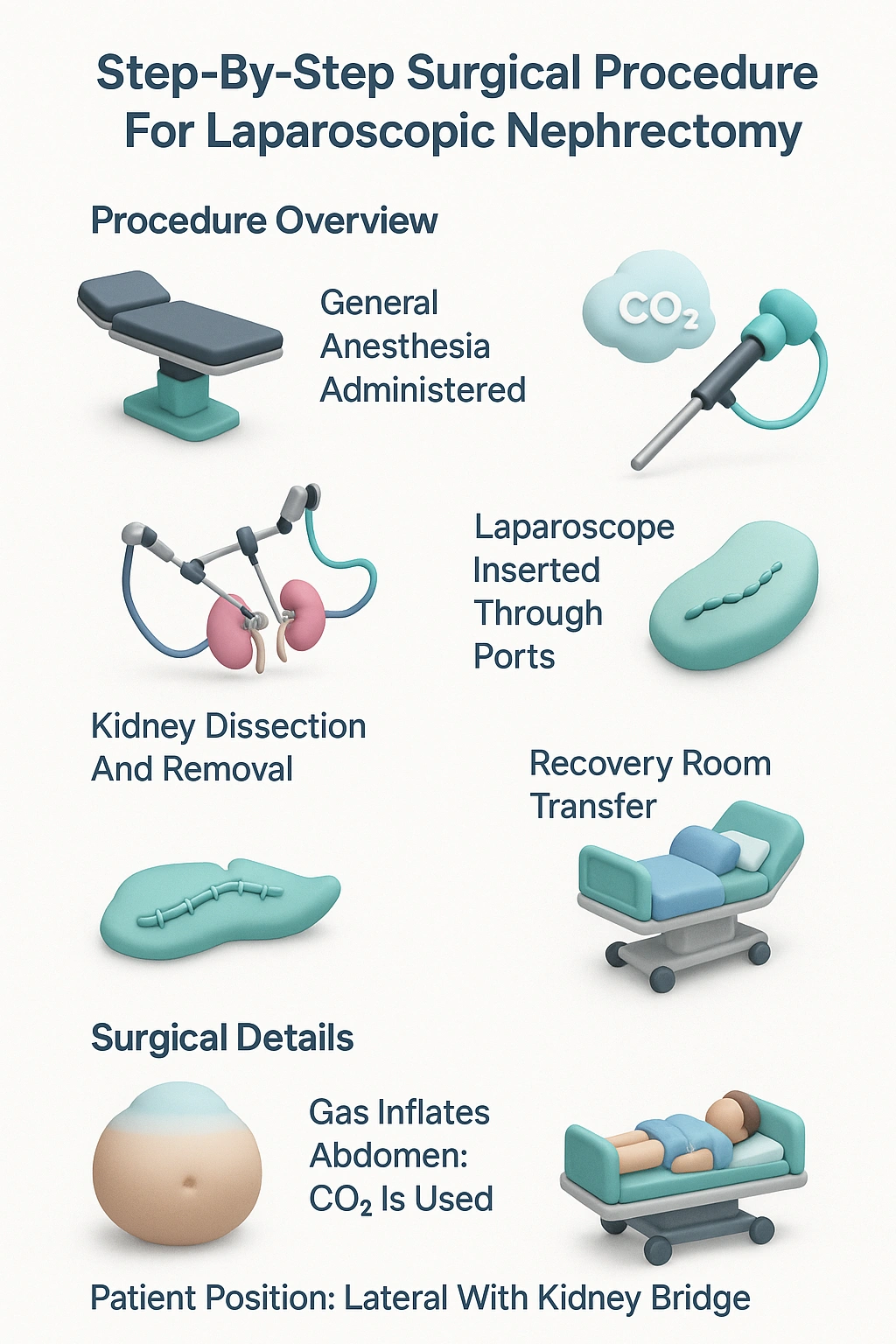
Once you are on the table, the anesthetist gives you medicine through a vein, and you fall into a deep sleep. You will not feel anything. Then, the team places you in the laparoscopic nephrectomy position.

This usually involves lying on your side (Lateral Decubitus position) with a “kidney bridge” (a bump on the bed) raised to stretch the waist area. This opens up the space for the surgeon.

The surgeon makes the first tiny cut and fills your tummy with carbon dioxide gas. This gas balloons the tummy up, creating a “tent” or workspace. Then, the camera (laparoscope) is inserted.

In some difficult cases, doctors use a technique called laparoscopic nephrectomy hand assisted. Here, one incision is made slightly larger (about 3 inches) so the surgeon can insert their gloved hand into the abdomen.

The hand helps to feel the tumor and move the kidney while the other hand uses the laparoscopic tools. This gives the best of both worldsβ€”tactile feel and visual magnification.

Using long, thin instruments, the surgeon separates the kidney from the bowel and liver. They carefully clip and cut the artery and vein.

β¦Ώ Special Case: If the tumor is very aggressive, it might grow a “thrombus” (tumor clot) into the main vein of the body (Inferior Vena Cava). This requires a very complex surgery called radical nephrectomy with ivc thrombectomy. This is a high-risk procedure where the surgeon must open the vein to pluck out the tumor clot.

β¦Ώ Alternative Approach: Sometimes, instead of going through the tummy (transperitoneal), the surgeon goes through the back muscles. This is called laparoscopic retroperitoneal nephrectomy. This is great for patients who have had many tummy surgeries before, as it avoids the intestines completely.

Once the kidney is fully disconnected, it is placed inside a strong plastic bag inside the body. The bag is then pulled out through one of the port sites. The skin is closed with staples or glue. You are then moved to the recovery room to wake up.

Recovery After Surgery

The journey to full health continues after leaving the operating room, requiring a period of rest and careful monitoring during the healing process.

Patients can expect a brief hospital stay followed by home recuperation that involves pain management and a gradual return to physical activity. Knowing what to expect during the days and weeks post-op helps in planning for necessary care and support.
You will have some pain, mostly at the incision sites. The radical nephrectomy recovery is usually smooth, but you will be given painkillers through your IV drip. Some patients feel shoulder painβ€”this is actually due to the gas used during surgery irritating the diaphragm, not an injury to the shoulder. It goes away in 24 hours.
For the first few hours, you perform a “water trial.” If you can drink water without vomiting, you get tea, soup, or juice. By the next morning, you are usually eating a soft breakfast.

You will be asked to walk on the same day. This prevents blood clots in the legs. However, no heavy lifting (like buckets of water or heavy bags) for 4 weeks.

It is interesting to look at global standards for instance, the laparoscopic nephrectomy nhs guidelines in the UK are very similar to Indian protocols, emphasizing “Early Mobilization” (walking immediately).

Most patients go back to desk jobs in 2 weeks. The radical nephrectomy scar will start to fade from red to pink to skin color over 6 to 12 months.
Proper nutrition helps the wound heal and protects the remaining kidney.
Food Group Good to Eat
(Recommended)
Avoid or Limit
(Restricted)
Proteins Eggs, Fish, Chicken (boiled/grilled), Dal Red meat (Mutton, Beef), Processed sausages
Vegetables Bottle gourd (Lauki), Sponge gourd (Turai), Carrots Spinach, Tomatoes (if prone to stones)
Fluids Water, Coconut water, Fresh lime juice Alcohol, Sugary sodas, Caffeinated energy drinks
Spices/Salt Turmeric, Cumin, Coriander (moderate) High salt, Pickles, Papad, Packaged chips
Snacks Fruits, Roasted chana, Puffed rice Samosas, Fried snacks, Bakery items

Success Rate and Long-Term Outcomes

Laparoscopic kidney removal is widely recognized as a highly successful procedure with excellent clinical track records for both cancer treatment and donor safety.

Most patients adapt remarkably well to living with a single functioning kidney, maintaining normal renal function and a high quality of life. Here, we explore the statistical success rates and the long-term prognosis for patients.
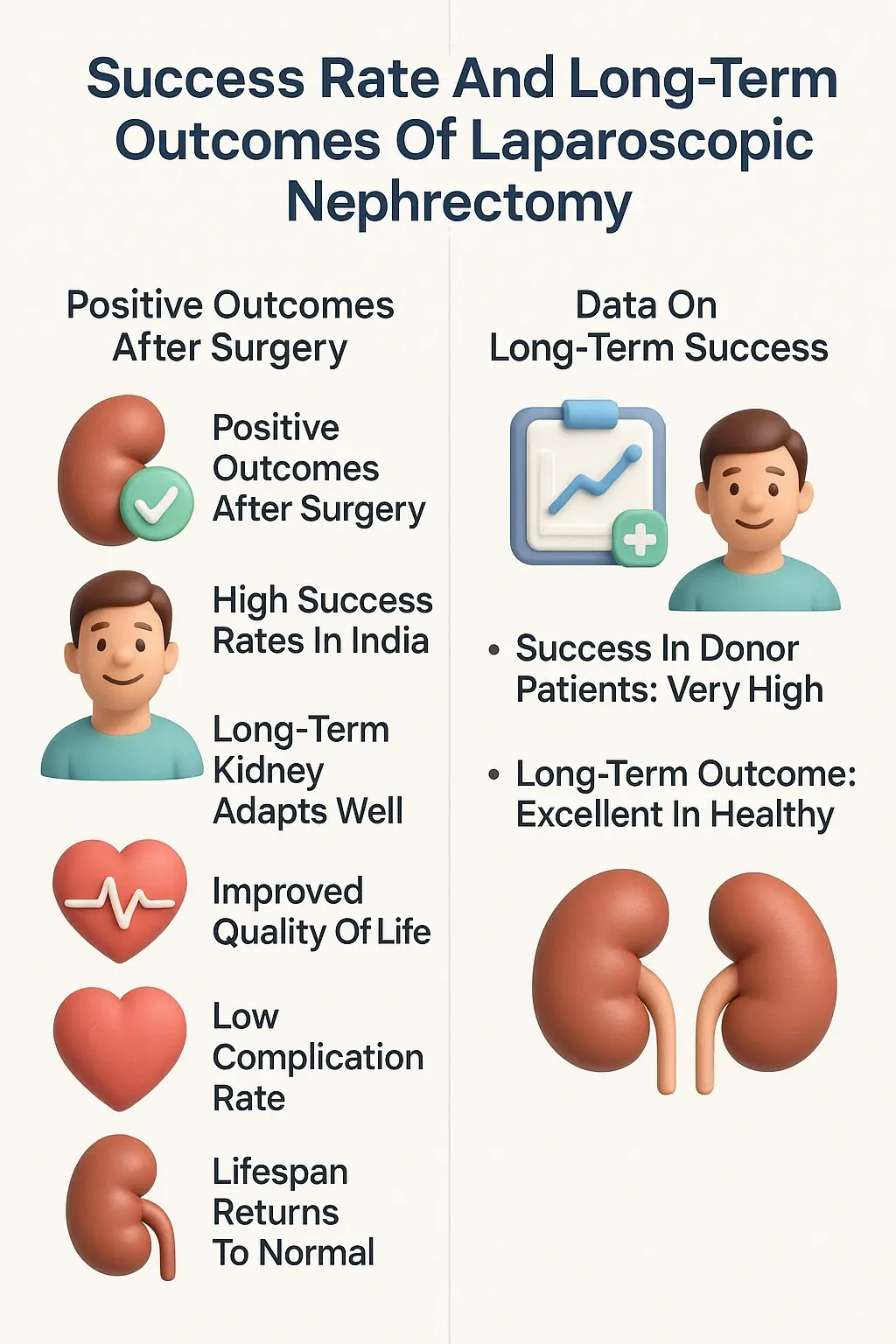
Success Rate And Long-Term Outcomes Of Laparoscopic Nephrectomy
India has become a hub for medical tourism because our surgeons are highly skilled. The success rate for this surgery is over 98%. Complications are very rare in good hospitals.
The human body is amazing. When one kidney is removed, the other kidney actually grows in size (hypertrophy) to filter more blood. Your creatinine might rise slightly after surgery but usually stabilizes.
You can play sports, work, travel, and enjoy life. The radical nephrectomy nhs data shows that for cancer patients, if the tumor is removed early, the survival rate is excellent, and patients live normal lifespans.
Studies prove that laparoscopic patients have less chronic pain and fewer hernias than open surgery patients.

Cost of Laparoscopic Nephrectomy in India

The financial aspect of treatment is a major consideration, and expenses can vary significantly based on the hospital facility, the city, and the surgeon’s expertise.

In India, the cost is often more affordable compared to Western nations, though it is influenced by factors such as room category and insurance coverage. This section provides an estimated price range to help with financial planning.

The laparoscopic nephrectomy cost varies widely.

β¦Ώ Small Nursing Homes: β‚Ή60,000 to β‚Ή1,00,000.
β¦Ώ Mid-range Hospitals: β‚Ή1,50,000 to β‚Ή2,50,000.
β¦Ώ Premium Corporate Hospitals: β‚Ή3,00,000 to β‚Ή5,50,000.

If you have Ayushman Bharat or state government schemes, the surgery might be free or very low cost. For insurance holders, most policies cover the full laparoscopic nephrectomy cost because it is a life-saving medically necessary procedure.

The bill usually includes:

β¦Ώ Surgeon and Anesthetist fees.
β¦Ώ OT charges and Consumables (staplers, harmonic scalpel).
β¦Ώ Room Rent and Nursing.
β¦Ώ Medicines.

The use of advanced technology like “Robotic Assistance” will increase the cost significantly. Also, if you have other diseases like diabetes or heart issues, you might need ICU care, which adds to the bill.

A rough estimate to help you plan your finances.
Expense Head Approximate Cost (INR) Notes
Room Rent (3–4 days) β‚Ή20,000 – β‚Ή40,000 Depends on ward vs private room
Doctor/Surgeon Fees β‚Ή50,000 – β‚Ή1,00,000 Based on surgeon's seniority
OT & Anesthesia β‚Ή40,000 – β‚Ή80,000 Includes gas, equipment use
Consumables/Pharmacy β‚Ή30,000 – β‚Ή50,000 Staplers, clips, medicines
Investigations β‚Ή10,000 – β‚Ή20,000 Post-op blood tests, scans
Total Estimated β‚Ή1.5 Lakh – β‚Ή3 Lakh Varies by city and hospital

Conclusion

β¦Ώ In conclusion, Laparoscopic Nephrectomy is a safe, effective, and modern way to treat serious kidney problems. Whether it is for removing a cancer via radical surgery or donating a kidney to a family member, this technique offers the best chance for a quick return to normal life.

β¦Ώ Understanding the laparoscopic nephrectomy anatomy and the procedure helps remove the fear of the unknown. If your doctor has recommended this surgery, rest assured that it is the gold standard of treatment worldwide. With smaller scars, less pain, and a faster discharge from the hospital, Laparoscopic Nephrectomy truly represents the best of medical technology helping patients heal better.

β¦Ώ Always consult with a qualified Urologist to discuss your specific case. Remember, a positive mindset and good knowledge are your best tools for a speedy recovery!

Frequently asked questions

It is a modern surgery where doctors remove a kidney using small keyhole cuts instead of a big opening. They use a special camera to see inside your tummy and remove the organ safely. This method is popular because it causes less pain and helps you recover much faster.
A nephroscope is a thin, tube-like medical instrument that has a light and a camera on the end. Doctors insert it through a small cut in your back to look directly inside your kidney. It is mostly used to find and remove kidney stones without making large cuts on your body.
The cuts made during this surgery are very tiny, usually just about one centimeter long. Because they are so small, they heal very quickly and fade significantly over time. After a year or so, these marks often become so faint that they are barely visible on your skin.
Yes, most kidney removal surgeries today are done using laparoscopy because it is safer for the patient. However, if the kidney tumor is extremely large or very complicated, the doctor might still suggest open surgery. Your surgeon will decide the best and safest method for your specific condition.
This is simply the medical name for keyhole kidney removal surgery. "Nephrectomy" means taking out the kidney, and "Laparoscopic" refers to the technique of using small cuts and a camera. It is widely used to treat kidney cancer, severe infections, or for kidney donation.
Laparoscopy is needed when medicines can no longer cure a serious kidney problem like a tumor or infection. It allows doctors to operate deep inside the body without cutting through large muscles. This approach saves the patient from long hospital stays and heavy pain after the operation.
There is no fixed limit on the number of times you can have laparoscopy, but it depends on your health. However, if you have had many surgeries in the past, scar tissue may form inside your tummy. This can sometimes make it difficult for the doctor to perform another laparoscopy safely.
There is some discomfort, but it is not "agony." The pain is mostly from the muscle cuts and the gas. Simple painkillers like Paracetamol or Tramadol are usually enough to keep you comfortable.
Yes! Thousands of people are born with only one kidney and never know it. A single healthy kidney is perfectly capable of filtering your blood and keeping you healthy.
Dr Swati Shah

Dr. Swati Shah

MS, DrNB (Surgical Oncology)

Dr. Swati Shah is a renowned Robotic Uro and Gynecological Cancer Surgeon from Ahmedabad. He has 15+ years of extensive experience in pelvic oncosurgery and 10+ years of experience in robotic surgery. She treats cancers of kidney, bladder, prostate, uterus, ovaries and other pelvic organs.

5/5 - (25 reviews)
dr swati shah - uro & gynec cancer surgeon
Privacy Overview

This website uses cookies so that we can provide you with the best user experience possible. Cookie information is stored in your browser and performs functions such as recognising you when you return to our website and helping our team to understand which sections of the website you find most interesting and useful.