
WhatsApp

Most Men See Improved Urinary Symptoms After Robotic Prostate Surgery

You are here >> Home > Latest Updates > Robotic Surgery > Most Men…

Lower urinary tract symptoms after robot-assisted radical prostatectomy a systematic review.DOI 10.1007s11701-025-02916-y

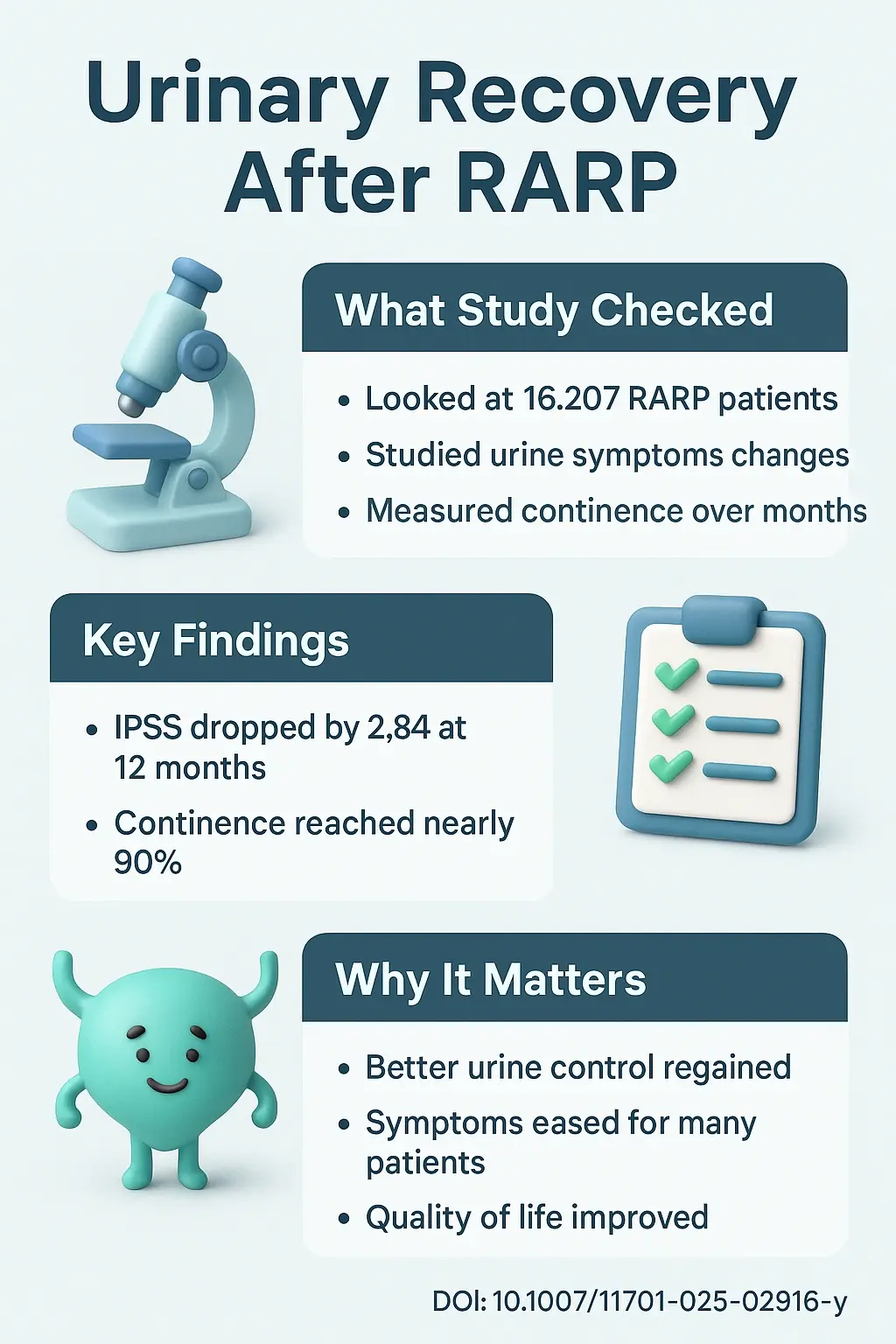
Robot-assisted prostate surgery (RARP) is often used to treat men with localized prostate cancer. But many wonder what happens to urinary symptoms after surgery. This review of 18 studies looked at over 16,000 men to find out.

The good news: most men see improvements in lower urinary tract symptoms (LUTS) after surgery. These include problems like frequent urination, weak stream, and urgency. By 6 months, men reported fewer symptoms, and things got even better by 12 months.

Urinary control (continence) also improved over time. Around 40–50% of men were dry at 1 month. By 12 months, nearly 90% had regained control.

Some surgical methods helped men recover faster. These included Retzius-sparing techniques and rebuilding tissue around the urethra. Men who had worse urinary symptoms before surgery or larger prostates often noticed the biggest improvements.

This shows that robotic surgery not only removes cancer but may also improve bladder symptoms for many men—especially over time.

If you’re considering prostate surgery, ask your doctor about your urinary health and what to expect during recovery.

Rate this post
dr swati shah - uro & gynec cancer surgeon
Privacy Overview

This website uses cookies so that we can provide you with the best user experience possible. Cookie information is stored in your browser and performs functions such as recognising you when you return to our website and helping our team to understand which sections of the website you find most interesting and useful.