New Scan-Based Risk Groups Help Predict Prostate Cancer Survival Better
New Scan-Based Risk Groups Help Predict Prostate…
SF-203 (Second Floor), Olive Greens, Sarkhej - Gandhinagar
Hwy, Gota, Ahmedabad, Gujarat, India 382481
Plot No. 1 A, Apollo Hospital International Limited, GIDC Bhat, Industrial Estate, Gandhinagar, Gujarat 382428

Patient

Patient
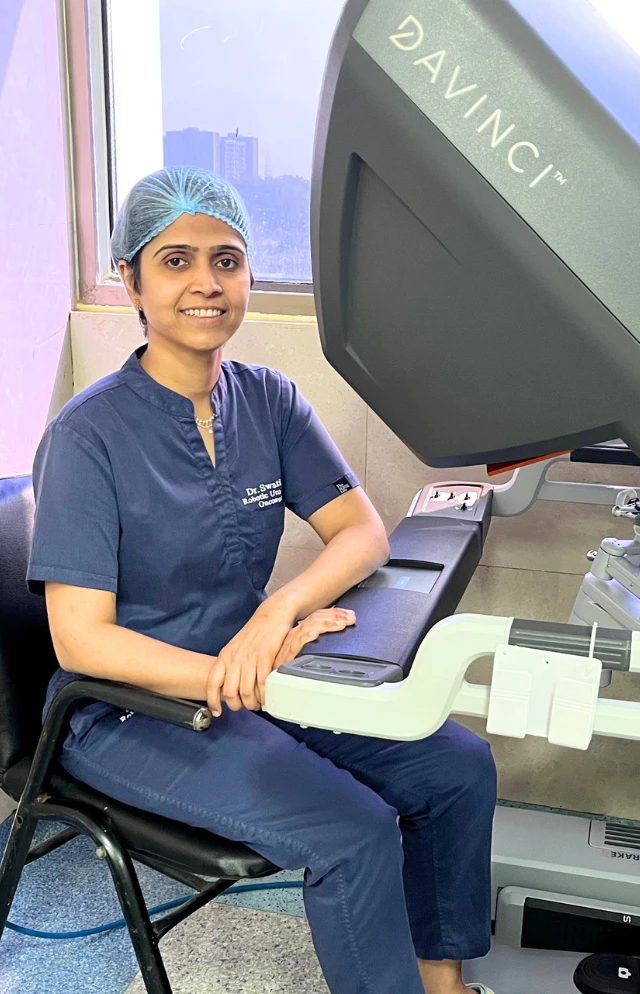
We were looking for a reliable Doctor for guidance and surgery, where we came across and consulted Dr Swati Shah. She explained things thoroughly and also did the surgery very well. She is very talented surgeon and friendly to the patients. Thank you Dr Swati and the whole hospital staff for being friendly and determined throughout our stay.

Patient
| The Myth | The Fact |
|---|---|
| "I have no pain or trouble urinating, so I don't have cancer." | Fact: Early-stage prostate cancer is often "silent" and shows no symptoms. By the time pain or severe urinary issues appear, the cancer may have already spread. Regular PSA screening is the only way to catch it early. |
| "Prostate cancer is only a disease for very old men." | Fact: While risk increases with age, it is increasingly common in men in their 40s and 50s, especially those with a family history. Younger patients often have more aggressive types that require early intervention. |
| "A high PSA level always means I have cancer." | Fact: An elevated PSA can be caused by simple infections, an enlarged prostate (BPH), or even recent cycling. It is a "risk indicator," not a final diagnosis. Dr. Shah uses advanced imaging (MRI) to confirm if a biopsy is truly needed. |
| "Surgery will leave me with permanent urine leakage." | Fact: With modern Robotic-Assisted Surgery, Dr. Shah can precisely preserve the urinary sphincter. Most patients regain full control very quickly—often within days to a few weeks after the catheter is removed. |
| "If I get surgery, my sex life will be over." | Fact: Robotic technology allows for "Nerve-Sparing" techniques. By saving the delicate nerves responsible for erections, many patients can maintain their quality of life and intimacy after recovery. |
| "Prostate cancer is always a death sentence." | Fact: If caught early and treated with precision surgery, the 5-year survival rate is nearly 100%. It is one of the most curable forms of cancer when managed by an expert uro-oncologist. |


| Feature | Robotic-Assisted Surgery (Dr. Swati Shah) | Traditional Open Surgery |
|---|---|---|
| Incision Size | 4–5 Tiny Keyholes (8mm each) | One Large Cut (6–8 inches) |
| Surgical Vision | 3D High-Definition (15x Zoom) | Naked Eye (2D View) |
| Blood Loss | Minimal (Rarely needs transfusion) | Moderate to High |
| Hospital Stay | 2–3 Days | 5–7 Days |
| Pain & Scarring | Very Low; Minimal Scars | High; Large Permanent Scar |
| Recovery Time | 2–3 Weeks | 6–8 Weeks |
| Nerve Sparing | Highly Precise (Better for Potency) | Less Precise |


⦿ VIU and Robotic Radical Prostatectomy
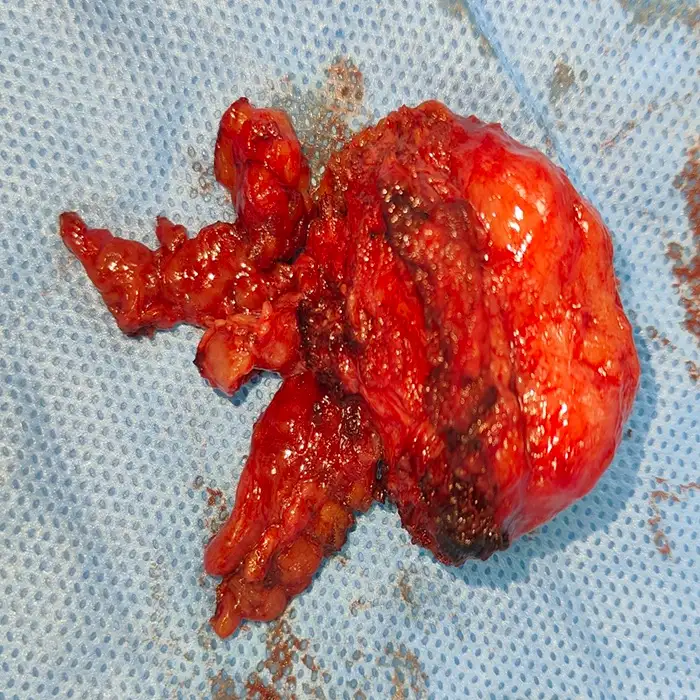
• Procedure: Dr. Shah executed a combined cystoscopic urethrotomy and a minimally invasive robotic prostatectomy.
• Lymph Nodes: A systematic pelvic lymphadenectomy was performed, with fifteen total nodes retrieved for accurate staging.
• Safety: The robotic approach allowed for extreme precision, resulting in minimal blood loss and stable vitals.
• Cancer Clearance: The surgical team achieved completely negative margins, successfully removing a tumor involving 50% of the gland.
⦿ Organ-Confined Clearance and Rapid Mobilization
The patient demonstrated a smooth postoperative recovery, achieving early ambulation and maintaining hemodynamic stability throughout his hospital stay. Final pathology confirmed a pT2N0 stage, indicating the high-grade cancer was entirely organ-confined with zero lymph node involvement. He was discharged in stable condition with a clear follow-up protocol and an excellent functional prognosis.
Even with an aggressive Gleason 8 score, robotic surgery allows us to achieve curative results when the disease is organ-confined. By combining urethral repair with precise robotic excision, we effectively cleared the cancer while prioritizing the patient’s rapid return to normal urinary function.
⦿ Robotic Radical Prostatectomy with Retroperitoneal Clearance
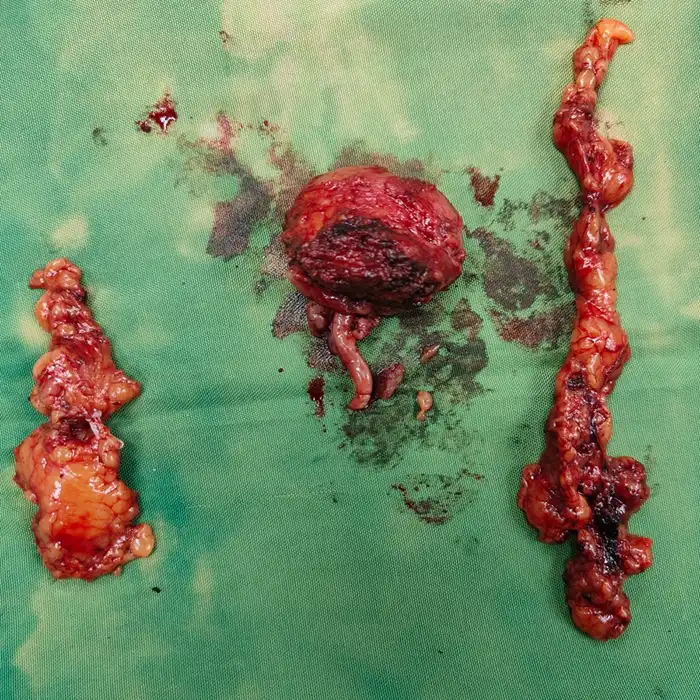
• Procedure: Radical prostatectomy with seminal vesicle excision and bilateral pelvic lymph node clearance.
• Complex Anatomy: Performed retroperitoneal lymph node dissection (RPLND) to address enlarged para-aortic nodes.
• Safety & Blood Loss: Precise robotic dissection limited intraoperative blood loss to approximately 400 ml.
• Cancer Clearance: Achieved complete surgical removal of the primary tumor and all suspicious nodes.
⦿ Successful Pathological Staging and Rapid Recovery
Successful Pathological Staging and Rapid Recovery
Postoperatively, the patient remained hemodynamically stable and achieved early ambulation without the need for blood transfusions. Final histopathology confirmed acinar adenocarcinoma with clear staging of the nodal involvement, providing a roadmap for follow-up care. The patient was discharged within days, maintaining excellent clinical stability and a clean surgical wound.
For locally advanced cases, a multi-modal approach is vital. By combining prior hormonal therapy with robotic RPLND, we successfully reduced the tumor burden and achieved a high level of surgical precision that traditional methods often struggle to provide.
New Scan-Based Risk Groups Help Predict Prostate…
Choosing the Right Treatment for Advanced Prostate…
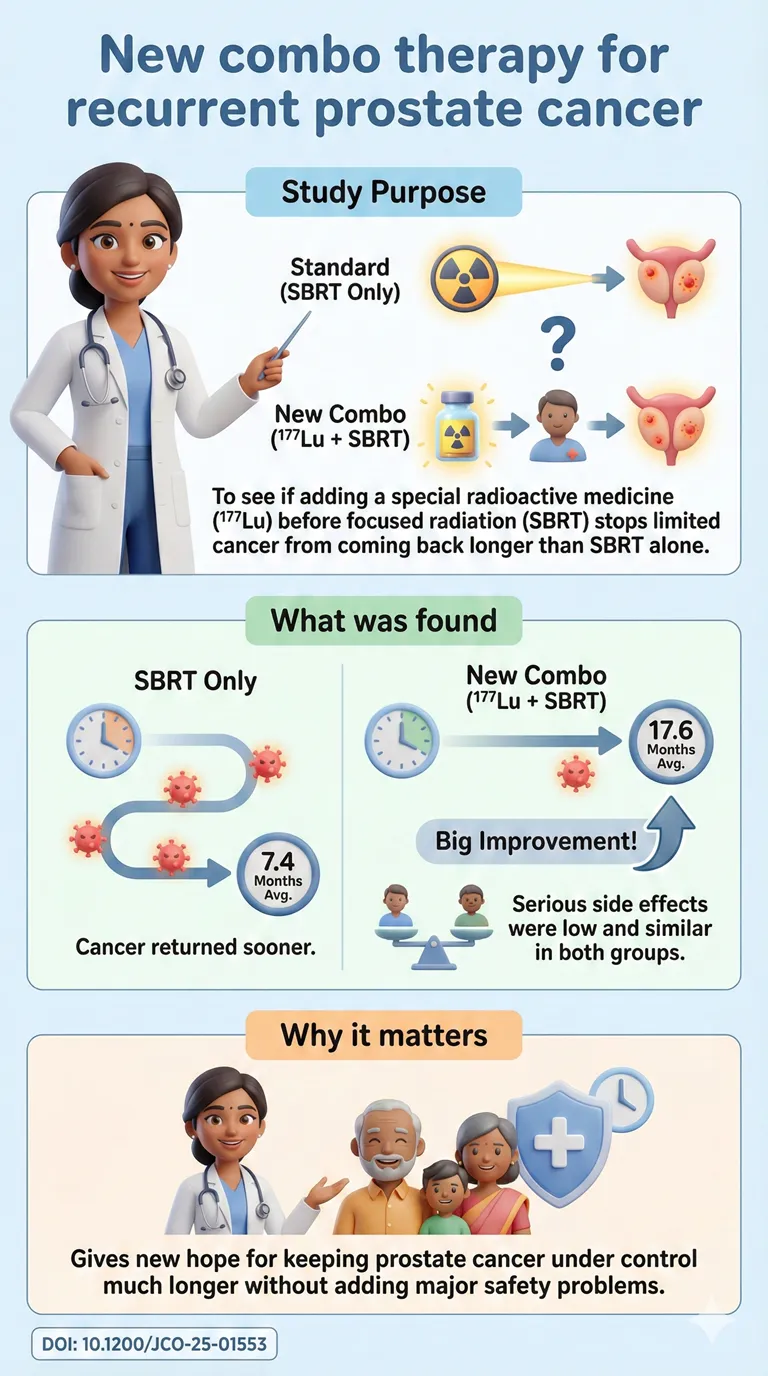
New Combo Treatment May Delay Prostate Cancer…
| The Myth | The Fact |
|---|---|
| "The robot performs the surgery on its own." | Fact: The robot is 100% controlled by Dr. Swati Shah. It is a high-tech tool that translates her hand movements into micro-precise actions inside the body; it cannot move or make decisions without her. |
| "Robotic surgery is only for young people." | Fact: Age is not a barrier. Because robotic surgery involves less blood loss and smaller incisions, it is often safer for elderly patients (even those in their 70s and 80s) compared to traditional open surgery. |
| "I will lose urinary control forever after surgery." | Fact: Modern robotic techniques allow for "Nerve-Sparing" and "Sphincter Preservation." Most patients regain full urinary control much faster than with traditional surgery—often within weeks or even days. |
| "No symptoms mean I am cancer-free." | Fact: Early-stage prostate cancer is "silent" and rarely shows symptoms. Regular PSA blood tests are the only way to catch it early when it is 100% curable. |
| "Robotic surgery is experimental and risky." | Fact: Robotic surgery is the global "Gold Standard" for prostate cancer. It is a proven, FDA-approved technology that significantly reduces the risk of infection and complications compared to open surgery. |
| Treatment | What it is | Main Benefit |
|---|---|---|
| Active Surveillance | Close monitoring with regular PSA tests and biopsies. | Avoids immediate side effects of surgery or radiation. |
| Radiation Therapy | Using high-energy beams to kill cancer cells. | No surgery required; effective for localized tumors. |
| Robotic Surgery | Precision removal of the prostate by Dr. Swati Shah. | Best for total cancer removal and faster return of bladder control. |
If you have any kind Uro Cancer related medial emergency, visit Apollo Hospital. An expert doctor is always available & treatment will be provided at once.