
WhatsApp

Choosing the Right Treatment for Advanced Prostate Cancer

You are here >> Home > Latest Updates > Prostate Cancer > Choosing the…

Best therapeutic approach in metastatic hormone-sensitive prostate cancer based on disease volume a systematic review and network meta-analysis.DOI 10.1093oncolooyaf386

Prostate cancer can spread to other parts of the body. When this happens and the cancer still responds to hormone treatment, doctors call it metastatic hormone-sensitive prostate cancer. Many new treatments are now available. This is good news. It can also feel confusing for patients and families.

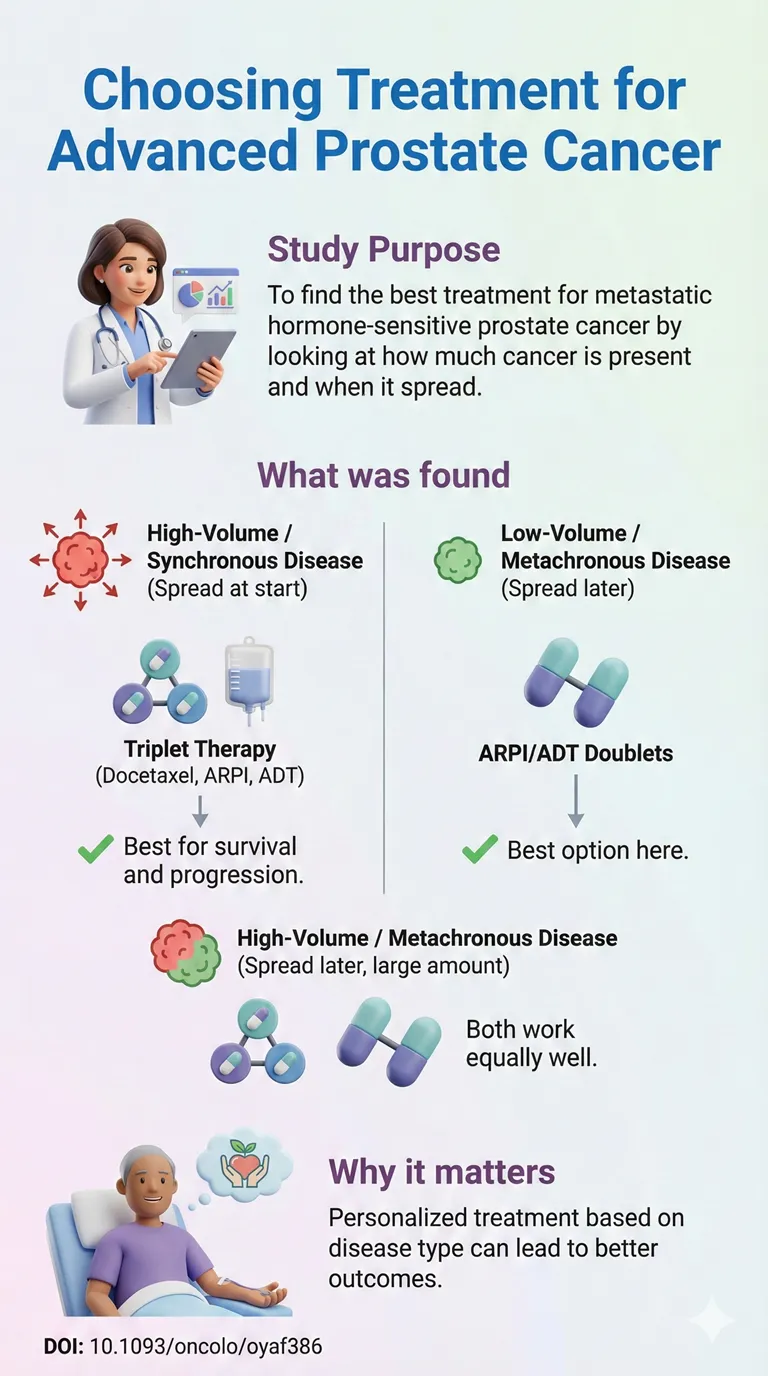
A large research review looked at the best first treatments for men with this type of prostate cancer. The researchers studied results from many clinical trials. They focused on how much cancer was present and when it spread.

Doctors often describe cancer spread as high volume or low volume. High volume means the cancer has spread to many areas, often including bones or organs. Low volume means fewer spots of cancer. Timing also matters. Some men are diagnosed with spread at the start. Others develop spread later, after earlier treatment.

The study compared different treatment plans. Some men received hormone therapy alone. Others received hormone therapy plus one extra medicine. Some received three treatments together, usually hormone therapy, chemotherapy, and a newer hormone-blocking drug.

The results were clear. Men with high-volume cancer lived longer when they received three treatments together. This benefit was strongest when the cancer had already spread at diagnosis. The combination helped slow cancer growth and delayed worsening on scans.

Men with low-volume cancer did best with two treatments instead of three. Hormone therapy combined with a modern hormone-blocking drug worked very well. Adding chemotherapy did not give extra benefit for many of these men. This was especially true when the cancer spread later in the disease course.

For men with high-volume cancer that spread later, both two-drug and three-drug treatments worked in a similar way. This gives doctors flexibility to tailor care based on health, side effects, and patient wishes.

This research supports a more personal approach to treatment. The amount of cancer and the timing of spread can guide better choices. Patients can use this information when talking with their cancer team. Clear discussions help match treatment to each person’s situation and goals.

Rate this post
dr swati shah - uro & gynec cancer surgeon
Privacy Overview

This website uses cookies so that we can provide you with the best user experience possible. Cookie information is stored in your browser and performs functions such as recognising you when you return to our website and helping our team to understand which sections of the website you find most interesting and useful.