
Yes — in selected patients, surgery can still have a role.
But locally advanced or node-positive prostate cancer is different from straightforward organ-confined prostate cancer.
The treatment decision often requires a multimodal strategy, combining some or all of:
The important question is therefore not simply:
“Can the prostate be removed?”
It is: “Can surgery contribute meaningfully to long-term cancer control as part of the overall treatment strategy?”
This distinction is particularly important in T3, T4, very-high-risk and node-positive prostate cancer.
Localized prostate cancer is confined to the prostate.
Locally advanced prostate cancer has extended beyond the prostate or involves structures immediately around it.
This may include:
T3a: Cancer has extended through the prostate capsule into surrounding tissue.
T3b: Cancer has invaded the seminal vesicles.
T4: The tumour has invaded adjacent structures such as the bladder neck, external sphincter, rectal wall or pelvic structures, depending on the exact staging definition.
The 2026 EAU risk classification places cT3–4 disease and/or clinically node-positive disease (cN+) in the high-risk/locally advanced category.
N1 means that prostate cancer has spread to regional pelvic lymph nodes.
This is different from distant metastatic disease.
A simplified way of thinking about staging is:
T = primary tumour extent
N = regional lymph nodes
M = distant metastases
Therefore:
N1 disease is therefore serious, but it is not the same as having distant bone, liver or lung metastases.
NCI staging similarly classifies any T, N1, M0 as stage IVA, while M1 disease is stage IVB.
The treatment plan can change substantially depending on whether the cancer is:
T2 N0 M0
versus
T3 N0 M0
versus
T3/T4 N1 M0
versus
M1 disease.
A patient who appears to have cancer confined to the prostate on one scan may have clinically significant extracapsular extension or lymph-node disease on more advanced imaging.
For high-risk or locally advanced disease, current EAU guidance recommends metastatic staging with PSMA PET/CT when available, or at least conventional cross-sectional imaging and bone scanning.
I do not decide on surgery from the biopsy report alone.
The assessment combines:
I specifically look for:
When indicated, this helps assess:
I also consider:
Conventional CT and bone scans can miss smaller-volume prostate cancer deposits.
PSMA PET/CT has improved sensitivity for detecting lymph-node and bone disease compared with conventional staging approaches, although it does not eliminate the possibility of microscopic disease.
This matters because treatment planning should ideally begin with the most accurate practical assessment of disease extent.
However: A negative PSMA PET/CT does not prove that microscopic cancer is absent.
This is particularly relevant when deciding whether lymph-node dissection, radiation or systemic treatment should form part of the treatment strategy.
In selected patients, yes.
Radical prostatectomy may be considered as part of a multimodal treatment strategy for appropriately selected patients with locally advanced disease.
However, surgery becomes technically more demanding as the tumour extends beyond the prostate.
The operation may require:
The EAU patient information for locally advanced disease notes that radical prostatectomy can be used in selected patients, while also emphasizing that the surgery can be longer and associated with more complications.
This is an important point.
A patient should not undergo radical prostatectomy simply because the prostate can technically be removed.
For some patients with locally advanced or node-positive disease, radiation combined with systemic treatment may be the preferred treatment strategy.
For others, surgery may be considered as part of a multimodal plan.
The decision depends on:
NCI lists external-beam radiation with or without hormonal treatment, hormonal treatment, and radical prostatectomy with or without postoperative radiation among treatment approaches used for stage III disease.
Multimodal treatment means that more than one treatment modality may be used during the patient’s cancer journey.
For example:
Strategy A: Radical prostatectomy + pelvic lymph-node dissection → PSA surveillance → additional treatment if indicated
Strategy B: Radiation therapy + ADT ± additional systemic therapy
Strategy C: Surgery → pathology-based risk assessment → postoperative radiation and/or systemic treatment when indicated
The exact sequence is individualized.
The key principle is: The first treatment should be planned with the entire disease course in mind.
If lymph nodes are involved, surgery alone may not be the complete treatment strategy.
The final pathology after prostatectomy and lymph-node dissection can provide important information about:
This information can then help determine the need for additional treatment.
Hormonal treatment may be incorporated into management of high-risk node-positive disease, depending on the overall clinical situation.
Pelvic lymph-node dissection is not simply an additional step during prostatectomy.
In appropriately selected high-risk patients, it can provide important pathological staging information.
It may identify disease that was not definitively characterized on imaging.
However:
A larger lymph-node dissection does not automatically mean better cancer control.
The extent of PLND should be individualized according to the patient’s risk and treatment plan.
Detailed discussion of PLND is covered separately on our: Pelvic Lymph-Node Dissection in Prostate Cancer page →
This is one of the most important differences between routine and complex prostatectomy.
In localized disease, preservation of the neurovascular bundles may be possible when the tumour is sufficiently distant from them.
In locally advanced disease, cancer control takes priority.
If imaging, biopsy or intraoperative findings indicate that the tumour is closely involving a neurovascular bundle, that side may need to be partially or completely sacrificed.
The decision is therefore:
Cancer control first → nerve preservation whenever oncologically safe.
The presence of a robot does not change this oncological principle.
Detailed discussion of nerve-sparing is covered on:
Nerve-Sparing Robotic Prostatectomy →
Current EAU patient information similarly emphasizes that nerve-sparing may be performed when possible, but nerves may need to be removed when the cancer is close to them.
A standard prostatectomy and a complex locally advanced prostatectomy should not be considered the same operation.
Locally advanced surgery may involve:
1. More extensive tumour dissection
The surgeon may need to dissect through tissue planes distorted or infiltrated by tumour.
2. More difficult nerve decisions
Nerve preservation must be balanced against oncological clearance.
3. Complex apical anatomy
Tumours involving or approaching the apex require particularly careful planning.
4. Seminal-vesicle involvement
T3b disease requires appropriate oncological dissection.
5. Extensive pelvic lymph-node dissection
This may be indicated according to the patient’s risk.
6. Previous treatment or procedures
Previous TURP, hormonal treatment or pelvic surgery can alter anatomy and increase technical complexity.
7. Reconstruction
Some complex pelvic cases require individualized reconstruction to restore urinary continuity and function.
This is why experience with difficult pelvic oncology surgery matters in addition to experience with routine robotic prostatectomy.
Tumour size alone should not determine whether surgery is possible.
A large prostate or large tumour may make the operation more technically demanding, but feasibility depends on:
This is where high-quality MRI review and, when indicated, PSMA PET/CT become particularly useful.
Some patients with high-risk or locally advanced prostate cancer may receive androgen-deprivation therapy before or around local treatment.
The presence of previous hormonal treatment changes the clinical context.
The surgeon needs to understand:
Previous treatment can also alter tissue planes and make surgery more demanding.
This requires individualized multidisciplinary planning.
The location and number of involved nodes matter.
A patient with limited pelvic nodal disease is not necessarily managed in the same way as a patient with extensive nodal disease or distant metastases.
The treatment discussion may include:
The treatment strategy should be based on the distribution of disease, not simply the label “N1.”
That changes the treatment framework.
Once distant metastatic disease is confirmed, the primary objective becomes systemic disease control, with local treatment considered selectively in specific clinical circumstances.
This is different from a patient with locally advanced or regional node-positive disease without distant metastases.
Therefore:
T3/T4 N0 M0
and
N1 M0
and
M1
should not be treated as the same disease state.
Complex prostate cancer should ideally not be managed by one specialist working in isolation.
The team may include:
Uro-oncological surgeon- Assesses resectability and the potential role of surgery.
Radiation oncologist- Assesses definitive or postoperative radiation strategies.
Medical oncologist- Assesses ADT and systemic treatment options.
Uropathologist / oncopathologist- Reviews Grade Group, tumour extent, margins, nodes and other pathological features.
Radiologist- Provides detailed MRI interpretation and local staging.
Nuclear medicine specialist- Interprets PSMA PET/CT in the context of prostate cancer staging.
Specialist nursing / rehabilitation team- Supports urinary, sexual and general recovery.
For high-risk and locally advanced disease, the value of the MDT is not simply to have several doctors involved.
It is to answer: “What combination of treatments gives this particular patient the most appropriate overall cancer-control strategy?”
My prostate cancer practice includes patients with a broad range of disease presentations—not only straightforward localized prostate cancer.
I have operated on patients with:
My robotic prostatectomy experience includes 627 robotic radical prostatectomies, with 650 radical prostatectomies overall.
I have been performing robotic prostatectomy since 2013, before robotic surgery became available in Ahmedabad.
My training included a dedicated uro-oncology focus and exposure to complex robotic pelvic oncology surgery.
The experience is relevant not because every patient needs surgery, but because the decision about surgery becomes more nuanced as disease becomes more complex.
In advanced prostate cancer, the surgeon must be prepared for:
Unexpected tumour extension
Distorted tissue planes
Difficult pelvic anatomy
Close relationship to nerves and vessels
Previous surgery
Previous hormonal treatment
Positive or suspicious lymph nodes
Need for reconstruction
This requires planning before entering the operating room.
The operation should therefore be considered as part of a complete oncological strategy rather than as an isolated robotic procedure.
This principle becomes particularly important in high-risk disease.
If the tumour is close to a neurovascular bundle, preserving the nerve at the expense of an inadequate cancer margin may not be appropriate.
The surgical plan may therefore include:
depending on the tumour.
The objective is:
Preserve function whenever it is oncologically safe — never compromise cancer clearance simply to preserve a nerve.
The operation is only one part of the treatment pathway.
After radical prostatectomy, the patient is followed with:
PSA
PSA becomes an important marker of treatment response and subsequent surveillance.
Final pathology
The pathology report may provide:
Further treatment when indicated
Depending on pathology and postoperative PSA behaviour, some patients may require additional treatment.
This may include radiation and/or systemic treatment depending on the clinical circumstances.
Yes.
The fact that a patient may require additional treatment does not automatically mean that surgery was inappropriate.
In high-risk disease, treatment may be deliberately multimodal.
For example:
Surgery → pathology → PSA → risk assessment → additional treatment if indicated
The important question is whether surgery formed a rational component of the overall treatment plan for that individual patient.
I use a structured approach:
STEP 1- Confirm pathology
What exactly is the Grade Group/Gleason score?
STEP 2- Define local extent
What does MRI show?
STEP 3- Assess regional and distant disease
Is PSMA PET/CT indicated?
STEP 4- Determine risk
Localized? High-risk? Very-high-risk? T3? T4? N1?
STEP 5- Assess resectability
Can the tumour be removed with an appropriate oncological margin?
STEP 6- Assess functional implications
What would surgery mean for continence and sexual function?
STEP 7- Discuss multimodal options
Surgery, radiation and systemic treatment are considered together.
STEP 8- Make a patient-specific plan
The final decision is made after discussing expected benefits, risks, alternatives and the patient’s priorities.
If you have been diagnosed with advanced local or regional prostate cancer, ask:
A second opinion is particularly useful when:
For a meaningful second opinion, bring the actual imaging, biopsy/pathology information and PSA history, not only the diagnosis summary.
Locally advanced does not automatically mean “inoperable.”
But it also does not automatically mean “surgery is the answer.”
The correct question is: Can surgery safely contribute to the overall cancer-control strategy for this particular patient?
For some patients, surgery may be an important component.
For others, radiation and systemic treatment may be more appropriate.
For some, a combination of treatments may be required.
The decision should be based on accurate staging, tumour biology, anatomy, patient health, functional priorities and multidisciplinary assessment.
What Is Robotic Radical Prostatectomy?
Understanding RARP, indications and the basic operation.
Nerve-Sparing Robotic Prostatectomy
How tumour location determines whether nerves can safely be preserved.
Pelvic Lymph-Node Dissection
Understanding nodal staging and the role of PLND.
Critical Steps in Robotic Prostatectomy
Technical principles that influence oncological and functional outcomes.
Localized Prostate Cancer: Surgery vs Other Treatment Options
Understanding active surveillance, surgery and radiation.
Life After Robotic Prostatectomy
Cancer outcomes, PSA follow-up, continence, sexual function and our analysed results.
My prostate cancer case library includes patients with different stages and levels of complexity.
The case summaries demonstrate how treatment planning changes according to:
View Prostate Cancer Case Summaries →
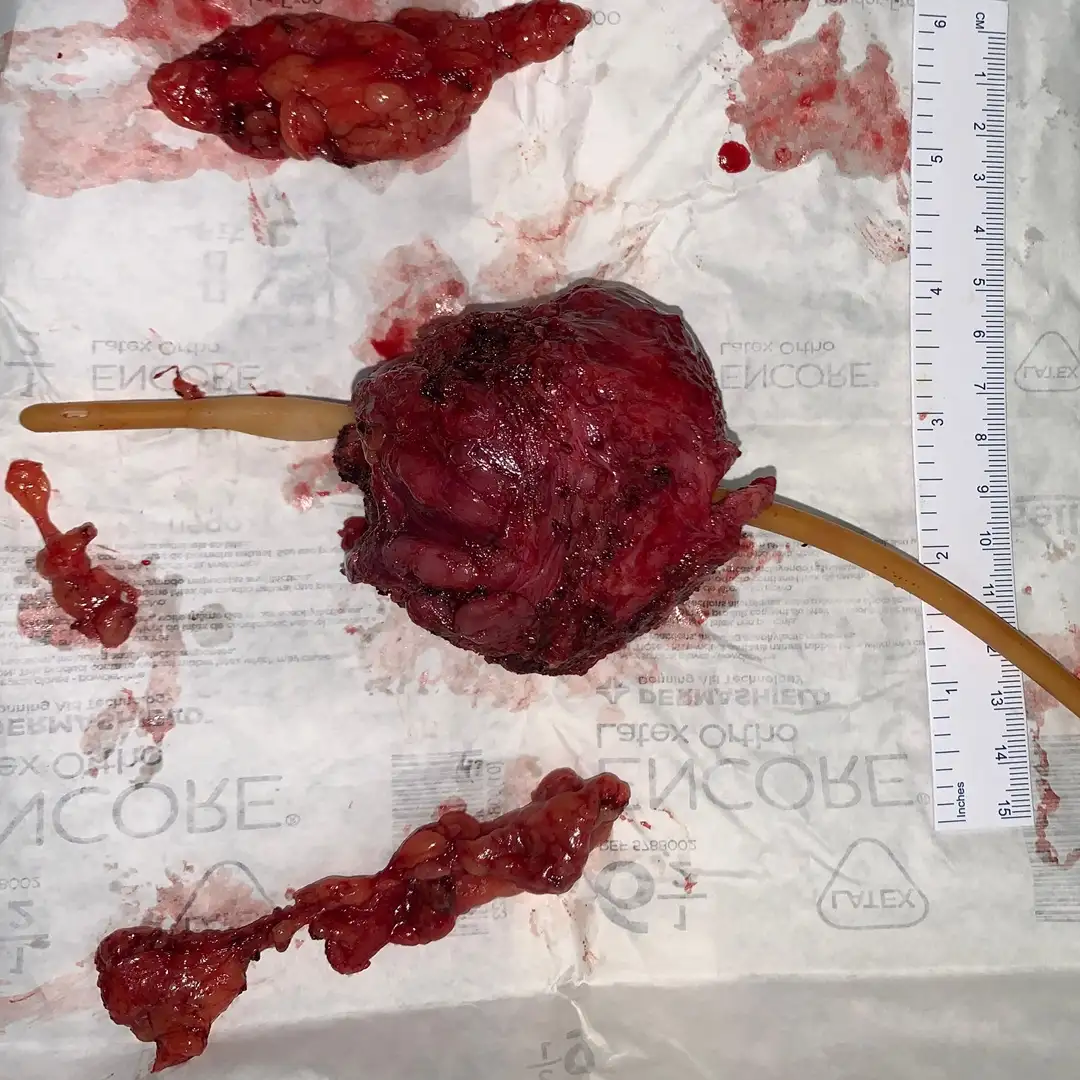
A 67-year-old male presented with urinary urgency and a significantly elevated PSA level of 144.92 ng/ml. Diagnostic imaging and biopsy confirmed an acinar adenocarcinoma, demanding an urgent and highly precise surgical intervention to prevent potential systemic spread while managing the high biochemical risk.
⦿ Robotic-Assisted Radical Prostatectomy and Lymphadenectomy
• Procedure: A minimally invasive radical prostatectomy was executed with unilateral neurovascular bundle preservation.
• Lymph Nodes: A total of 20 pelvic lymph nodes were successfully removed and staged.
• Safety: The surgery was completed with a very low blood loss of 150 ml.
• Cancer Clearance: Pathological examination confirmed negative surgical margins, indicating the complete removal of the tumor.
⦿ Full Oncological Clearance and Early Mobilization
The patient’s postoperative recovery was excellent, characterized by early mobilization and a stable discharge within a few days. Final histopathology confirmed a pT2N0 stage with zero lymph node involvement and no extraprostatic extension. Crucially, the patient achieved early urinary continence, returning to his routine daily activities without significant functional impairment or complications.
By utilizing robotic precision, we achieved complete cancer clearance despite the patient's high pre-operative PSA levels. This approach allowed for meticulous nerve preservation and reconstruction, which are vital for maintaining the patient's quality of life and ensuring a rapid return to normalcy.
View Prostate Cancer Video Testimonials →
Seeking the best possible medical care, the family consulted with Dr. Swati Shah, an expert Robotic Uro-Gynec Oncologist.
After a thorough consultation, Dr. Shah recommended a Robotic Radical Prostatectomy. The family agreed, and the advanced, minimally invasive surgery was a complete success. Highlighting the rapid recovery associated with robotic procedures, the patient was remarkably discharged from the hospital just two days after the operation.
Vikram reports that all medical tubes and stitches have now been safely removed. His father is experiencing no complications and is feeling significantly better post-surgery.
View Prostate Cancer Educational Videos →
If you have been diagnosed with T3, T4, high-risk, very-high-risk or node-positive prostate cancer, bring:
A detailed review can help establish:
Where is the cancer?
How extensive is it?
Is it resectable?
What are the treatment options?
Does surgery have a role?
Would multimodal treatment be required?
Dr Swati H. Shah
Pelvic (Uro & Gynec) Oncosurgeon
Robotic Uro & Gynec Cancer Surgeon
Apollo Hospital, Ahmedabad
Director, Shah’s Cancer & Robotic Surgery Centre
Founder & Director, Department of Pelvic Oncology, Apollo Ahmedabad
18+ years in uro-gynaecologic cancer surgery | Robotic surgery since 2013 | 650 radical prostatectomies including 627 robotic procedures
Swasth Parivar: twice a month, practical advice on recovery, diet and warning signs. No advertising. Stop any time.
Your number is used for these updates and for the clinic to reach you. It is never sold or passed on. To stop, reply STOP on WhatsApp.