
Robotic Radical Prostatectomy (RARP) is a minimally invasive operation to remove the prostate gland and seminal vesicles for the treatment of prostate cancer. Pelvic lymph nodes may also be removed when indicated.
The operation is performed through small abdominal incisions using a robotic surgical system. The surgeon controls the robotic instruments from the console, allowing magnified three-dimensional vision and precise movement within the deep and narrow pelvis.
The aim of prostate cancer surgery is not simply to remove the prostate. A quality radical prostatectomy seeks to achieve three important goals:
The balance between these goals depends on the extent and biology of the cancer, the patient’s health and pre-treatment function, and the surgical technique used.
During radical prostatectomy, the entire prostate gland and seminal vesicles are removed.
Depending upon the cancer risk and stage, surgery may also include:
⦿ Pelvic lymph-node dissection
⦿ Unilateral or bilateral nerve-sparing
⦿ Wider excision around the prostate where required for cancer clearance
⦿ Bladder-neck preservation or reconstruction
⦿ Reconstruction between the bladder and urethra
The removed prostate, seminal vesicles and lymph nodes are examined by an experienced pathologist. The final histopathology provides important information about the exact Grade Group, pathological stage, surgical margins, seminal-vesicle involvement and lymph-node status.
These findings, together with postoperative PSA, help determine further follow-up or treatment.
RARP may be considered in appropriately selected patients with prostate cancer in whom surgery forms part of a potentially curative or multimodality treatment strategy.
The decision should not be based on PSA alone.
Before recommending surgery, we review the complete disease profile, including:
The PSA level and its trend provide information about the disease but must be interpreted together with other findings.
The biopsy establishes the diagnosis and provides the Gleason score/ISUP Grade Group, amount of cancer and distribution of involved cores.
MRI helps assess the location and extent of the tumour, possible extracapsular extension, seminal-vesicle involvement and its relationship with the neurovascular bundles.
In appropriate higher-risk patients, PSMA PET/CT may help assess lymph nodes and disease outside the prostate.
Patients may have low-, intermediate-, high- or very-high-risk disease. The cancer may be organ-confined, locally advanced or involve regional lymph nodes.
The potential benefit of surgery must be considered alongside age, associated medical conditions, fitness for surgery and expected life expectancy.
Cancer control, urinary function, sexual function and the advantages and limitations of alternative treatments should be discussed before deciding on surgery.
Not every patient diagnosed with prostate cancer requires radical prostatectomy. Active surveillance, radiotherapy and systemic treatments have important roles in appropriately selected patients.
Radical prostatectomy is most commonly used for localized prostate cancer, but surgery may also form part of treatment for selected patients with more advanced disease.
Our prostate cancer surgical practice includes patients with:
Treatment of high-risk, locally advanced and node-positive prostate cancer is particularly individualized and may require more than one treatment modality.
Read more → Localized Prostate Cancer: Surgery vs Other Treatment Options
Read more → Locally Advanced & Node-Positive Prostate Cancer: Where Does Surgery Fit?
Robotic technology is a surgical platform. The operation itself is performed by the surgeon controlling the robotic instruments.
Therefore, when considering RARP, it is useful to understand not only whether a hospital has a robotic system, but also the surgeon’s training and experience specifically in prostate cancer and robotic prostate surgery.
Dr Swati Shah — Robotic Uro & Pelvic Oncosurgeon
Dr Swati Shah has been involved in the management of prostate cancer since 2008 and has been performing robotic prostate surgery since 2013.
Her training pathway included:
Her prostate cancer training included not only standard radical prostatectomy, but also:
Since moving to Gujarat in 2016, uro-oncology and robotic pelvic cancer surgery have remained major areas of her surgical practice.
Prostate Surgery Experience
650
Total radical prostatectomies*
627
Robotic radical prostatectomies*
Since 2013
Robotic prostatectomy experience
95%
Cases undergoing pelvic lymph-node dissection in the analysed surgical series*
RARP is performed under general anaesthesia.
Several small incisions are made in the abdomen through which a camera and robotic instruments are introduced. The surgeon sits at the robotic console and controls the instruments throughout the operation.
The robotic system provides:
The broad surgical sequence includes:
1. Accessing the Prostate
The prostate and surrounding pelvic anatomy are carefully exposed.
2. Controlling and Dividing the Prostate Attachments
The prostate is separated from the bladder and surrounding structures while maintaining oncological principles.
3. Nerve Preservation — When Appropriate
The neurovascular bundles responsible for erectile function lie close to the prostate.
Depending upon the location and extent of cancer, bilateral, unilateral or non-nerve-sparing surgery may be appropriate.
Cancer clearance takes priority, but nerves are preserved whenever it is considered oncologically safe.
Read more → Nerve-Sparing Robotic Prostatectomy
4. Preserving Functional Anatomy Where Appropriate
Depending upon the individual anatomy and cancer extent, surgical planning may include preservation or reconstruction of structures important for urinary recovery.
5. Removal of the Prostate and Seminal Vesicles
The prostate and seminal vesicles are completely removed and sent for histopathological examination.
6. Pelvic Lymph-Node Dissection
When indicated, pelvic lymph nodes are removed for pathological assessment.
Read more → Pelvic Lymph-Node Dissection in Prostate Cancer
7. Bladder-to-Urethra Reconstruction
After removing the prostate, the bladder is joined back to the urethra with a precise vesicourethral anastomosis.
A urinary catheter is temporarily placed while this connection heals.
No.
Using a robotic system does not by itself define the quality of a prostatectomy.
A quality robotic radical prostatectomy aims to balance:
Cancer Control
Functional Preservation
Where oncologically and technically appropriate:
Patient Safety
Important measures include:
Functional Recovery
Outcomes should include:
The quality of robotic prostatectomy should therefore be assessed by cancer control, functional outcomes, safety and long-term follow-up — not simply by whether a robot was used.
Read more → Critical Steps in Robotic Prostatectomy That Can Improve Outcomes
All three approaches are designed to perform the same fundamental cancer operation — radical removal of the prostate.
Open Radical Prostatectomy
The prostate is removed through a larger abdominal incision.
Laparoscopic Radical Prostatectomy
The operation is performed through small incisions using conventional laparoscopic instruments.
Robotic Radical Prostatectomy
The operation is performed through small incisions with robotic instruments controlled by the surgeon.
The robotic platform provides magnified 3D vision and articulating instruments that facilitate precise dissection and reconstruction in the deep pelvis.
However, the presence of a robotic system alone does not guarantee superior cancer control, continence or sexual-function outcomes.
Patient selection, cancer characteristics, surgical technique, surgeon experience and postoperative rehabilitation remain important.
[GET A PROSTATE CANCER SECOND OPINION]
[BOOK CONSULTATION WITH DR SWATI SHAH]
What Should I Expect After Robotic Prostatectomy?
Recovery varies according to the patient’s age, health, disease extent and complexity of surgery.
Immediately After Surgery
Patients are encouraged to mobilise early and gradually resume oral intake.
Hospital Stay
In our analysed series, the average postoperative hospital stay has been approximately 2.8 days.*
Urinary Catheter
A catheter remains temporarily while the bladder-to-urethra connection heals. The timing of removal is individualized.
Final Histopathology
The removed prostate and other specimens are examined to determine:
PSA After Surgery
PSA is monitored after radical prostatectomy. Subsequent management depends on postoperative PSA, final pathology and future PSA behaviour.
Urinary Continence
Urinary control usually improves progressively following surgery. Pelvic-floor rehabilitation may form part of recovery.
Sexual Function
Recovery depends on preoperative erectile function, age, cancer location and stage, whether unilateral or bilateral nerve preservation is oncologically possible, and postoperative rehabilitation.
Read more → Life After Robotic Prostatectomy: Cancer Control, Continence & Sexual Function
Prostate cancers are not all the same. Real-world surgical practice includes straightforward localized cancers as well as high-risk and technically complex disease.
Our prostate cancer case library contains approximately 30 detailed clinical case summaries, including examples of:
Where available, the cases include:
Presentation → PSA/Investigations → MRI/PSMA PET → Biopsy → Operative findings/images → Histopathology → Hospital recovery → Follow-up
These cases are presented as clinical examples of actual surgical experience rather than as a substitute for individual medical advice.
[FEATURED CASE SUMMARY] → View all Prostate Cancer Case Summaries
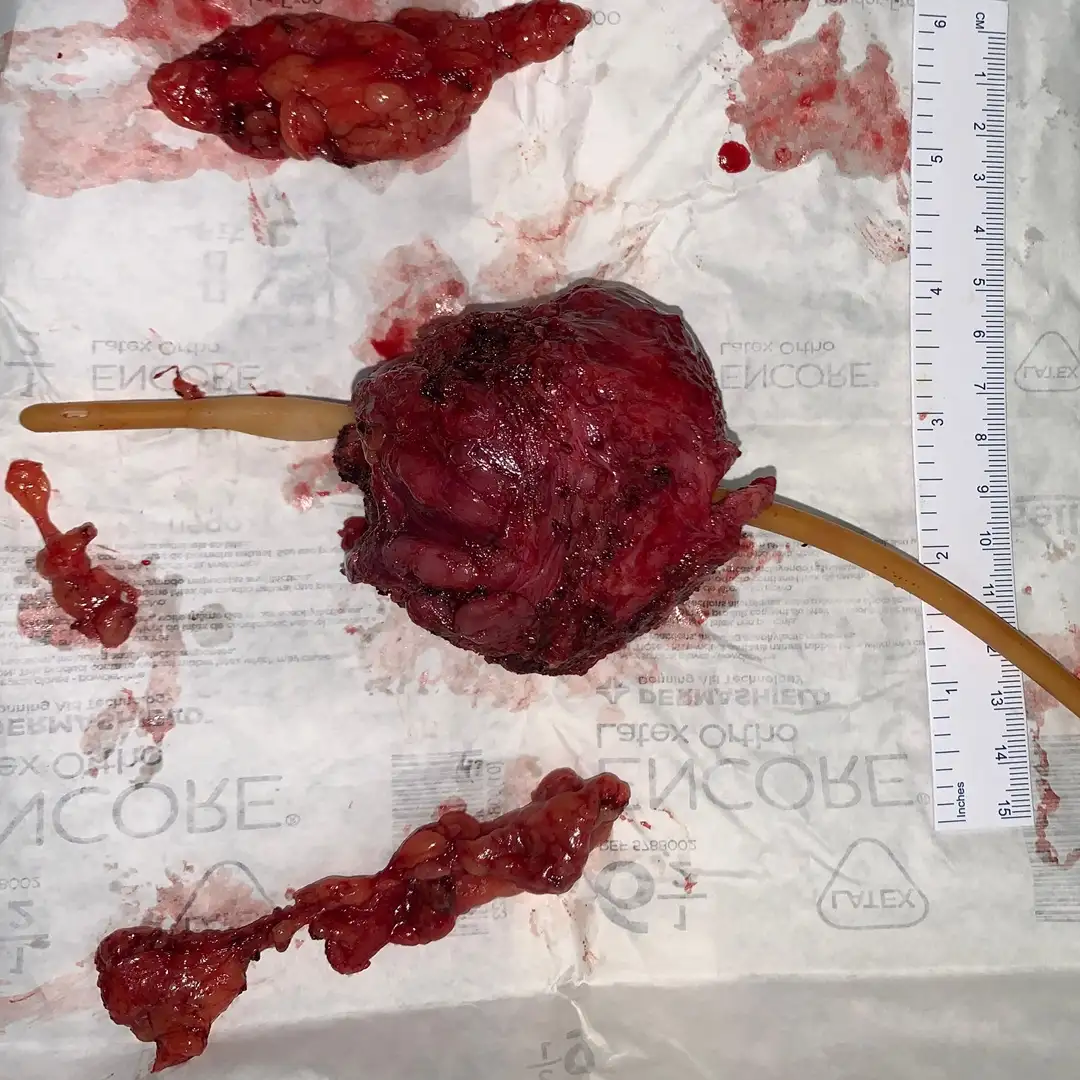
A 67-year-old male presented with urinary urgency and a significantly elevated PSA level of 144.92 ng/ml. Diagnostic imaging and biopsy confirmed an acinar adenocarcinoma, demanding an urgent and highly precise surgical intervention to prevent potential systemic spread while managing the high biochemical risk.
⦿ Robotic-Assisted Radical Prostatectomy and Lymphadenectomy
• Procedure: A minimally invasive radical prostatectomy was executed with unilateral neurovascular bundle preservation.
• Lymph Nodes: A total of 20 pelvic lymph nodes were successfully removed and staged.
• Safety: The surgery was completed with a very low blood loss of 150 ml.
• Cancer Clearance: Pathological examination confirmed negative surgical margins, indicating the complete removal of the tumor.
⦿ Full Oncological Clearance and Early Mobilization
The patient’s postoperative recovery was excellent, characterized by early mobilization and a stable discharge within a few days. Final histopathology confirmed a pT2N0 stage with zero lymph node involvement and no extraprostatic extension. Crucially, the patient achieved early urinary continence, returning to his routine daily activities without significant functional impairment or complications.
By utilizing robotic precision, we achieved complete cancer clearance despite the patient's high pre-operative PSA levels. This approach allowed for meticulous nerve preservation and reconstruction, which are vital for maintaining the patient's quality of life and ensuring a rapid return to normalcy.
Surgical Gallery
See operative video demonstrating different steps and clinical situations encountered during robotic prostate cancer surgery.
[FEATURED SURGICAL video]- Watch a Short Surgical Video
See a focused surgical clip demonstrating an important technical step of RARP.
[FEATURED SHORT VIDEO] → View Prostate Cancer Shorts
The robotic system provides a magnified, high-definition 3D view of the surgical field, allowing the surgeon to clearly identify delicate anatomical structures such as tiny blood vessels and important nerves. This enhanced visualization is particularly valuable during prostate surgery, where precise dissection is essential.
The system’s flexible wristed instruments can rotate and move with a range of motion that facilitates fine surgical movements in the confined pelvic space. This can help the surgeon perform accurate dissection while carefully working around critical structures.
The goal of robotic radical prostatectomy is to achieve complete cancer removal while, whenever oncologically appropriate, preserving important surrounding structures that contribute to urinary continence and sexual function.
रोबोटिक सिस्टम सर्जिकल क्षेत्र का मैग्निफाइड, हाई-डेफिनिशन 3D दृश्य प्रदान करता है, जिससे सर्जन छोटी रक्त वाहिकाओं और महत्वपूर्ण नसों जैसी नाजुक संरचनाओं को स्पष्ट रूप से पहचान सकते हैं। यह बेहतर विज़ुअलाइज़ेशन प्रोस्टेट सर्जरी में विशेष रूप से महत्वपूर्ण है, जहाँ सटीक तरीके से सर्जरी करना आवश्यक होता है।
सिस्टम के फ्लेक्सिबल रिस्टेड इंस्ट्रूमेंट्स कई दिशाओं में घूम और मुड़ सकते हैं, जिससे पेल्विस के सीमित स्थान में भी सर्जन को बारीकी से सर्जरी करने में मदद मिलती है। इससे महत्वपूर्ण संरचनाओं के आसपास सावधानीपूर्वक काम करते हुए सटीक डिसेक्शन किया जा सकता है।
रोबोटिक रैडिकल प्रोस्टेटेक्टॉमी का लक्ष्य कैंसर को पूरी तरह निकालना होता है। साथ ही, जहाँ कैंसर की स्थिति इसकी अनुमति देती है, वहाँ पेशाब पर नियंत्रण (urinary continence) और यौन कार्य (sexual function) में महत्वपूर्ण भूमिका निभाने वाली आसपास की संरचनाओं को सुरक्षित रखने का प्रयास किया जाता है।
The goal is to achieve a complete oncological resection while preserving as much functional anatomy as safely possible. Careful dissection can help maintain adequate urethral length, protect the external urinary sphincter, and preserve the nerves responsible for urinary and sexual function when oncologically appropriate.
Robotic surgery provides a magnified, high-definition three-dimensional view and wristed instruments that allow controlled, precise movements in this confined anatomical space. This can be particularly valuable during apical dissection, where even small differences in tissue planes and surgical technique can influence postoperative outcomes.
However, functional preservation should never compromise cancer clearance. The prostate and involved tissues must be removed completely with appropriate oncological margins based on the patient’s tumour characteristics.
Patient Education Video
Understand prostate cancer, robotic prostatectomy and recovery through patient-focused educational videos.
[FEATURED EDUCATIONAL VIDEO] → Watch Prostate Cancer Education Videos
Patient Experience
Read the experience of a patient treated for prostate cancer.
[FEATURED GOOGLE REVIEW] → Read Prostate Cancer Patient Reviews

Video Testimonial
Hear directly from a patient about diagnosis, surgery and recovery.
[FEATURED VIDEO TESTIMONIAL] → Watch Prostate Cancer Patient Testimonials
Seeking the best possible medical care, the family consulted with Dr. Swati Shah, an expert Robotic Uro-Gynec Oncologist.
After a thorough consultation, Dr. Shah recommended a Robotic Radical Prostatectomy. The family agreed, and the advanced, minimally invasive surgery was a complete success. Highlighting the rapid recovery associated with robotic procedures, the patient was remarkably discharged from the hospital just two days after the operation.
Vikram reports that all medical tubes and stitches have now been safely removed. His father is experiencing no complications and is feeling significantly better post-surgery.
Good prostate cancer treatment starts with selecting the right treatment, not simply selecting an operation.
Cases requiring multidisciplinary input are reviewed with specialists including:
Dr Swati Shah has also initiated multidisciplinary academic forums addressing prostate cancer:
PROM — Pelvic Radiology & Oncology Meeting
Focused multidisciplinary discussion of prostate cancer imaging and its implications for treatment planning.
Pelvic POINT — Pathology, Oncology, Immunology & Novel Therapeutics
Multidisciplinary discussion of prostate pathology, Gleason/Grade Group assessment, molecular testing, risk classifiers and evolving systemic treatments.
The objective is to integrate imaging + pathology + cancer biology + surgical considerations + radiation/systemic options before making complex treatment decisions.
Dr Swati Shah has presented and discussed robotic prostate cancer surgery at national and regional academic meetings, including prostate cancer symposia, urology meetings and robotic surgery workshops.
Her academic work in prostate surgery has included:
[ACADEMIC/FACULTY IMAGE GALLERY] → View Academic Presentations & Robotic Training
A prostate cancer centre should offer more than access to a robotic surgical system.
Important considerations include:
The objective should be to choose the right treatment for the right patient — and, when surgery is selected, to deliver cancer control while preserving function wherever oncologically possible.
Before deciding on surgery, the complete prostate cancer picture should be reviewed together:
PSA + Biopsy/Grade Group + MRI + PSMA PET/CT where indicated + Age & Health + Current Urinary/Sexual Function + Patient Priorities
Patients who already have these reports can obtain a specialist prostate cancer surgical opinion to understand:
[GET A PROSTATE CANCER SECOND OPINION]
[BOOK CONSULTATION WITH DR SWATI SHAH]
Swasth Parivar: twice a month, practical advice on recovery, diet and warning signs. No advertising. Stop any time.
Your number is used for these updates and for the clinic to reach you. It is never sold or passed on. To stop, reply STOP on WhatsApp.