
Robotic radical prostatectomy is not complete when the operation ends.
For a patient, the real questions are:
A high-quality prostate cancer programme should therefore look beyond the operation itself.
It should measure cancer control, surgical safety, functional recovery and long-term follow-up.
I have been performing robotic radical prostatectomy since 2013.
My overall experience includes:
650- Radical prostatectomies
627- Robotic radical prostatectomies
Since 2013- Robotic prostatectomy experience
My prostate cancer practice includes patients across a broad spectrum:
The importance of this experience is not simply the number of operations.
It is the ability to adapt the operation to the tumour, anatomy, risk and functional priorities of each patient.
Surgical results are meaningful only when the reader knows:
For this reason, our detailed outcome figures are presented as our analysed clinical series and should not be interpreted as a guarantee for an individual patient.
Individual outcomes can differ according to tumour stage, age, baseline urinary and sexual function, anatomy, previous procedures, nerve-sparing feasibility and other clinical factors.
What does the pathology show after surgery?
One of the important advantages of radical prostatectomy is that the entire prostate and, when indicated, pelvic lymph nodes can be examined by pathology.
The final report may establish:
This provides information that cannot be obtained from imaging alone.
In our analysed prostatectomy series, the reported pathological stage distribution includes:
Pathological category | Proportion |
pT2 | 40% |
pT3 | 55% |
pN1 | 25% |
These figures demonstrate that our surgical experience is not limited to straightforward organ-confined prostate cancer.
However, pT2, pT3 and pN1 percentages should be interpreted within the defined analysed cohort, because these categories can overlap—for example, a patient can be pT3 and pN1.
What is a positive surgical margin?
A positive surgical margin means that cancer cells are present at the inked edge of the removed surgical specimen.
A negative margin does not guarantee that recurrence can never occur, but margin status is an important pathological factor in assessing recurrence risk.
In our analysed series:
Positive surgical margins
Approximately 10%
Margin-negative cases
Approximately 90%
These figures should be interpreted according to the stage mix and pathological characteristics of the cohort.
A surgeon should not aim for a low positive-margin rate by simply removing more tissue from every patient.
The objective is: Appropriate cancer clearance while preserving function whenever oncologically safe.
What does recurrence after prostatectomy mean?
After radical prostatectomy, PSA is expected to fall to a very low or undetectable level.
PSA is therefore one of the most important tools for monitoring patients after surgery.
Current EAU guidance describes PSA measurement as the cornerstone of follow-up after local treatment and notes that PSA is expected to become undetectable after radical prostatectomy. A rising PSA does not automatically mean that the patient has clinically significant metastatic disease.
The pattern, level, timing and rate of PSA rise, together with pathology and other risk factors, determine the next step.
In our analysed series:
Biochemical recurrence
Approximately 20%
Median follow-up
Approximately 60 months
This figure should be interpreted in the context of the substantial proportion of higher-stage disease represented in our surgical experience.
It should not be used as an individual’s predicted risk without considering:
A PSA rise after prostatectomy requires structured assessment, not immediate panic.
The doctor may review:
If recurrence is suspected, additional treatment may be considered.
Depending on the clinical situation, this can include salvage radiation therapy and/or systemic treatment.
Current EAU guidance recommends imaging at recurrence when the result is expected to affect treatment planning.
When will I become continent?
Urinary recovery after prostatectomy is a process.
Some men regain control very quickly.
Others improve progressively over several months.
Recovery depends on factors such as:
Therefore, continence should be assessed over time rather than judged only during the first few weeks.
In our analysed data:
At 3 months- Approximately 90% were 0-pad
At 6 months- Approximately 95% were 0-pad
At 12 months- Approximately 99% were 0-pad
For clarity, 0-pad means no pad use, according to our recorded definition.
These figures represent our analysed clinical data and are not a prediction that every individual patient will achieve the same recovery.
Urinary control after prostatectomy depends on the interaction between:
During robotic prostatectomy, attention to anatomy and reconstruction can support functional recovery.
Important surgical principles include:
These technical aspects are discussed in greater detail on our:
Critical Steps in Robotic Prostatectomy page →
Erectile recovery is different from urinary continence.
It is influenced by:
Therefore, it is not appropriate to promise that nerve-sparing surgery will preserve erections.
In our analysed prostatectomy experience, the approximate distribution was:
Nerve-sparing approach | Proportion |
Bilateral nerve-sparing | 50% |
Unilateral nerve-sparing | 20% |
Non-nerve-sparing | 30% |
These figures reflect the fact that nerve preservation is determined by cancer anatomy and oncological safety.
It is not simply a technique selected for every patient.
The principle is: Cancer control first. Functional preservation whenever oncologically safe.
Detailed discussion of nerve-sparing is provided on our dedicated: Nerve-Sparing Robotic Prostatectomy page →
Two patients may undergo robotic prostatectomy but have completely different nerve-sparing possibilities.
For example:
Patient A
Tumour is away from the neurovascular bundles.
→ Bilateral nerve-sparing may be possible.
Patient B
Tumour is close to one neurovascular bundle.
→ Unilateral nerve-sparing may be appropriate.
Patient C
Tumour extensively involves both sides.
→ Non-nerve-sparing surgery may be necessary to achieve appropriate cancer clearance.
This is why the presence of a robot does not determine whether nerves can be preserved.
The tumour does.
Pelvic lymph-node dissection is performed when indicated by the patient’s risk profile and treatment plan.
In our experience:
PLND performed in- Approximately 95% of cases
Average lymph nodes retrieved- Approximately 15
The number of lymph nodes retrieved varies according to:
The detailed principles of pelvic lymph-node dissection are covered on our dedicated PLND page.
Cancer control and functional recovery are important, but safety remains fundamental.
Our analysed data include:
Average estimated blood loss- Approximately 200 mL
Transfusion rate- Approximately 5%
Major complication rate- Approximately 2%
Readmission rate- Approximately 2%
Again, these figures should be understood within the defined cohort and case mix.
Complication rates can be influenced by:
Our recorded experience includes:
Operative duration- Approximately 2–4 hours
Average postoperative hospital stay- Approximately 2.8 days
Operative time varies according to the complexity of the case.
A straightforward localized prostatectomy and a T3/T4 or reoperative pelvic case should not be expected to have identical operative times.
After surgery, recovery generally occurs in stages.
Early postoperative period
The focus is on:
After catheter removal
The focus shifts toward:
Over subsequent months
The focus becomes:
PSA is one of the most important long-term follow-up tests after radical prostatectomy.
EAU guidance states that PSA is expected to become undetectable after radical prostatectomy and recommends ongoing PSA-based follow-up.
The exact monitoring schedule should be individualized according to:
A single PSA result should generally be interpreted in context rather than in isolation.
Not necessarily.
In an asymptomatic patient with an appropriately undetectable PSA, routine imaging is generally not required.
Current EAU guidance states that imaging has no routine role in follow-up after localized prostate cancer treatment when PSA is not rising and the patient is asymptomatic; imaging is used when it is likely to affect management, particularly when recurrence is suspected.
This avoids unnecessary investigations while maintaining appropriate surveillance.
Prostate cancer follow-up is not only about PSA.
A comprehensive follow-up programme considers:
Cancer control
Urinary function
Sexual function
General health
Current guidance emphasizes both oncological and functional follow-up after prostate cancer treatment.
A good prostate cancer outcome cannot be reduced to one number.
It involves several dimensions.
1. Cancer control- Appropriate tumour removal and long-term disease control.
2. Surgical safety- Low rates of serious complications and avoidable readmission.
3. Urinary recovery- Progressive return of urinary control.
4. Sexual function- Preservation or recovery where oncologically and physiologically possible.
5. Quality of life- Returning to normal activities and living without unnecessary treatment-related limitations.
6. Long-term follow-up- Detecting recurrence early enough for appropriate additional treatment when required.
The AUA/ASTRO guideline similarly emphasizes discussing individualized cancer recurrence risk and the different urinary, sexual and bowel effects of prostate cancer treatments.
For me, the quality of robotic prostatectomy is not defined simply by:
“The operation was completed robotically.”
It is evaluated across:
Cancer- Appropriate oncological clearance
Technique- Precise dissection and reconstruction
Safety- Minimizing complications and blood loss
Function- Preserving continence and sexual function whenever safely possible
Follow-up- Monitoring PSA and functional recovery
Long-term care- Recognizing recurrence and providing appropriate additional treatment
Our prostatectomy experience includes patients who are not all identical.
The case library includes examples of:
This is important because surgical outcomes should always be interpreted in relation to case complexity and patient selection.
A surgeon’s experience with only uncomplicated cases cannot automatically be extrapolated to complex pelvic oncology.
We maintain detailed case summaries that may include:
These cases demonstrate how the treatment strategy changes according to disease extent and anatomy.
View Prostate Cancer Case Summaries →
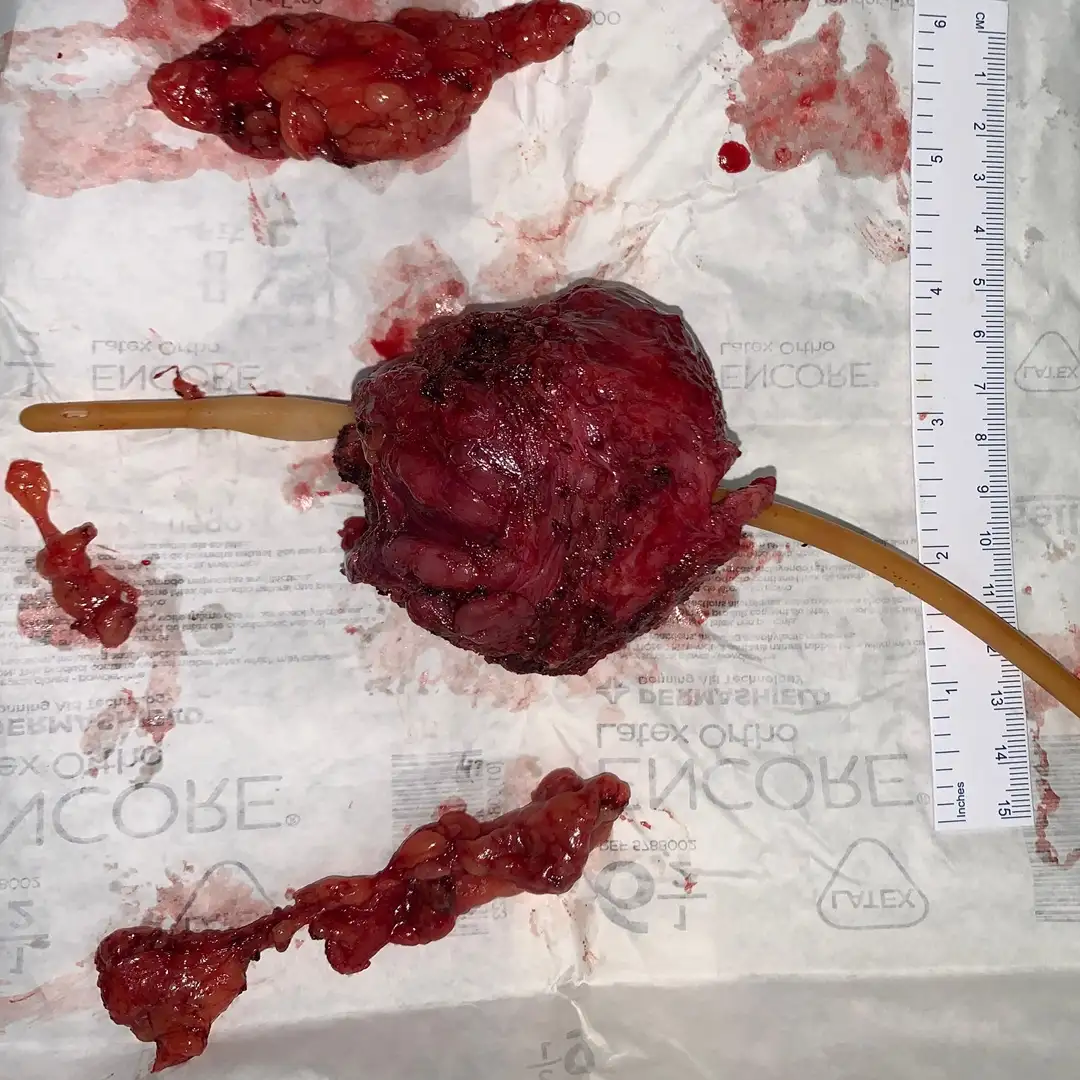
A 67-year-old male presented with urinary urgency and a significantly elevated PSA level of 144.92 ng/ml. Diagnostic imaging and biopsy confirmed an acinar adenocarcinoma, demanding an urgent and highly precise surgical intervention to prevent potential systemic spread while managing the high biochemical risk.
⦿ Robotic-Assisted Radical Prostatectomy and Lymphadenectomy
• Procedure: A minimally invasive radical prostatectomy was executed with unilateral neurovascular bundle preservation.
• Lymph Nodes: A total of 20 pelvic lymph nodes were successfully removed and staged.
• Safety: The surgery was completed with a very low blood loss of 150 ml.
• Cancer Clearance: Pathological examination confirmed negative surgical margins, indicating the complete removal of the tumor.
⦿ Full Oncological Clearance and Early Mobilization
The patient’s postoperative recovery was excellent, characterized by early mobilization and a stable discharge within a few days. Final histopathology confirmed a pT2N0 stage with zero lymph node involvement and no extraprostatic extension. Crucially, the patient achieved early urinary continence, returning to his routine daily activities without significant functional impairment or complications.
By utilizing robotic precision, we achieved complete cancer clearance despite the patient's high pre-operative PSA levels. This approach allowed for meticulous nerve preservation and reconstruction, which are vital for maintaining the patient's quality of life and ensuring a rapid return to normalcy.
Educational prostate cancer videos
Short explanations of prostate cancer diagnosis, treatment and surgery.
Watch Prostate Cancer Educational Videos →
Surgical videos
Selected operative videos demonstrate specific technical aspects of robotic prostatectomy.
View Prostate Surgery Videos →
Patient video testimonials
Patient experiences provide a personal perspective on treatment and recovery.
View Prostate Cancer Video Testimonials →
Seeking the best possible medical care, the family consulted with Dr. Swati Shah, an expert Robotic Uro-Gynec Oncologist.
After a thorough consultation, Dr. Shah recommended a Robotic Radical Prostatectomy. The family agreed, and the advanced, minimally invasive surgery was a complete success. Highlighting the rapid recovery associated with robotic procedures, the patient was remarkably discharged from the hospital just two days after the operation.
Vikram reports that all medical tubes and stitches have now been safely removed. His father is experiencing no complications and is feeling significantly better post-surgery.
Patient reviews
Google reviews provide additional patient feedback.
View Prostate Cancer Reviews →

If final pathology shows high-risk features, the postoperative plan is individualized.
Depending on:
the patient may require closer surveillance or additional treatment.
Additional treatment can include radiation and/or systemic therapy depending on the clinical situation.
I do not believe that every patient with an adverse pathological feature should automatically receive the same treatment.
The postoperative plan should be based on the complete pathological and PSA picture.
Recurrence does not mean that nothing more can be done.
The first step is to establish:
Is the PSA truly rising?
Then:
How quickly is it rising?
Then:
Where is the disease likely to be?
Then:
Would additional treatment change the patient’s outcome?
Depending on the clinical situation, management may include:
The timing of additional treatment is individualized.
Before undergoing robotic prostatectomy, I recommend asking:
These questions help patients understand not only the operation, but the complete treatment pathway.
Parameter | Our analysed data |
Total radical prostatectomies | 650 |
Robotic radical prostatectomies | 627 |
Robotic prostatectomy experience | Since 2013 |
Bilateral nerve-sparing | 50% |
Unilateral nerve-sparing | 20% |
Non-nerve-sparing | 30% |
PLND performed | ~95% |
Average nodes retrieved | ~15 |
Positive surgical margins | ~10% |
pT2 | 40% |
pT3 | 55% |
pN1 | 25% |
Transfusion | ~5% |
Major complications | ~2% |
Readmission | ~2% |
Average blood loss | ~200 mL |
Operative duration | 2–4 hours |
Average hospital stay | ~2.8 days |
0-pad continence at 3 months | ~90% |
0-pad continence at 6 months | ~95% |
0-pad continence at 12 months | ~99% |
Reported biochemical recurrence | ~20% |
Median follow-up | ~60 months |
These are our reported/analysed clinical data, not guarantees for an individual patient.
Before publication, each figure should ideally be accompanied internally by:
This is particularly important for positive margins, biochemical recurrence, continence and erectile-function outcomes, because definitions and case mix can substantially affect reported percentages.
The goal is not simply to perform a robotic prostatectomy.
The goal is to provide the patient with:
Appropriate cancer control
Safe surgery
Functional recovery
Long-term surveillance
A plan for additional treatment if it becomes necessary
That is how I define the quality of prostate cancer care.
If you have been diagnosed with prostate cancer and are considering robotic prostatectomy, bring:
A complete review allows the treatment plan to be based on the actual cancer characteristics rather than the diagnosis label alone.
Dr Swati H. Shah
Pelvic (Uro & Gynec) Oncosurgeon
Robotic Uro Cancer Surgeon
Apollo Hospital, Ahmedabad
Director, Shah’s Cancer & Robotic Surgery Centre
Founder & Director, Department of Pelvic Oncology, Apollo Ahmedabad
18+ years in uro-gynaecologic cancer surgery
Robotic surgery since 2013
650 radical prostatectomies
627 robotic radical prostatectomies
Every prostate cancer patient is different.
The same operation may have very different implications for two men depending on:
My approach is therefore:
Understand the cancer → plan the treatment → perform the operation precisely → measure recovery → monitor PSA → remain involved in long-term care.
That is the complete prostate cancer journey.
Swasth Parivar: twice a month, practical advice on recovery, diet and warning signs. No advertising. Stop any time.
Your number is used for these updates and for the clinic to reach you. It is never sold or passed on. To stop, reply STOP on WhatsApp.