Testicular cancer is the most common cancer in young men in Türkiye. Catching it early can save lives, and self-checks are a simple way to spot changes. But not everyone knows how or when to do them.
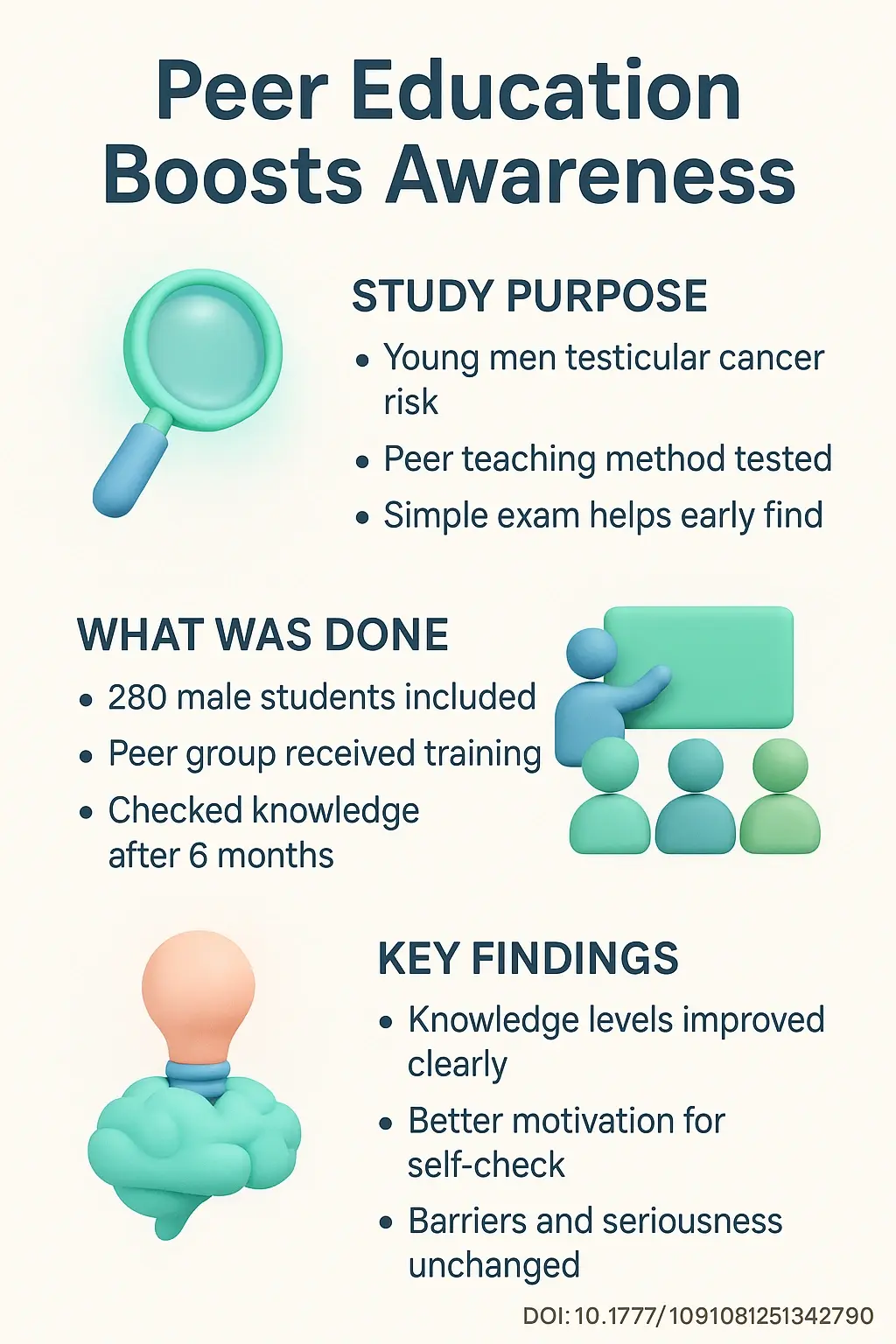
This study looked at whether peer education—learning from friends or classmates—could help. Researchers worked with 280 male university students. Half of them got regular health information. The other half were taught by trained peers about testicular cancer and how to do self-checks.
Six months later, the group taught by peers knew more and were more likely to take responsibility for their health. They felt more confident in checking themselves and believed more strongly in the benefits of doing so. Their motivation to act was higher, too.
The study didn’t find changes in how serious they thought the cancer was or the barriers they faced, but the gains in knowledge and self-care were clear.
Peer education is easy to run, low-cost, and works well in schools and universities. Nurses and health educators can help guide these programs.
If you’re a young man, learn how to check yourself—and don’t be afraid to teach others. It could save a life.